
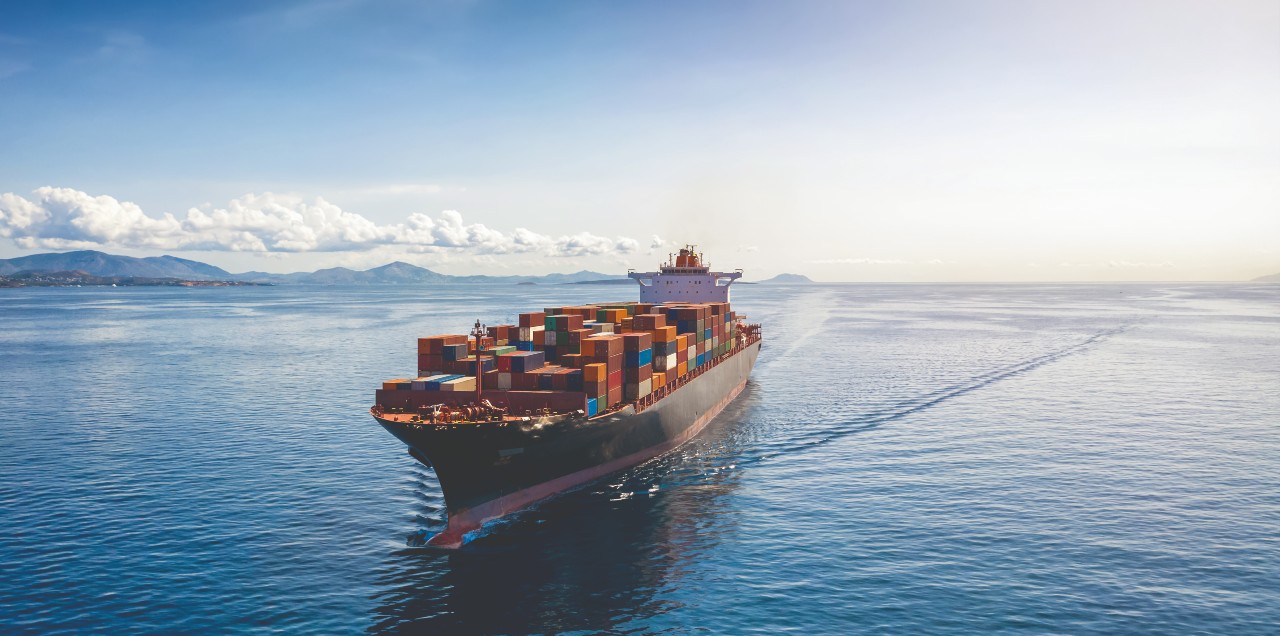
A surge in demand and reduced sailing schedules are causing severe capacity shortages on India to Europe routes, prompting higher prices and extended booking lead times amid pervasive disruptions across major liner services.
Westbound container traffic from India and the wider south-west Asian region into Europe is running into a squeeze just as shippers had hoped to move into the softer end of the Asia-Europe peak, with forwarders saying space is scarce and bookings now need to be made weeks ahead. One European freight forwarder told The Loadstar that it had become ‘nigh-on impossible’ to secure liftings, while carriers were increasingly cancelling reservations instead of rolling cargo, forcing customers back through the booking process. The pressure is being felt across the trade rather than on a single string, with blank sailings, port omissions and weak schedule integrity all weighing on available capacity.
CMA CGM has moved quickly to capitalise on the imbalance. According to the company’s customer advisories, it introduced a peak season surcharge for Asia to North Europe shipments and then raised it further in a later notice, underlining how fast pricing is responding to the tighter market. The Loadstar also reported that the carrier’s India-North Europe and India-Mediterranean business has been running full, according to the forwarder it cited.
The capacity picture has worsened because many scheduled sailings have simply not happened. A Loadstar analysis of Xeneta’s eeSea data found that, between 1 March and 8 July, 51 of 248 planned India-Europe sailings were not operated, cutting pro forma capacity from 1.59m teu to 1.32m teu. The same reporting showed that demand strengthened again in March and April, just as carriers were removing space. Industry-wide reporting in February also showed that alliances had already planned dozens of blank sailings on Asia-Europe routes for March and April, while slow steaming was shaving further capacity from the market.
The effects are visible across the main services. CMA CGM’s EPIC loop with Cosco and OOCL operated 13 sailings against 18 scheduled in the period cited by The Loadstar, while MSC’s IPAK saw multiple blanks and omissions at North European ports. ONE’s IOX, run with HMM and Yang Ming, was particularly unstable: Sea-Intelligence’s April and May schedule reliability report put its on-time arrival rate at just 27.3 per cent. By contrast, MSC’s IPAK was far more dependable, while the Gemini services operated by Maersk and Hapag-Lloyd were the strongest performers and even added extra loaders, increasing capacity above plan. For shippers, the practical result is longer waiting times, less reliable connections and a market where book-ahead discipline matters more than ever.
Source Reference Map
Inspired by headline at: [1]
Sources by paragraph:
– Paragraph 1: [1]
– Paragraph 2: [1], [3], [5]
– Paragraph 3: [1], [2]
– Paragraph 4: [1]
Source: Noah Wire Services
Verification / Sources
- https://theloadstar.com/high-demand-and-tight-capacity-hits-india-north-europe-trade/ – Please view link – unable to able to access data
- https://shippingintelligencehub.com/article/carriers-blank-sailings-asia-europe-demand-2026-02-26 – In February 2026, major container shipping alliances announced 47 blank sailings across major trade lanes for March-April 2026, with Asia-Europe routes bearing the brunt at 28 cancelled voyages. The 2M Alliance (Maersk and MSC) led with 12 blanked Asia-North Europe strings, while THE Alliance (ONE, HMM, Yang Ming) cancelled 9 sailings and Ocean Alliance (CMA CGM, COSCO, Evergreen, OOCL) voided 7 services. Transpacific routes saw 14 blank sailings announced, concentrated on Asia-US West Coast services. Beyond blanking, carriers implemented widespread slow steaming, reducing average speeds to 16-17 knots from 19-20 knots on Asia-Europe routes, effectively removing 8-10% of capacity while cutting fuel consumption.
- https://www.cma-cgm.com/news/5442/pss-from-asia-to-north-europe – On 21 May 2026, CMA CGM announced a Peak Season Surcharge (PSS) of USD 500 per TEU for shipments from all Asian ports to all North European ports, effective from 1 June 2026 until further notice. This surcharge applies to all deals with validity superior to 30 days. The associated basic freights are available on CMA CGM’s website, and other charges such as bunker-related surcharges, THC (Origin and Destination), and Safety and Security-related surcharges may also apply.
- https://www.cma-cgm.com/assets/public/documents/Client%20Advisory%20-Peak%20Season%20Surcharge%20%28PSS-00%29%20-%20CCAI-072-090326.pdf – CMA CGM Agencies (India) Private Limited issued a client advisory (CCAI-072-090326) announcing a Peak Season Surcharge (PSS-00) for shipments from India, Pakistan, Sri Lanka, Middle East Gulf, and Red Sea ports to the US East Coast and US Gulf Coast. Effective 2 April 2026, the surcharge is USD 4,500 per 20′ container and USD 6,000 per 40′ container. Effective 15 April 2026, the surcharge increases to USD 6,000 per 20′ container and USD 9,000 per 40′ container. All applicable rates, surcharges, and rules, including mandatory pricing elements under EU commitments, can be located in the applicable Governing Tariffs.
- https://www.cma-cgm.com/assets/public/documents/Client%20Advisory%20-Peak%20Season%20Surcharge%20%28PSS-00%29%20-%20CCAI-144-070526.pdf – CMA CGM Agencies (India) Private Limited issued a client advisory (CCAI-144-070526) announcing a Peak Season Surcharge (PSS-00) for shipments from India, Pakistan, Sri Lanka, Middle East Gulf, and Red Sea ports to the US East Coast and US Gulf Coast, effective 1 June 2026. The surcharge is USD 1,500 per 20′ container and USD 1,500 per 40′ container. All applicable rates, surcharges, and rules, including mandatory pricing elements under EU commitments, can be located in the applicable Governing Tariffs.
- https://www.cma-cgm.com/assets/public/documents/Client%20Advisory%20-%20PEAK%20SEASON%20SURCHARGE%20%28PSS00%29%20-%20CCAI-490-041225.pdf – CMA CGM Agencies (India) Private Limited issued a client advisory (CCAI-490-041225) announcing a Peak Season Surcharge (PSS00) for shipments from India, Pakistan, Sri Lanka, Middle East Gulf, and Red Sea ports to the US East Coast, US Gulf Coast, and all inland destinations reached via said ports. Effective 1 January 2026, the surcharge is USD 2,000 per container (all types). Effective 15 January 2026, the surcharge increases to USD 3,000 per container (all types). All applicable rates, surcharges, and rules, including mandatory pricing elements under EU commitments, can be located in the applicable Governing Tariffs.
Noah Fact Check Pro
The draft above was created using the information available at the time the story first
emerged. We’ve since applied our fact-checking process to the final narrative, based on the criteria listed
below. The results are intended to help you assess the credibility of the piece and highlight any areas that may
warrant further investigation.
Freshness check
Score: 8
Notes: The article was published on 8 July 2026, providing timely information. However, the content references data up to 8 July 2026, which may indicate that some information was compiled earlier. The article cites a CMA CGM announcement from 21 May 2026 regarding a Peak Season Surcharge (PSS) of $500 per container, effective from 1 June 2026. (cma-cgm.com) This suggests that the article’s content is current, but some details may have been compiled prior to the publication date.
Quotes check
Score: 7
Notes: The article includes direct quotes from a European freight forwarder, stating, “We are seeing a large increase in demand on ISC trade, getting shipments away is nigh-on impossible, and we are now having to book four-to-six weeks in advance.” However, the source of this quote is not specified, making it difficult to verify its authenticity. Without independent verification, the credibility of this quote is uncertain.
Source reliability
Score: 8
Notes: The primary source, The Loadstar, is a reputable publication in the logistics and supply chain industry. The article references official CMA CGM announcements regarding the Peak Season Surcharge (PSS) from 21 May 2026. (cma-cgm.com) However, the article’s reliance on a single freight forwarder’s anecdotal account without independent verification raises concerns about the comprehensiveness and objectivity of the reporting.
Plausibility check
Score: 9
Notes: The article’s claims about increased demand and capacity constraints in the India-North Europe trade align with industry trends and are supported by CMA CGM’s PSS announcement. The article also references data from Xeneta’s eeSea liner database, indicating that 51 of 248 planned sailings between 1 March and 8 July were not operated, reducing capacity from 1.59 million TEU to 1.32 million TEU. This data supports the article’s claims about capacity issues.