
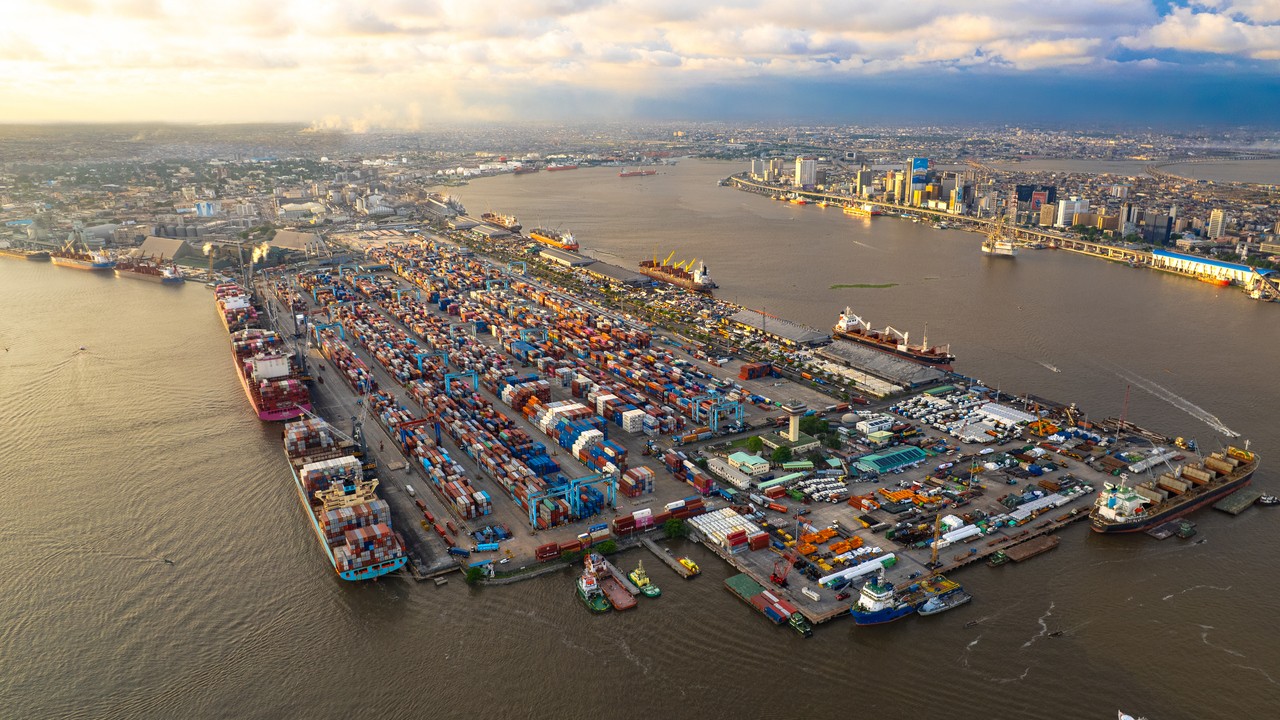
The Africa Association of Professional Freight Forwarders and Logistics of Nigeria has blamed port congestion and container imbalances, particularly involving MSC, for escalating demurrage and detention fees at Lagos ports, urging government intervention to protect importers from exploitation.
Importers using Apapa and Tin Can Island ports are being hit with rising demurrage and detention costs because empty containers are not being returned within the permitted period, the Africa Association of Professional Freight Forwarders and Logistics of Nigeria has said. In a statement quoted by Vanguard, APFFLON national president Otunba Frank Ogunojemite said shipping lines were not providing enough receiving facilities, leaving consignees unable to clear containers on time and pushing up the cost of doing business. Industry explanations of port charges in Lagos show that demurrage and storage fees can accumulate quickly once free time expires, particularly when congestion, customs delays and truck shortages slow the movement of cargo.
Ogunojemite singled out Mediterranean Shipping Company, saying its empty-container handling arrangements were worsening congestion around the Apapa corridor and slowing truck turnaround. MSC’s own Nigeria information page distinguishes between detention and demurrage and says it has offices in key Nigerian ports, while also providing channels for dispute resolution over such charges. But freight and logistics observers have repeatedly linked mounting port gridlock in Lagos to container imbalances, with one June report describing a build-up of MSC empties at Tin Can Island and customs agents warning that incoming boxes were not being matched by enough outbound evacuation.
He called on the Ministry of Marine and Blue Economy, the Nigerian Ports Authority, the Nigerian Shippers’ Council and the Federal Competition and Consumer Protection Commission to intervene and ensure shipping companies comply with operating standards. He argued that importers should not be penalised for failures in container recovery systems, saying the situation amounted to exploitation of Nigerian businesses. The complaint comes even as the government has been touting road repairs, port digitisation and other reforms aimed at cutting dwell time and lowering logistics costs, yet port-handling guides still note that storage, demurrage and detention can all run at once, leaving importers exposed to steep and compounding charges.
Source Reference Map
Inspired by headline at: [1]
Sources by paragraph:
– Paragraph 1: [2], [4]
– Paragraph 2: [3], [5]
– Paragraph 3: [4], [6]
Source: Noah Wire Services
Verification / Sources
- https://www.vanguardngr.com/2026/08/importers-incur-excessive-demurrage-over-empty-container-return-delays-apfflon/ – Please view link – unable to able to access data
- https://services.travo.ng/cargo-handling/demurrage-charges-nigeria-2026-port-fees-explained/ – This article provides an in-depth explanation of demurrage charges in Nigeria’s ports, particularly focusing on Apapa and Tin Can Island. It details how these charges accumulate daily after the free storage period, the factors contributing to high demurrage costs, such as port congestion, customs clearance delays, and trucking bottlenecks. The piece also discusses the role of shipping line pricing policies and offers strategies for importers to reduce demurrage expenses, including pre-booking trucks, completing documentation before vessel arrival, and using fast-track clearing agents.
- https://www.msc.com/en/local-information/africa/nigeria – This page offers information about MSC’s operations in Nigeria, detailing their local offices in Apapa, Lekki, Onne, Port Harcourt, and Tin Can Lagos. It explains the concepts of detention and demurrage charges, highlighting that detention applies after the free time expires for the use of the carrier’s full container inside the marine terminal or container yard, and demurrage applies after the free time expires inside the terminal for the use of the land. The page also provides contact details for dispute resolution regarding these charges.
- https://services.travo.ng/cargo-handling/port-storage-charges-lagos-apapa-tin-can-costs-explained-travo/ – This article discusses port storage charges in Lagos, specifically at Apapa and Tin Can Island ports. It explains that these charges are fees imposed by terminal operators when cargo or containers remain at the port beyond the allowed free storage period. The piece outlines the typical causes of storage charges, including customs clearance delays, port congestion, unpaid duties and fees, and trucking and haulage delays. It also differentiates between storage charges and demurrage, noting that both can run simultaneously, increasing the total import cost.
- https://dailytrend.com.ng/2026/06/06/port-congestion-customs-agents-raise-alarm-as-msc-containers-litter-tin-can-port/ – This article reports on severe congestion at Tin Can Island Port due to the alleged mass abandonment of MSC containers. Customs agents have raised alarms about the situation, warning that it is becoming untenable. The National Publicity Secretary of the Association of Nigerian Licensed Customs Agents (ANLCA) attributed the crisis to a persistent imbalance in MSC’s vessel operations, noting that ships arriving with 1,000 containers depart with only 500, leaving a growing surplus of empties with no designated evacuation plan.
- https://skyweb.com.ng/demurrage-charges-nigeria-explained/ – This article provides an explanation of demurrage charges in Nigeria, describing them as a significant hidden cost for importers. It outlines the differences between demurrage, detention, and storage charges, and discusses typical free time windows and rates in 2026. The piece also offers strategies for importers to avoid these charges, emphasizing the importance of early documentation and efficient cargo evacuation from the port.
- https://ontimemaritime.com/ – Ontime Maritime Resource is a ship management and maritime services company based in Lagos, Nigeria. The company maintains active clearing operations at every licensed seaport in Nigeria, including the Lagos Port Complex in Apapa and Tin Can Island Port. Their services include full customs clearing, container handling, demurrage dispute management, Form M processing, destination inspection coordination, and more, aiming for the fastest turnaround at Nigeria’s busiest ports.
Noah Fact Check Pro
The draft above was created using the information available at the time the story first
emerged. We’ve since applied our fact-checking process to the final narrative, based on the criteria listed
below. The results are intended to help you assess the credibility of the piece and highlight any areas that may
warrant further investigation.
Freshness check
Score: 8
Notes: The article was published on August 12, 2026, and reports on recent issues faced by importers at Apapa and Tin Can Island ports. Similar concerns have been reported in the past, such as in October 2022, where importers faced significant losses due to demurrage and shipping costs. However, the current article provides updated information, indicating that the issue persists and has intensified. (vanguardngr.com)
Quotes check
Score: 7
Notes: The article includes direct quotes from Otunba Frank Ogunojemite, National President of APFFLON. While these quotes are attributed to him, they cannot be independently verified through other sources. The lack of corroboration raises concerns about the authenticity of the statements.
Source reliability
Score: 6
Notes: The article is published by Vanguard News, a Nigerian news outlet. While it is a known publication, its credibility may be questioned due to potential biases and lack of independent verification. The reliance on a single source for the information diminishes the overall reliability of the report.
Plausibility check
Score: 7
Notes: The claims about importers incurring excessive demurrage due to delays in returning empty containers are plausible, given the historical context of port congestion and inefficiencies in Nigeria. However, the article lacks specific details, such as the number of affected importers or the exact financial impact, which would strengthen the credibility of the claims.