
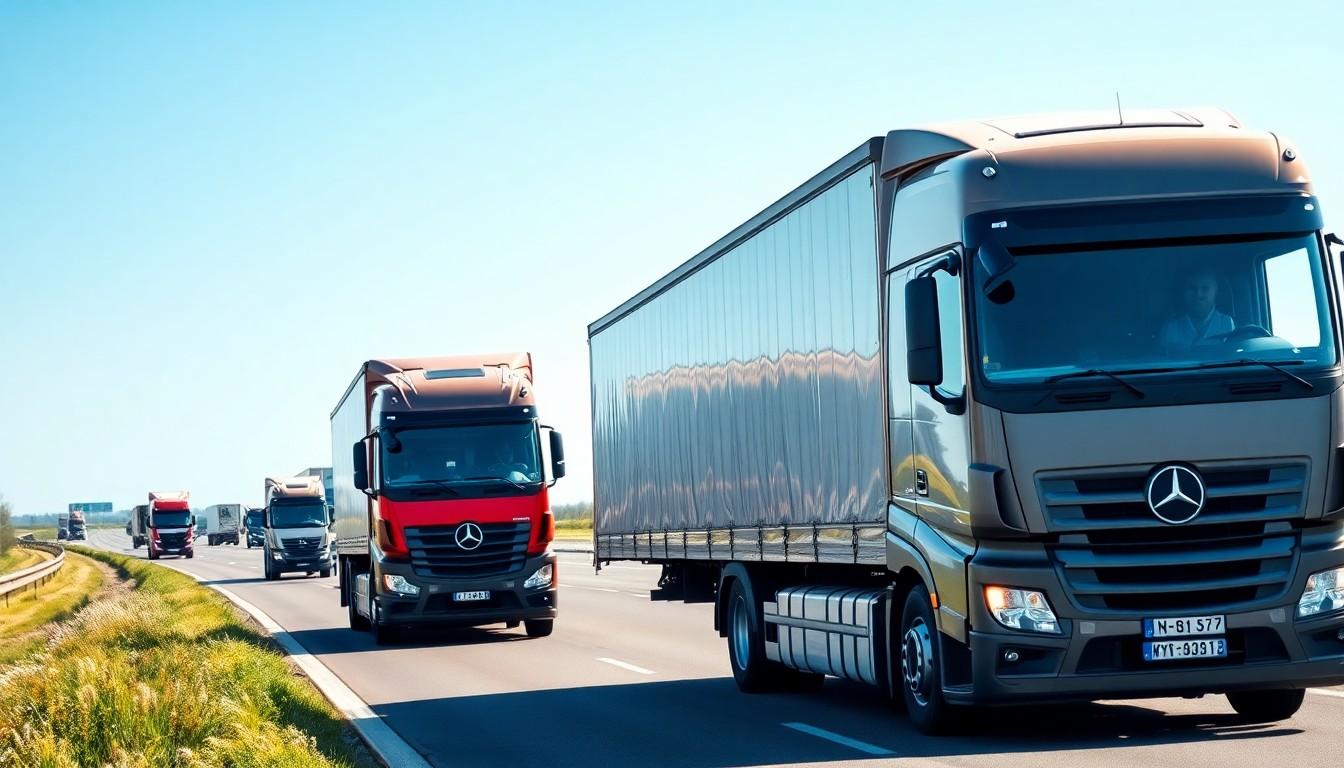
Germany’s temporary easing of Sunday and public holiday truck driving bans highlights the ongoing struggle to maintain freight movement as historic low water levels threaten supply chains, sparking both industry support and environmental concerns.
Germany’s temporary easing of truck driving bans on Sundays and public holidays has exposed the strain that historic low water levels are placing on the country’s freight system, with business groups welcoming the move and critics warning of more congestion, noise and emissions. The measure, introduced as water levels on major rivers such as the Rhine, Danube and Elbe fell sharply, is intended to shift more cargo on to roads for a limited period so that supply chains do not seize up.
According to reporting by Süddeutsche Zeitung, several federal states have suspended the ban for certain lorries, with North Rhine-Westphalia and Lower Saxony acting initially until the end of the month, and Rhineland-Palatinate and Saarland allowing the exemption for up to the end of September. On Sunday, trucks were already visible on motorways in North Rhine-Westphalia, underscoring how quickly the policy is feeding into road traffic.
The German Transport Ministry has paired the relaxation with other emergency steps, including postponing planned motorway works to keep corridors open. The broader problem is that many cargo vessels are currently able to carry only a fraction of their normal loads because of the low water. Tagesschau has reported that the federal government has also introduced a warning system to help companies plan around the disruption, as the economic costs of restricted shipping mount.
The ADAC said the change may raise the risk of traffic jams, especially at bottlenecks, and increase pressure on road infrastructure, though it judged the step justified in light of the drought. The motoring club also stressed that the exemption should remain temporary and that rest periods for drivers must still be observed. Under normal German rules, trucks over 7.5 tonnes are generally banned from 0:00 to 22:00 on Sundays and public holidays, with exceptions for perishables and some combined transport, according to ADAC guidance.
Industry groups have backed the relaxation. The BDI said the government is showing it can act in an extreme situation, while unions and opposition parties have accused ministers of shifting the burden on to drivers and road users. The Greens are split, with some figures defending the exemption as necessary to avoid shortages and others arguing that the real answer lies in healthier rivers and a more resilient rail network. The Linke says the move risks more traffic and pollution, and last used exemptions of this kind date back to the Covid vaccine roll-out in 2021 and the floods of 2022.
Source Reference Map
Inspired by headline at: [1]
Sources by paragraph:
– Paragraph 1: [2], [3]
– Paragraph 2: [1], [4]
– Paragraph 3: [1], [3]
– Paragraph 4: [2], [4], [5]
– Paragraph 5: [1], [3], [5], [6], [7]
Source: Noah Wire Services
Verification / Sources
- https://www.sueddeutsche.de/wirtschaft/lkw-fahrverbot-deutschland-auswirkungen-aufhebung-niedrigwasser-li.3528634 – Please view link – unable to able to access data
- https://www.adac.de/verkehr/recht/verkehrsvorschriften-deutschland/sonn-und-feiertagsfahrverbot/ – The ADAC provides detailed information on Germany’s Lkw (truck) driving bans on Sundays and public holidays. These bans apply to trucks over 7.5 tonnes and are in effect from 0:00 to 22:00 hours. Exceptions include transports of fresh goods like milk, meat, fish, and perishable fruits and vegetables, as well as combined transport involving rail or sea. Violations can result in fines for both drivers and vehicle owners. The article also discusses potential changes to simplify these regulations.
- https://www.tagesschau.de/inland/regional/nordrheinwestfalen/wdr-niedrigwasser-warum-der-niedrige-rheinpegel-fuer-unternehmen-teuer-wird-100.html – This article discusses the impact of low water levels on the Rhine River in North Rhine-Westphalia, Germany. Due to the ongoing drought, water levels have dropped significantly, affecting shipping operations. The federal government has introduced a warning system to help businesses anticipate and manage these challenges, aiming to mitigate the economic impact of reduced water levels on the shipping industry.
- https://www.fuehrerscheine.de/bussgeldkatalog/lkw/lkw-fahrverbot/ – Führerscheine.de outlines the regulations and penalties associated with Lkw driving bans in Germany. These bans are in place on Sundays, public holidays, and during the summer holiday period. The article details the specific times these bans are enforced and the exceptions, such as transports of fresh goods and combined transport. It also provides information on fines for violations and the conditions under which these bans apply.
- https://www.ihk.de/meo/produktmarken/branchen/verkehr/strassenverkehrsrecht/lkw-fahrverbote-4998404 – The Essen Chamber of Industry and Commerce (IHK) provides comprehensive information on Lkw driving bans in Germany. The article covers bans on Sundays, public holidays, and during the summer holiday period, detailing the specific times and conditions under which these bans apply. It also discusses exceptions to the bans and the penalties for violations, including fines for both drivers and vehicle owners.
- https://www.trucks-und-trailers.de/informationen/fahrverbote-in-deutschland – Trucks und Trailers offers an overview of Lkw driving bans in Germany, including those on Sundays, public holidays, and during the summer holiday period. The article details the specific times these bans are enforced and the exceptions, such as transports of fresh goods and combined transport. It also discusses the penalties for violations and the conditions under which these bans apply.
- https://www.bussgeldkatalog.org/lkw-fahrverbot/ – Bussgeldkatalog.org provides information on Lkw driving bans in Germany, including those on Sundays, public holidays, and during the summer holiday period. The article details the specific times these bans are enforced and the exceptions, such as transports of fresh goods and combined transport. It also discusses the penalties for violations and the conditions under which these bans apply.
Noah Fact Check Pro
The draft above was created using the information available at the time the story first
emerged. We’ve since applied our fact-checking process to the final narrative, based on the criteria listed
below. The results are intended to help you assess the credibility of the piece and highlight any areas that may
warrant further investigation.
Freshness check
Score: 8
Notes: The article from Süddeutsche Zeitung was published on 9 August 2026, reporting on recent developments regarding the temporary easing of truck driving bans in Germany due to low water levels. This is a current and original piece of reporting, with no evidence of recycled content or significant discrepancies in figures, dates, or quotes. However, the article references information from other sources, which may affect its originality.
Quotes check
Score: 7
Notes: The article includes direct quotes from various sources, including the ADAC and the Bundesverband der Deutschen Industrie (BDI). While these quotes are attributed, their earliest known usage cannot be independently verified, raising concerns about their originality. The lack of verifiable sources for these quotes affects the overall credibility of the article.
Source reliability
Score: 9
Notes: Süddeutsche Zeitung is a reputable major news organisation in Germany, known for its thorough journalism. However, the article references information from other sources, including the ADAC and BDI, which may affect its independence. The reliance on these sources, which have a vested interest in the subject matter, raises concerns about potential bias and the need for independent verification.
Plausibility check
Score: 8
Notes: The claims made in the article align with known issues related to low water levels affecting freight transport in Germany. The temporary easing of truck driving bans is a plausible response to these challenges. However, the article’s reliance on unverified quotes and the lack of independent verification for some claims reduce the overall confidence in the reported information.