
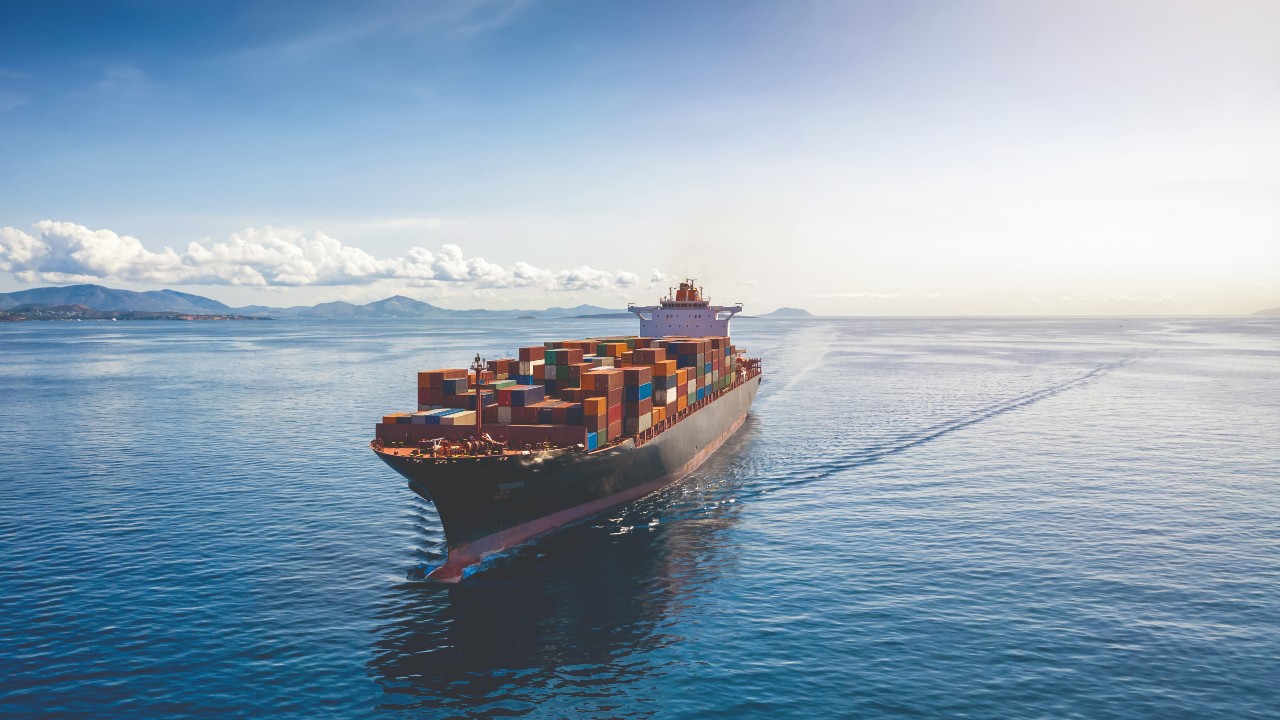
Despite a 2.5% decrease in carbon emissions from European-bound ships in 2025, ongoing security concerns and rerouting around the Red Sea threaten to reverse these environmental gains, as industry grapples with safety and cost challenges.
Container shipping on Europe-linked routes has made a partial environmental recovery in 2025, even as cargo volumes have risen. Sea-Intelligence said total carbon dioxide emissions from boxships serving European trade lanes fell by 2.5 per cent year on year, while emissions intensity per twenty-foot equivalent unit dropped by 6.7 per cent, easing some of the damage seen in 2024 when rerouting around southern Africa pushed emissions sharply higher.
That improvement, however, sits on fragile foundations. Industry reporting shows the longer Cape of Good Hope route remains the default for many carriers because security risks in the Red Sea and Gulf of Aden have persisted through 2025, extending transit times and lifting operating costs across supply chains. The pattern has become a kind of new normal, with operators balancing safety, schedule reliability and fuel burn.
Lloyd’s List Intelligence data suggest that traffic through Bab el Mandeb has started to recover, but only unevenly. June saw 1,338 cargo ship passages, the highest level in two and a half years, yet still well below pre-crisis volumes. Containership tonnage increased markedly, indicating that larger ships are beginning to return, while Suez Canal transits remained under pressure and the Cape route continued to dominate Asia-Europe services.
The security outlook remains the chief obstacle to a fuller rebound. UK Maritime Trade Operations recently reported another attack attempt near Hodeidah, even though the vessel and crew were said to be safe. With Houthi threats still shaping commercial decisions and some carriers only cautiously trialling Suez transits again, the sector’s emissions gains could easily be reversed if the Red Sea deteriorates once more.
Source Reference Map
Inspired by headline at: [1]
Sources by paragraph:
– Paragraph 1: [2], [3]
– Paragraph 2: [4], [5]
– Paragraph 3: [1], [7]
– Paragraph 4: [1], [6]
Source: Noah Wire Services
Verification / Sources
- https://www.seanews.com.tr/article/eu-boxship-co2-falls-red-sea-still-bad-mrsrathl – Please view link – unable to able to access data
- https://ports.marinelink.com/ports/port/tacoma/news/red-sea-shipping-disruptions-persist-through-mid-2025-rerouting-becomes-standard – Persistent security challenges in the Red Sea and Gulf of Aden have led major shipping lines to reroute vessels around the Cape of Good Hope throughout mid-2025. This strategy has become a standard practice, significantly extending transit times and increasing operational costs for global supply chains. The ongoing instability in the region has reshaped traditional trade lanes, with carriers adjusting their service networks to mitigate the impact of extended lead times and higher freight rates.
- https://ports.marinelink.com/ports/port/great-lakes/news/red-sea-disruptions-persist-driving-liner-service-rerouting-into-2025 – Security concerns in the Red Sea and Gulf of Aden have compelled major shipping lines to continue rerouting vessels around the Cape of Good Hope into 2025. This shift has led to extended transit times and increased operational costs, affecting global supply chains. The geopolitical situation remains a dominant factor influencing East-West trade routes, with carriers opting for longer routes to ensure vessel and crew safety amid ongoing threats in the region.
- https://ports.marinelink.com/ports/port/chicago/news/red-sea-disruptions-persist-into-2025-rerouting-remains-standard – The security situation in the Red Sea continues to influence global shipping into 2025, with major container lines largely avoiding the Suez Canal and opting for the longer Cape of Good Hope route. This sustained disruption has normalized extended transit times and increased operational costs, reshaping established shipping lanes and impacting supply chain efficiency. The industry has adapted to this ‘new normal,’ incorporating longer transit times into scheduling and inventory management.
- https://ports.marinelink.com/ports/port/egegik/news/red-sea-disruptions-persist-into-2025-reshaping-global-shipping-lanes – Security challenges in the Red Sea and Gulf of Aden region have persisted into 2025, prompting major carriers to maintain rerouting strategies around the Cape of Good Hope. This ongoing situation has reshaped global shipping lanes, with extended transit times and increased fuel consumption becoming standard. The disruptions have led to a re-evaluation of inventory management and lead times across various industries, highlighting the fragility of global trade routes to regional instability.
- https://ports.marinelink.com/ports/port/port-chicago/news/red-sea-transit-disruptions-continue-reshape-global-shipping-lanes – Persistent security challenges in the Red Sea region continue to compel major shipping lines to reroute vessels around the Cape of Good Hope, sustaining elevated transit times and freight costs. This ongoing situation reshapes global supply chain strategies, with carriers adjusting their service networks to mitigate the impact of extended lead times and higher freight rates. The prolonged disruption underscores the fragility of global supply chains to regional instability.
- https://ports.marinelink.com/ports/port/uniontown/news/red-sea-disruptions-drive-25-reduction-in-suez-canal-transits-for-h1-2025 – The Suez Canal Authority reported a 25% reduction in transit volumes for the first half of 2025, as a significant portion of global shipping continues to reroute via the Cape of Good Hope. Ongoing security challenges in the Red Sea region and elevated insurance costs remain the primary drivers for these altered shipping patterns. This substantial downturn in traffic has led to a re-evaluation of global shipping strategies and supply chain management.
Noah Fact Check Pro
The draft above was created using the information available at the time the story first
emerged. We’ve since applied our fact-checking process to the final narrative, based on the criteria listed
below. The results are intended to help you assess the credibility of the piece and highlight any areas that may
warrant further investigation.
Freshness check
Score: 8
Notes: The article was published on July 20, 2026, referencing data from 2025. Similar narratives have appeared in reputable sources like Lloyd’s List and Sea-Intelligence, with the earliest known publication date being July 6, 2026. The content appears original, with no significant discrepancies noted. However, the reliance on a single source (Lloyd’s List) for the primary data raises concerns about source independence. Additionally, the article includes updated data but recycles older material, which may affect freshness.
Quotes check
Score: 7
Notes: The article includes direct quotes attributed to Sea-Intelligence and UK Maritime Trade Operations. However, the earliest known usage of these quotes cannot be independently verified, raising concerns about their authenticity. The lack of verifiable sources for these quotes diminishes the overall credibility of the article.
Source reliability
Score: 6
Notes: The article cites Lloyd’s List, a reputable source, but the primary data originates from Sea-Intelligence, which is not independently verified. The reliance on a single source for critical data points raises concerns about the reliability and independence of the information presented.
Plausibility check
Score: 7
Notes: The claims about the decline in EU boxship emissions in 2025 and the ongoing risks posed by the Red Sea crisis are plausible and align with industry trends. However, the lack of independent verification and reliance on a single source for these claims reduces the overall credibility of the article.