
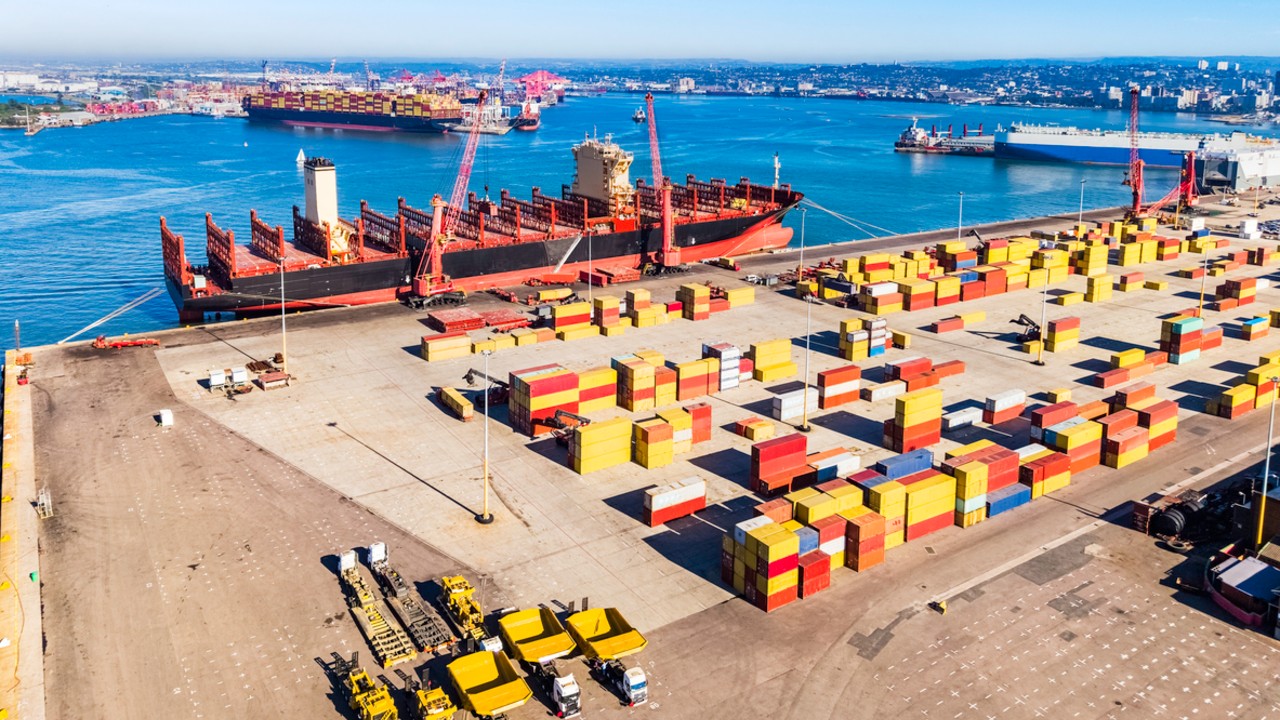
Strain at Durban’s busiest container terminal worsens following a system upgrade, prompting calls for urgent intervention amid rising costs and prolonged delays affecting the entire supply chain.
South Africa’s busiest container gateway is once again under strain, with freight and road transport groups warning that delays at Durban are worsening fast and are now feeding costs through the logistics chain. According to Moneyweb, the South African Freight and Logistics Association and the Road Freight Association say the pressure at the Durban Gateway Terminal is affecting vessels, yards and landside movement, with importers, exporters and consumers likely to bear the bill.
The terminal, formerly Durban Container Terminal Pier 2, began operating under a 25-year partnership between Transnet and Philippines-based International Container Terminal Services Inc on 1 January 2026. Transnet holds a majority stake in the operating company, while ICTSI runs day-to-day operations at a facility that handles more than 40 per cent of South Africa’s container traffic. Safla chair Arend du Preez said vessels calling at the terminal waited about 80 hours at anchorage in July before spending another 106 hours alongside, but by early August the anchorage delay had stretched to 166 hours, with a further 116 hours at berth.
The latest problems intensified after the terminal moved to its own Navis N4 operating system in mid-August. Safla and the RFA say weekly throughput fell by 26 per cent after the cut-over, while some shipping lines reported waits of eight to 12 days. Even so, Du Preez argues the software shift exposed deeper weaknesses already present in the operation, including equipment failures, poor straddle-carrier availability, yard congestion and weak co-ordination across the port chain.
The associations say the knock-on effects are reaching trucks and businesses well beyond the harbour fence. They report that average port calls have more than doubled since late June, while travel times along Bayhead Road have lengthened steadily since January. DGT has acknowledged disruption linked to the migration and says it has put in place around-the-clock ‘Hypercare’ support, temporary storage relief and its Radar cargo-tracking platform, but the terminal is still only gradually restoring truck appointments as the system stabilises.
Safla and the RFA say the crisis is also costing money. Shipping lines are applying storage, demurrage and detention charges when cargo cannot be collected on time, even if delays stem from terminal constraints rather than cargo owners’ actions. The groups say those charges are passed on through freight forwarders and eventually into consumer prices, while manufacturers are left waiting for inputs and some operators are forced into expensive airfreight. RFA chief executive Gavin Kelly said transport firms are carrying the strain on their balance sheets, with trucks standing idle, drivers waiting and fixed costs still running.
In response, the associations are calling for a Durban Gateway Terminal recovery compact bringing together the terminal operator, Transnet, eThekwini Municipality, shipping lines, transporters, labour and industry groups under a single daily command structure. They want a public 30-day recovery plan with measurable targets for vessel waiting times, crane performance, equipment reliability, yard use, truck turnaround and rail evacuation. Safla says the broader Transnet-ICTSI partnership can still deliver a lift in capacity and productivity, but only if Durban can return to predictable berthing, reliable gate access and uninterrupted cargo flow. Transnet told Moneyweb it is working with ICTSI to stabilise operations and improve service levels.
Source Reference Map
Inspired by headline at: [1]
Sources by paragraph:
– Paragraph 1: [2]
– Paragraph 2: [2]
– Paragraph 3: [2]
– Paragraph 4: [2]
– Paragraph 5: [2]
– Paragraph 6: [2]
Source: Noah Wire Services
Verification / Sources
- https://www.moneyweb.co.za/news/economy/new-crisis-at-durban-port-prompts-calls-for-urgent-action/ – Please view link – unable to able to access data
- https://www.moneyweb.co.za/news/economy/new-crisis-at-durban-port-prompts-calls-for-urgent-action/ – A fresh operational crisis at the Port of Durban has prompted freight and road transport associations to call for an urgent recovery plan as vessels, trucks, and containers face growing delays. The South African Freight and Logistics Association (Safla) and Road Freight Association (RFA) report that disruption at the Durban Gateway Terminal (DGT) is spreading across vessel, yard, and landside operations, pushing additional costs onto importers, exporters, and consumers. DGT, formerly Durban Container Terminal Pier 2, is operated under a 25-year partnership with Transnet by Philippines-based International Container Terminal Services Inc (ICTSI), which assumed operational responsibility on 1 January 2026. Transnet retains a 51% interest in the company operating the terminal, with ICTSI holding 49% and taking responsibility for day-to-day operations. Pier 2 is the largest container terminal in South Africa and handles more than 40% of the country’s container traffic. Safla chair Arend du Preez says vessels calling at DGT waited an average of about 80 hours at anchorage in July, followed by 106 hours at berth while cargo was loaded and discharged. By early August, the average anchorage delay had risen to 166 hours – about seven days – while vessels spent a further 116 hours, or nearly five days, at berth. During the height of Durban’s last port crisis in 2023, vessels waited up to 13 days at anchorage before berthing, earning the port a dismal ranking in the annual World Bank’s annual Container Port Performance Index (CPPI). Independent monitoring cited by Safla and the RFA shows that the average Durban port call – including time spent waiting and at berth – increased from less than five days in late June to more than 12 days by late August. This was after monthly berth calls at DGT reportedly dropped from 34 in May to 19 in August. The freight organisations decided it was time to hit the panic button and call for action. The deterioration coincided with DGT’s migration to its own Navis N4 terminal operating system in mid-August. Navis is used to manage activities such as the movement of containers through the terminal and the allocation of truck appointments. Transporters must secure slots before entering the port to collect or deliver containers. SAFLA and the RFA say weekly throughput dropped 26% following the systems cutover, with some shipping lines reporting terminal waits of eight to 12 days. However, Du Preez says the Navis transition merely aggravated problems that were already evident. These include poor availability of straddle carriers, equipment breakdowns, severe yard and truck congestion, and insufficient coordination across the port logistics chain. Organisational and labour issues arising from the transition to the new operator have also reportedly contributed to the disruption. In May, when only four container vessels were at anchorage – two of them destined for DGT – trucks were taking around 90 minutes to enter the terminal, collect containers and leave. Since then, the time transporters spend in the port precinct per visit has increased by more than half, while journey times along Bayhead Road have risen steadily since January. DGT has acknowledged the challenges caused by the Navis migration and introduced round-the-clock “Hypercare” support, temporary storage extensions and its Radar cargo-tracking platform. The terminal initially resumed operations at about 70% of normal levels following the migration, with truck appointment slots released gradually as the system stabilised. Costs passed down the supply chain Du Preez says the crisis is not limited to delays. Shipping lines are levying storage, demurrage and detention charges when containers cannot be collected on time, even when delays are caused by terminal or booking constraints beyond the control of cargo owners and freight forwarders. Those costs are passed from freight forwarders to their customers and ultimately feed into the price of goods. “The shipping lines and the port must sort this out and not pass the costs on to the consumer,” he says. The disruption is also leaving manufacturers waiting for components and raw materials, forcing some companies to use expensive airfreight and leaving trucks idle without bookings while operators continue paying drivers, finance charges and other fixed costs. During the 2023 logistics crisis, the GAIN Group estimated that freight-system dysfunction was costing the economy about R1 billion a day in lost output. “Transporters are carrying this crisis on their balance sheets,” says RFA CEO Gavin Kelly. “Fleets are standing without bookings while fixed costs run, drivers are queuing on Bayhead Road, and every standing hour ends up in the price of goods.” Recovery compact proposed Safla and the RFA are proposing a DGT Recovery Compact to bring the terminal operator, Transnet, eThekwini Municipality, shipping lines, transporters, organised labour and industry associations together under a single daily recovery structure. They want a public 30-day recovery plan with measurable daily targets covering vessel waiting and berth times, crane productivity, equipment availability, yard utilisation, container dwell times, truck turnaround times and rail evacuation. The associations also want Navis Hypercare support to remain in place until cargo flows have stabilised, alongside an equipment reliability programme and the accelerated removal of containers that have remained in the terminal for extended periods. Truck appointments should be based on the terminal’s actual handling capacity, with published slot schedules and clear reasons given when appointments are cancelled. They also want transparent processes to provide relief from storage, demurrage and detention charges where cargo owners were unable to move containers because of terminal-related delays. “Cargo owners and freight forwarders do not experience the port as separate institutions. They experience one chain,” says Safla executive officer Dave Logan. “If systems, straddles, slots, gates, roads or rail fail to align, cargo stops. The priority is not institutional blame. It is disciplined recovery, with clear owners, deadlines and one trusted set of numbers.” The Transnet-ICTSI partnership was intended to increase Pier 2’s annual capacity from two million to 2.8 million twenty-foot equivalent units, while substantially improving crane productivity and vessel turnaround times. Safla says it wants the partnership to succeed, but its performance must ultimately be measured by whether vessels berth predictably, trucks can access the terminal and cargo moves through the port on time. “Durban needs one recovery plan, one set of trusted numbers and shared accountability,” says Logan. “Cargo must move – and it must keep moving.” Response Moneyweb reached out to ICTSI and Transnet for comment. Transnet responded as follows: “Transnet is actively engaging with International Container Terminal Services, Inc. (ICTSI) to address the operational challenges currently being experienced at the Durban Gateway Terminal (DGT). Ensuring the efficient flow of cargo through South Africa’s ports remains a priority, and both parties are focused on implementing measures to stabilise operations and improve performance. “The immediate priority is to restore operational efficiency, improve service levels and ensure the reliable movement of cargo through this strategically important trade gateway. Transnet continues to provide support where required as efforts are intensified to address identified constraints and optimise terminal performance. “While recent challenges have impacted terminal operations, the transition and handover to ICTSI were successfully concluded, and the terminal demonstrated encouraging output performance during the initial months of operation. Transnet remains confident that the current challenges can be
Noah Fact Check Pro
The draft above was created using the information available at the time the story first
emerged. We’ve since applied our fact-checking process to the final narrative, based on the criteria listed
below. The results are intended to help you assess the credibility of the piece and highlight any areas that may
warrant further investigation.
Freshness check
Score: 10
Notes: The article is dated 27 August 2026, and the information aligns with recent reports from 25 August 2026, confirming its freshness. (theloadstar.com)
Quotes check
Score: 8
Notes: The article includes direct quotes from industry associations and officials. However, some quotes are not independently verifiable online, raising concerns about their authenticity. For example, the statement from Safla chair Arend du Preez regarding vessel delays is not found in other sources. (moneyweb.co.za)
Source reliability
Score: 9
Notes: Moneyweb is a reputable South African news outlet. However, the article relies heavily on statements from industry associations and officials, which may have inherent biases. Additionally, some information is not independently verifiable online, raising concerns about the completeness and accuracy of the reporting. (moneyweb.co.za)
Plausibility check
Score: 7
Notes: The reported operational crisis at Durban Gateway Terminal is consistent with other recent reports. However, the article lacks specific details on the causes of the crisis, such as equipment failures and system migrations, which are mentioned in other sources. (theloadstar.com)