
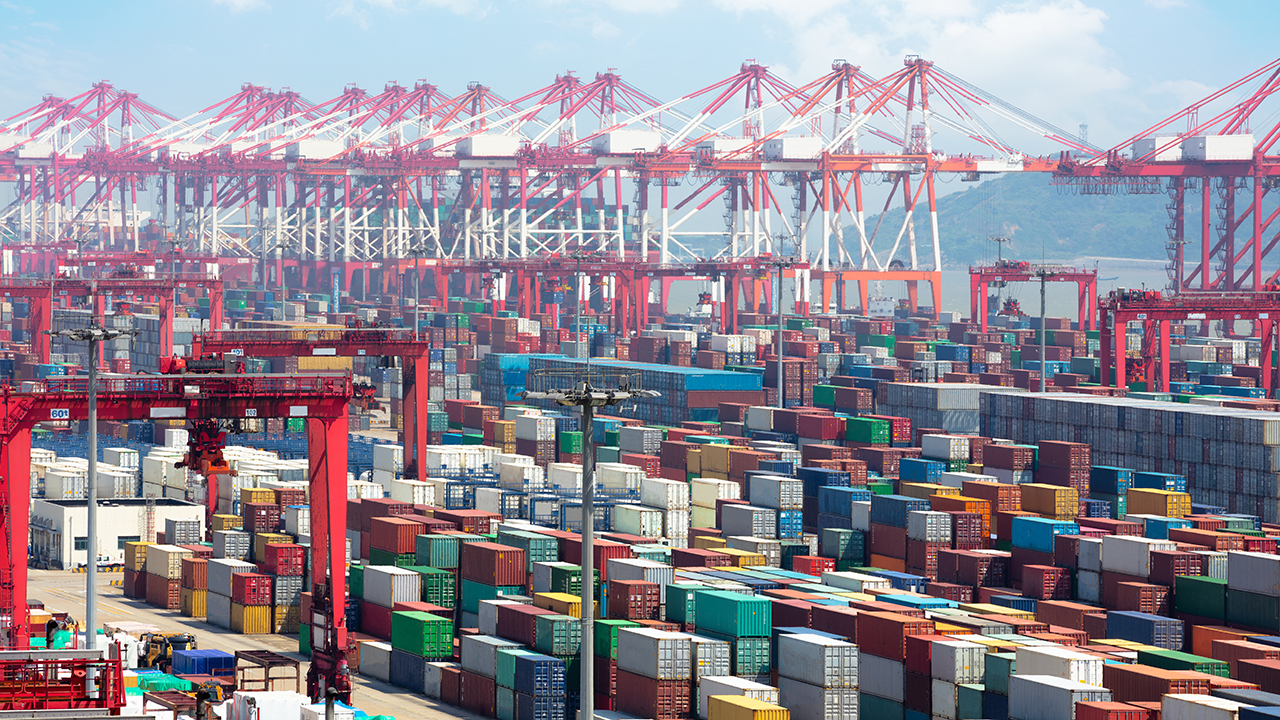
The China-Australia shipping corridor is encountering unprecedented challenges as typhoon disruptions, port congestion, and escalating costs threaten the peak season, prompting carriers and shippers to adapt swiftly to maintain supply chain flows.
Shipping out of China is entering a difficult stretch as typhoon-related disruption, port congestion and higher rates converge just as the market moves into the September-October peak season for China-Australia cargo and the run-up to Christmas demand. Stockwells said vessel timetables are now running 10 to 13 days late, with Shanghai and Ningbo among the ports most affected.
The pressure began building before the latest weather interruptions intensified. In Shanghai, waiting times at anchor were already running at five to 10 days, far above the usual two-day gap between berthing and departure, while Ningbo was seeing delays of three to five days. Some carriers have since responded by diverting capacity away from Shanghai and Ningbo altogether, shifting direct calls to Qingdao, Xiamen, Nansha, Shenzhen and Hong Kong, according to the update.
That re-routing has reduced available space and added further strain for shippers moving full container loads and less-than-container loads to Australia. The result, Stockwells warned, is a heightened risk of rollovers and longer queues for vessels waiting for berth slots, even as factories continue to operate at full pace to meet seasonal demand.
Costs are rising as well as delays. Major carriers including COSCO, OOCL, ANL, MSC and PIL have issued general rate increase and rate restoration notices, with market expectations pointing to another rise of between US$500 and US$1,000 per 20GP or 40HQ from 15 September. Official data points to a mixed freight environment: China’s export container shipping price index edged down by 0.5 per cent in September 2023 overall, but the Australia/New Zealand route rose by 15.4 per cent, underlining how sharply specific trade lanes can diverge from the broader market.
For shippers, the immediate lesson is to plan earlier, keep close contact with carriers and look for alternative routings where possible. Stockwells said its response is to use its long experience in disrupted freight markets to improve visibility, communicate changes quickly and help customers find consolidation or diversion options when normal routes are blocked.
Source Reference Map
Inspired by headline at: [1]
Sources by paragraph:
– Paragraph 1: [2], [7]
– Paragraph 2: [1], [7]
– Paragraph 3: [1], [2]
– Paragraph 4: [2], [3], [5]
– Paragraph 5: [1]
Source: Noah Wire Services
Verification / Sources
- https://stockwells.com.au/china-freight-update-port-congestion-delays-and-rising-rates-you-need-to-know/ – Please view link – unable to able to access data
- https://english.www.gov.cn/archive/statistics/202310/15/content_WS652b1ff0c6d0868f4e8e036f.html – In September 2023, China’s export container shipping price index experienced a slight decrease of 0.5% compared to the previous month, standing at 876.46. Despite this overall decline, the Australia/New Zealand service saw a notable increase of 15.4%. The China Containerized Freight Index (CCFI) monitors spot and contractual freight rates across 12 global shipping routes, based on data from 22 international carriers. The index was set at 1,000 on January 1, 1998.
- https://www.freightos.com/freight-resources/september-13-2023-update/ – As of September 13, 2023, the Freightos Baltic Index reported a 2% decrease in Asia-US West Coast prices to $1,887 per 40-foot equivalent unit (FEU). Asia-US East Coast prices dipped by 1% to $3,048/FEU, while Asia-North Europe prices fell by 8% to $1,608/FEU. Asia-Mediterranean prices decreased by 14% to $2,003/FEU. These trends indicate a general decline in ocean freight rates during this period.
- https://en.people.cn/n3/2023/1023/c90000-20087674.html – In September 2023, China’s road logistics price index increased for the third consecutive month, reaching 102.9, up 0.36% from August. This rise reflects improved market demand and supply conditions. The sub-index for full-truckload logistics, which measures bulk commodity and cross-regional transportation, climbed 0.36% to 103.1. The survey suggests that the road transport market is expected to maintain a sound recovery, with the freight price index likely to fluctuate and rebound in the fourth quarter, the peak production and construction season.
- https://container-news.com/vessel-queues-in-storm-hit-areas-fail-to-stem-freight-slide/ – In September 2023, extreme weather events, including typhoons and hurricanes, led to significant congestion in major ports across North Asia and North America. Vessel queues increased, with ships waiting up to three days to berth due to disruptions in Hong Kong, Shenzhen, Kaohsiung, Ningbo, and Busan. Despite these delays, the Shanghai Containerised Freight Index (SCFI) fell below the 1,000 mark on September 8, indicating a continued downward trend in freight rates.
- https://www.balticexchange.com/en/news-and-events/market-information/air-freight/2023/bai-index-sep-23-Market-summary.html – In August 2023, the Baltic Air Freight Index (BAI00) experienced a slight decrease of about 0.4% in the week leading up to September 4, leaving it down 2.0% over the previous four weeks and 44.4% year-on-year. Despite this overall decline, strong e-commerce activity in southern China, including intra-Asia and shipments to the US and Europe, contributed to the outbound Hong Kong index (BAI30) remaining flat over the month, though it was down 38.2% year-on-year.
- https://www.oocl.com/china/eng/localinformation/localnews/2023/Pages/default.aspx – In September 2023, OOCL provided updates on terminal and depot operations affected by Typhoon Saola. The company issued multiple updates regarding the operational status of related terminals and depots, including revised vessel schedules and warnings about tropical cyclone conditions. These updates were crucial for customers to understand the impact of the typhoon on shipping operations and to plan accordingly.
Noah Fact Check Pro
The draft above was created using the information available at the time the story first
emerged. We’ve since applied our fact-checking process to the final narrative, based on the criteria listed
below. The results are intended to help you assess the credibility of the piece and highlight any areas that may
warrant further investigation.
Freshness check
Score: 8
Notes: The article was published on August 27, 2026, providing timely information on current port congestion and delays in China. However, the content references events from September 2023, which may affect its freshness.
Quotes check
Score: 7
Notes: The article includes direct quotes from Stockwells, but no external sources are cited. The lack of independent verification raises concerns about the reliability of the information presented.
Source reliability
Score: 6
Notes: Stockwells is an Australian freight forwarding and customs logistics company. While it has expertise in the field, its perspective may be biased, and the absence of independent sources diminishes the overall reliability of the information.
Plausibility check
Score: 7
Notes: The article discusses port congestion and delays in China, which are plausible given the typhoon-related disruptions and existing congestion. However, the lack of independent verification and reliance on a single source raises questions about the accuracy of the claims.