
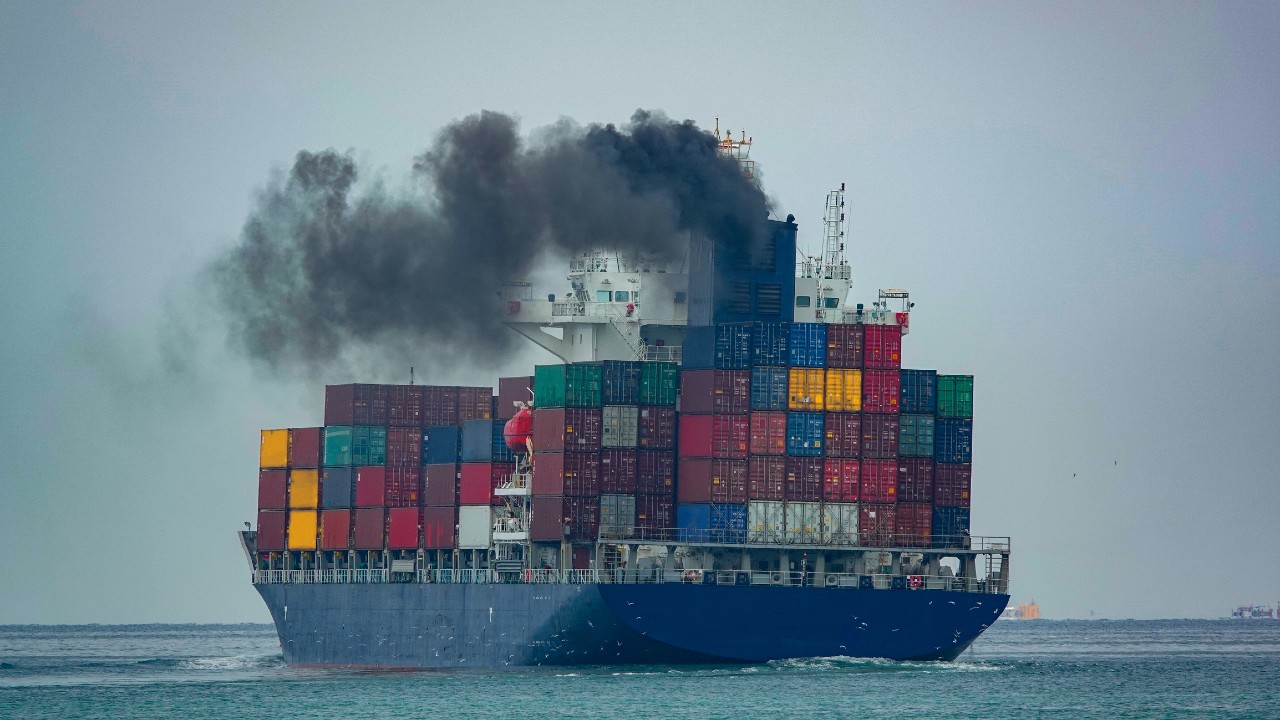
The World Shipping Council reports that over one in ten cargo units inspected across seven countries in 2025 still display safety deficiencies, highlighting ongoing risks in the shipping industry despite marginal improvements from previous years.
The World Shipping Council has reported that safety deficiencies were found in 9,645 of 93,079 cargo transport units inspected across seven countries in 2025, leaving the industry with a deficiency rate of 10.36 per cent. The figures, published on Monday, indicate that problems ranged from incomplete or incorrect paperwork to faults in marking and labelling, poor packing and cargo that was not adequately secured.
The council said those failings can have serious operational consequences, including damaged goods, containers lost at sea and fires on board ships. Mis-declared or undeclared dangerous goods were also flagged as a continuing concern. According to the WSC, correct declaration, packing, securing and marking remain basic safety duties that are too often overlooked.
‘Finding deficiencies in more than one in ten inspected units is far too high,’ Joe Kramek, the WSC’s president and chief executive, said. ‘Correct declaration, packing, securing and marking are fundamental safety obligations. When these requirements are not met, people’s lives are put at risk.’
The latest result shows some improvement on the previous two years, with the rate down from 11.39 per cent in 2024 and 11.00 per cent in 2023. Even so, the figure remains above 10 per cent and well ahead of the WSC’s low point in the 2017-2025 series, when the deficiency rate fell to 6.54 per cent in 2019. The council has argued that wider reporting from governments would help sharpen the industry’s understanding of cargo safety risks.
Source Reference Map
Inspired by headline at: [1]
Sources by paragraph:
– Paragraph 1: [2], [3]
– Paragraph 2: [2], [4]
– Paragraph 3: [2], [3], [5]
– Paragraph 4: [1], [2], [4], [7]
Source: Noah Wire Services
Verification / Sources
- https://www.bairdmaritime.com/shipping/boxships/wsc-reports-1036-per-cent-cargo-unit-deficiency-rate – Please view link – unable to able to access data
- https://www.worldshipping.org/news/one-in-ten-inspected-cargo-units-found-with-safety-deficiencies – In 2025, over 10% of cargo transport units inspected had safety deficiencies, according to the World Shipping Council (WSC). Authorities in seven countries reported 93,079 inspections, identifying deficiencies in 9,645 units, a 10.36% deficiency rate. Issues included incorrect documentation, marking and labelling faults, improper packing, and inadequate cargo securing, all increasing the risk of cargo damage, container losses, and ship fires. WSC President and CEO Joe Kramek emphasised the need for correct declaration, packing, securing, and marking as fundamental safety obligations to prevent endangering lives.
- https://maritimegazette.com/article/more-than-one-in-ten-cargo-units-inspected-in-2025-had-safety-deficiencies-wsc-data-shows-5760108 – Data from the World Shipping Council (WSC) reveals that in 2025, 9,645 deficiencies were found in 93,079 cargo unit inspections, resulting in a 10.36% deficiency rate. The most common issues were incorrect documentation, marking and labelling faults, improper packing, and inadequate cargo securing. These deficiencies can lead to cargo damage, container losses, and ship fires. WSC President and CEO Joe Kramek stated that finding deficiencies in more than one in ten inspected units is unacceptably high and emphasised the importance of proper safety measures.
- https://www.indexbox.io/blog/container-inspection-deficiencies-hit-1036-in-2025-wsc-report-reveals/ – The World Shipping Council (WSC) reported that in 2025, safety deficiencies were found in over 10% of cargo transport units examined. Authorities in seven countries conducted 93,079 inspections, identifying deficiencies in 9,645 units, equating to a 10.36% deficiency rate. Problems included erroneous paperwork, marking and labelling issues, poor stowage, and insufficient securing of cargo, each increasing the likelihood of damaged goods, lost containers, and onboard fires. WSC President and CEO Joe Kramek described the deficiency rate as unacceptably high and stressed the need for more governments to report inspection data to address global cargo safety risks.
- https://lamerce.it/en/news/container-inspections-deficiencies-more-than-one-in-ten – In 2025, over one in ten cargo transport units inspected had safety deficiencies, according to data published by the World Shipping Council (WSC). Authorities in seven countries reported 93,079 inspections, identifying deficiencies in 9,645 units, a 10.36% deficiency rate. Problems included incorrect documentation, marking and labelling faults, improper packing, and inadequate cargo securing, all increasing the risk of cargo damage, container losses, and ship fires. WSC President and CEO Joe Kramek emphasised the need for correct declaration, packing, securing, and marking as fundamental safety obligations to prevent endangering lives.
- https://en.portnews.ru/news/396949/ – The World Shipping Council (WSC) reported that 10.36% of cargo transport units inspected in 2025 had safety deficiencies. Authorities in seven countries conducted 93,079 inspections, identifying deficiencies in 9,645 units. Issues included incorrect documentation, marking and labelling faults, improper packing, and inadequate cargo securing, all increasing the risk of cargo damage, container losses, and ship fires. WSC President and CEO Joe Kramek stated that finding deficiencies in more than one in ten inspected units is unacceptably high and emphasised the importance of proper safety measures.
- https://www.balitangmarino.com/post/wsc-over-9-600-cargo-units-found-with-safety-deficiencies-during-inspections – In 2025, more than one in ten cargo transport units inspected were found to have safety deficiencies, according to data compiled and published by the World Shipping Council (WSC). Authorities in seven countries reported 93,079 unit inspections, identifying deficiencies in 9,645 units, equivalent to a 10.36% deficiency rate, compared to 11.39% in 2024. The problems included incorrect documentation, improper marking and labelling, inadequate packing, and insufficient cargo securing. WSC President and CEO Joe Kramek emphasised the need for correct declaration, packing, securing, and marking as fundamental safety obligations to prevent endangering lives.
Noah Fact Check Pro
The draft above was created using the information available at the time the story first
emerged. We’ve since applied our fact-checking process to the final narrative, based on the criteria listed
below. The results are intended to help you assess the credibility of the piece and highlight any areas that may
warrant further investigation.
Freshness check
Score: 8
Notes: The article references data published by the World Shipping Council (WSC) on 14 September 2026, reporting on inspections conducted in 2025. The earliest known publication date of similar content is 15 September 2026, indicating the article is based on recent information. However, the article’s publication date is 16 September 2026, suggesting it may have been republished or updated. (maritimegazette.com)
Quotes check
Score: 7
Notes: The article includes a direct quote from Joe Kramek, President and CEO of the WSC: ‘Finding deficiencies in more than one in ten inspected units is far too high.’ A search for this quote reveals it was first used in the WSC’s press release dated 14 September 2026. This suggests the quote is directly sourced from the WSC’s official statement, raising concerns about originality and potential reuse of content.
Source reliability
Score: 6
Notes: The article originates from Baird Maritime, a niche publication focusing on maritime news. While it provides detailed reporting, its limited reach and potential biases due to its specialized audience may affect the reliability of the information presented.
Plausibility check
Score: 8
Notes: The reported deficiency rate of 10.36% aligns with the WSC’s official data. The article provides specific figures and details consistent with the WSC’s findings. However, the reliance on a single source for this information raises concerns about the comprehensiveness and potential biases in the reporting.