
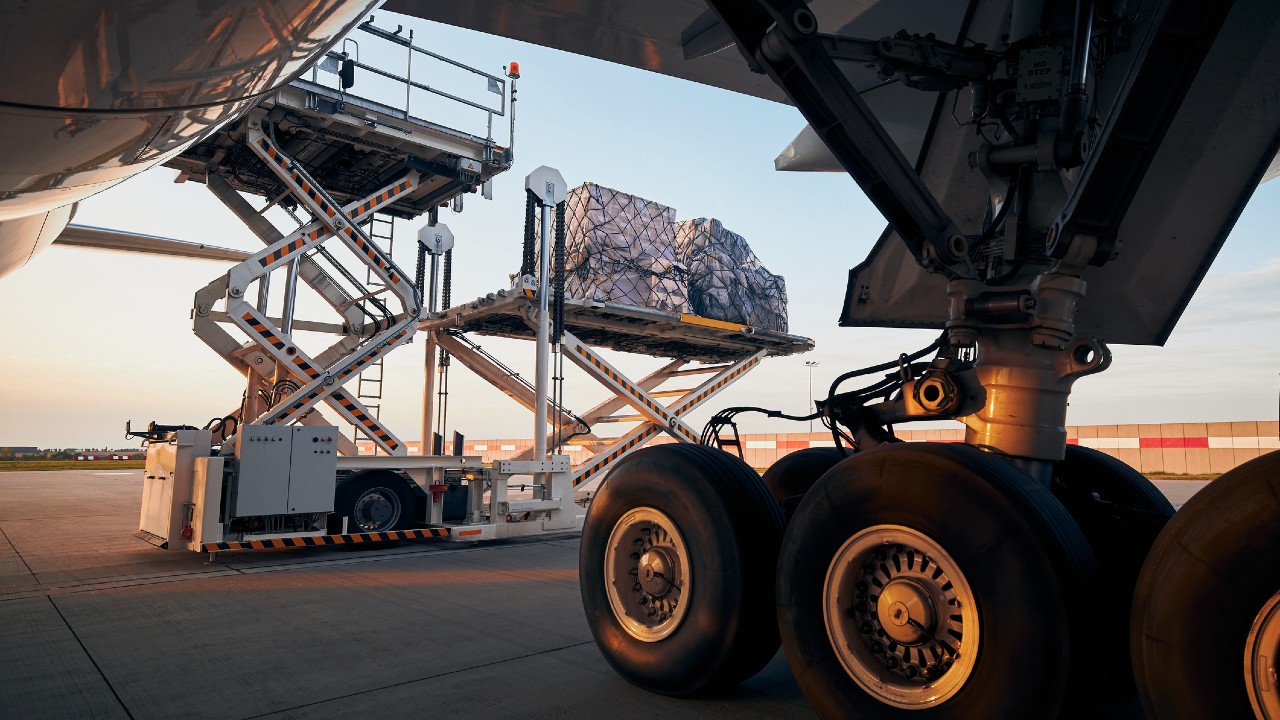
The walkout grounded flights at Brussels and disrupted freight at Liège, with airlines diverting aircraft and delivery firms warning of delays as the busy Black Friday period approaches.
A Belgian air traffic controllers’ strike disrupted cargo operations at Liège and Brussels airports on Monday, four days before Black Friday, prompting airlines to alter schedules and divert aircraft to neighbouring countries.
Liège Airport said about 70 flights were affected, although it had not yet specified how many were cancelled, delayed or rerouted, or when disrupted freight might move. Flight-tracking data showed an Emirates SkyCargo service from Dubai, scheduled to land at Liège, had instead been sent to Copenhagen. Maastricht Aachen Airport said it expected to receive two cargo flights diverted because of the strike, without naming the airlines or their original destinations.
Brussels Airport cancelled arrivals and departures scheduled between 7am and 9pm local time, including cargo services, and advised passengers with later flights to check with their airlines. The restricted period matched the airspace shutdown announced for the strike. Skeyes, Belgium’s air navigation service provider, said it could not provide normal air traffic management at Belgian airports or in the airspace under its responsibility during those hours, according to ATC News.
The walkout formed part of a nationwide protest against government spending cuts. The Board of Airline Representatives in Belgium described it as the 11th airspace-related industrial dispute in 11 months. The action also affected other airports: Charleroi cancelled flights for the day, while Ostend-Bruges worked with airlines to rearrange services, including cargo departures and arrivals. Belgium Pulse reported that the protest involved wider transport disruption, including reduced public transport services.
The consequences extended beyond aircraft schedules. FedEx warned of possible shipment delays to, from and within Belgium, while Jersey Post Global Logistics said disruption at Brussels Airport could hold up inbound international mail and parcels. Chronopost cautioned that expected road blockages and disruption in industrial areas could lengthen delivery times throughout Black Friday week, although it said its Belgian sites would remain open.
The Belgian disruption comes amid a busy freight period for Liège, where the cargo mix is changing. The Loadstar reported that the airport had linked a 42 per cent decline in small-parcel volumes to the EU’s €3 duty, which took effect on 1 July. Aircraft movements were down 6 per cent year on year in the third quarter, while freight tonnage was almost unchanged at 334,467 tonnes. For the first nine months of the year, total throughput rose 7.3 per cent to 1.03 million tonnes, supported by stronger exports.
The strike also highlights how quickly a disruption can outlast the period when flights are grounded. In the United States, the Federal Aviation Administration said instability in its air traffic telecommunications systems prompted a nationwide ground stop on 13 November. It reported that about 3,500 aircraft already in the air landed safely and that thousands of flights were cancelled. The US Department of Transportation said more than 8,000 flight operations resumed after the stop was lifted, while warning that delays and cancellations could continue as the system recovered. These accounts underline the distinction between reopening airspace and restoring normal capacity, although they do not establish how long Belgian cargo operations will take to return to normal.
Source Reference Map
Inspired by headline at: [1]
Sources by paragraph:
– Paragraph 1: [2], [4]
– Paragraph 2: [2]
– Paragraph 3: [2], [3]
– Paragraph 4: [2], [4]
– Paragraph 5: [2], [4]
– Paragraph 6: [2]
– Paragraph 7: [5], [6], [7]
Source: Noah Wire Services
Verification / Sources
- https://theloadstar.com/air-traffic-strike-disrupts-liege-and-brussels-cargo-ahead-of-black-friday/ – Please view link – unable to able to access data
- https://atcnews.org/brussels-airport-braces-for-a-no-flight-day-on-monday-23rd-november-due-to-strike/ – The article reports that Belgian air traffic controllers were due to strike on Monday, 23 November 2026, closing Belgian airspace from 07:00 to 21:00 local time. The expected stoppage meant that most flights to and from Brussels Airport would be cancelled, including services operated by Brussels Airlines. It attributes the action to air traffic controllers joining a nationwide protest against government cost-cutting measures, with disruption also affecting rail transport. The report cites Skeyes, Belgium’s air navigation service provider, as saying it would be unable to deliver normal air traffic management services at Belgian airports and in the airspace under its responsibility during the stated hours. It also describes likely consequences for travellers connecting through airline hubs, including passengers travelling between Brussels and Entebbe and other African destinations, who might need to be rebooked. Brussels Airport was expected to handle approximately 60,000 passengers that day, many of whom could face cancellations and travel changes over subsequent days. The Board of Airline Representatives in Belgium, which the article says represents 25 airlines, called the action the eleventh airspace-related industrial dispute in 11 months and criticised its effects on Belgium’s transport links, economy and reputation. The report focuses mainly on passenger impacts and the anticipated airport shutdown; it does not provide a detailed cargo-flight tally or estimates of freight delayed at Liège or Brussels.
- https://airspacetimes.com/en/disruptions/belgium-national-strike-brussels-airport-flights-cancelled-2026-11-23/ – This disruption page collects information about the Belgian national strike and its effect on flights scheduled for Monday, 23 November 2026. It says that some air traffic controllers were expected to join the strike, leading to significant flight cancellations at Brussels Airport. The page gives the anticipated disruption period as 07:00 to 21:00 local time and explains that the action formed part of a wider national protest. It links its account to notices from Brussels Airport, Brussels Airlines and TUI fly, as well as coverage from aviation and travel publications. The page is chiefly useful as a traveller-facing overview: it directs readers towards airline and airport announcements for flight-specific advice and recognises that schedules and operational information may change. Its source list includes an airport passenger notice and airline updates published around the date of the strike. The article concerns passenger air travel rather than air-freight operations, and it does not independently establish how many cargo flights were cancelled, diverted or delayed at Liège Airport. Nor does it provide a confirmed timetable for the restoration of freight capacity. Its value in relation to the supplied report is therefore limited to corroborating the announced strike date, the expected period of restricted air traffic and the likelihood of widespread cancellations affecting Brussels Airport. Readers should rely on the linked operator notices for individual flight status, because a general disruption summary cannot determine whether a particular flight operated.
- https://belgiumpulse.com/article/national-union-protest-in-brussels-grounds-all-flights-and-disrupts-transport-20261123 – The article describes a national demonstration and transport disruption in Belgium on 23 November 2026. It says the ACV, ABVV and Synova trade unions organised a protest in Brussels against government spending cuts and related concerns about purchasing power, employment and public services. Air travel was among the sectors affected: the report says Skeyes announced that air traffic at Belgian airports would be halted between 07:00 and 21:00 because some air traffic controllers were taking part in the strike. Brussels Airport was reported to expect around 60,000 passengers to be affected by cancellations. Brussels South Charleroi Airport was described as facing a full-day disruption, including cancellations beyond the core airspace stoppage period, with passengers advised not to travel to the airport. The article also covers effects on public transport in Brussels and Flanders, including reduced metro, tram and bus services. It presents the air strike as part of a wider nationwide action rather than a dispute limited to aviation. The report does not focus on freight, diverted cargo aircraft or the number of affected shipments. It therefore supports the general context of the strike and its timing, but does not verify the cargo-specific details in the supplied article. The article attributes much of its reporting to VRT NWS and directs readers to transport operators for practical updates.
- https://www.faa.gov/newsroom/nationwide-ground-stop-questions-and-answers – The Federal Aviation Administration’s question-and-answer page explains the nationwide ground stop issued in the United States on 13 November 2026 after instability affected its air traffic telecommunications systems. The FAA says the disruption began at 17 of its 22 Air Route Traffic Control Centres and spread to several Terminal Radar Approach Controls. It describes the stop as a precaution to protect safety, rather than a complete loss of radio or radar communications; some frequencies and radar feeds remained reliable. The agency states that approximately 3,500 aircraft already in the air landed safely. It also reports that operators cancelled about 12,462 flights on the day of the incident, including 9,082 cancellations by major airlines, while noting that not every cancellation was directly caused by the ground stop. The page discusses the FAA’s account of the legacy telecommunications system instability, its investigation and the measures taken to stabilise operations. It says air traffic resumed after the system was made stable and that recovery would take time as airlines worked through the disruption. This is an official account of the US outage cited in the supplied article as an example of how aviation capacity can take time to recover after flights restart. The page does not provide the WorldACD international capacity comparison or any Belgian strike data, and its cancellation totals should not be confused with cargo-specific figures.
- https://www.transportation.gov/briefing-room/icymi-us-transportation-secretary-sean-p-duffy-provides-update-restoration-airspace?trk=public_post_comment-text – This US Department of Transportation statement, dated 14 November 2026, gives the department’s account of the nationwide FAA ground stop that began the previous day. It says telecommunications issues affected the stability of communications and radar systems used by air traffic control, prompting the FAA to stop flights nationwide as a precaution. The statement credits air traffic controllers and pilots with grounding more than 3,500 flights safely and reports that more than 8,000 flight operations resumed after the ground stop was lifted. It describes the government’s focus on reopening the airspace safely and restoring operations, while warning that passengers should expect some delays and cancellations as the system recovered. The statement provides official context for the US aviation disruption mentioned in the supplied article, including the distinction between lifting a ground stop and achieving normal operating capacity again. It does not independently support the article’s specific claim that international flight capacity remained about 10 per cent below the previous week over the weekend; that figure is attributed there to WorldACD. It also contains no Belgian air traffic strike reporting, freight diversion information or cargo-volume statistics for Liège Airport. The release is therefore relevant to the comparison with the US outage and the recovery process, but it should not be treated as evidence for the Belgian cargo claims.
- https://www.faa.gov/newsroom/nationwide-ground-stop-questions-and-answers – The FAA’s official newsroom page provides a second useful account of the operational scale and safety response to the 13 November 2026 US nationwide ground stop. The agency explains that instability in its telecommunications network prompted a precautionary decision to stop flights, with the issue affecting multiple air traffic control centres. It states that aircraft already airborne were able to land safely and gives an estimate of roughly 3,500 aircraft safely reaching the ground. The page also reports that thousands of flights were cancelled as airlines responded to the disruption and that normal operations would take time to restore. Its discussion makes clear that the ground stop ending did not mean every airline, airport or route returned to ordinary capacity immediately. That distinction is relevant to the supplied article’s point that flight resumption and network recovery are separate stages, particularly when aircraft and crews need repositioning. The FAA page is an authoritative source for the US event and for the agency’s stated explanation, safety measures and cancellation figures. However, it does not mention the WorldACD assessment of weekend international capacity, the advice from Expeditors, or any air cargo operations in Belgium. It also does not substantiate the claimed 10 per cent capacity shortfall. Those details require separate sources, so this page supports only the general factual background about the US ground stop and its recovery.
Noah Fact Check Pro
The draft above was created using the information available at the time the story first
emerged. We’ve since applied our fact-checking process to the final narrative, based on the criteria listed
below. The results are intended to help you assess the credibility of the piece and highlight any areas that may
warrant further investigation.
Freshness check
Score: 7
Notes: 🕰️ The central cargo-disruption report is dated 23 November 2026, and the earliest directly similar material I found was the same-day Air Cargo Week report. ATC News published a 22 November preview of the strike, but it did not contain the article’s cargo-specific reporting. The Loadstar page appears in search results as published on 23 November, although direct access was blocked, so I could not compare the full versions or establish the precise publication order. The article also incorporates Liège’s September traffic figures, which are older background rather than new strike developments; those figures are independently traceable to the airport’s October announcement. No evidence found that the complete cargo narrative appeared more than seven days earlier. (aircargoweek.com)
Quotes check
Score: 5
Notes: ⚠️ The supplied article contains no extended direct quotations; most claims are paraphrased or attributed indirectly. Skeyes’ statement about its inability to provide normal air traffic management during the restricted hours appears in the 22 November ATC News preview, so it is not independently new wording. The Liège statistics and the 42% parcel decline are corroborated by Liège Airport’s own announcement, but that is an interested source, not independent confirmation. The provided text does not identify the exact source or wording for several carrier warnings, the Emirates diversion, or the Maastricht flights, so those details could not be independently checked from the supplied references. (atcnews.org)
Source reliability
Score: 6
Notes: ⚠️ The Loadstar is a specialist logistics publication, and its page identifies a reporter and the Liège Airport spokesperson as a source; however, this is a niche outlet rather than a major general-news organisation, and the page could not be opened directly during checking. The supplied version is attributed to Noah Wire Services and explicitly says it was inspired by The Loadstar headline, making it derivative rather than clearly original reporting. The same-day Air Cargo Week report provides additional coverage, while ATC News is a pre-strike aviation blog and should not be treated as equivalent to independent on-the-ground reporting. Liège Airport’s figures are confirmed on its official site, but they originate from the airport itself. (theloadstar.com)
Plausibility check
Score: 7
Notes: ✅ The strike and its 07:00–21:00 air traffic restriction are supported by contemporaneous reporting and the cited Skeyes statement. Liège’s third-quarter cargo tonnage, 6% fall in aircraft movements, 42% small-parcel decline and 7.3% nine-month throughput increase match the airport’s published figures. The FAA ground stop on 13 November is also supported by the FAA and US Department of Transportation. ⚠️ The specific Emirates diversion, two Maastricht-bound cargo flights, and shipment warnings are not independently substantiated by the sources inspected here. The article itself appropriately says the US comparison does not establish Belgium’s recovery time. (atcnews.org)