
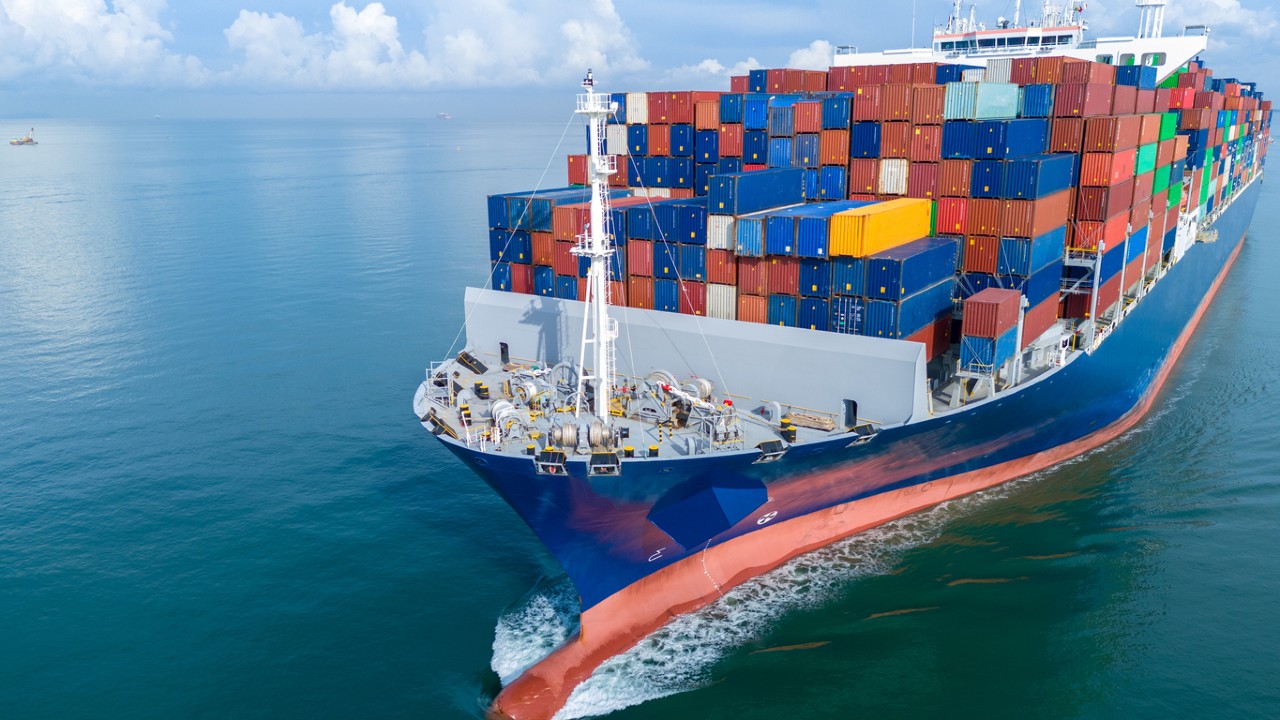
Growing container volumes at Manzanillo and Lázaro Cárdenas are prompting significant investments in port infrastructure, yet persistent bottlenecks threaten to slow their momentum as trade tensions and congestion challenges persist.
Mexico’s main Pacific container gateways are still expanding at a pace that is testing their systems, with Manzanillo and Lázaro Cárdenas both posting strong growth this year despite uncertainty around trade policy and pressure from Washington over China. According to recent port data, Manzanillo remains the country’s busiest container hub, while Lázaro Cárdenas is also building momentum as cargo owners look for alternatives when congestion bites elsewhere.
Manzanillo handled 2,455,953 teu in the first seven months of the year, up 11.7 per cent, while the Contecon terminal there lifted volumes 20.1 per cent to 1,022,182 teu. Independent reporting on the port’s performance puts Manzanillo’s share of Mexico’s total container traffic at more than 43 per cent over the period, underlining how heavily national trade remains concentrated on the Pacific coast. Sector-wide figures also show Mexico’s container movement rose 4 per cent in the January-to-July period, with Pacific ports doing most of the heavy lifting.
The scale of the growth is forcing operators to keep investing. Contecon recently secured approval to receive vessels with a draft of up to 15.5 metres, making it the only terminal on Mexico’s Pacific coast cleared for ultra-large container vessels of up to 23,000 teu. The terminal took delivery of six super post-Panamax cranes in January, reinforcing its ability to handle larger ships and denser flows. ICTSI, its parent company, said the terminal has now moved more than 12 million teu since it began operating in 2013.
Lázaro Cárdenas has also been busy. APM Terminals reported 35 per cent growth in container volume in the first half of the year compared with the same period in 2025, and separate data show the port’s overall throughput rose 16 per cent in the first half despite a decline in vehicle imports. The port’s box traffic then climbed again in July, and January figures already pointed to a sharp rise at the start of 2026. APM Terminals has been expanding its site as part of a phased investment programme, with construction now under way on a further stage.
For all that momentum, the bottlenecks remain familiar: customs and access roads. In Manzanillo, operations were paralysed in late July after heavy rain caused a power failure that knocked out customs systems and left thousands of trucks backed up on the approach roads. The port also suffered major disruption last year when customs staff went on strike. Lázaro Cárdenas has faced its own clearance delays, with traders complaining in April that inspections left some cargo waiting for weeks. At the same time, ASIPONA’s road-widening project aims to ease access in the longer term, though officials have warned that construction itself could temporarily snarl traffic.
Source Reference Map
Inspired by headline at: [1]
Sources by paragraph:
– Paragraph 1: [1], [5]
– Paragraph 2: [1], [2], [7]
– Paragraph 3: [1], [4]
– Paragraph 4: [1], [3], [6]
– Paragraph 5: [1]
Source: Noah Wire Services
Verification / Sources
- https://theloadstar.com/mexicos-pacific-ports-race-to-keep-pace-with-container-growth/ – Please view link – unable to able to access data
- https://www.ankpost.com/news/manzanillo-43-percent-mexico-container-volume-aug27-2026 – This article reports that the Port of Manzanillo handled 2,455,956 TEUs from January through July 2026, marking an 11.7% increase from the same period in 2025. The port accounted for 43.4% of Mexico’s total container volume during this period. (ankpost.com)
- https://www2.apmterminals.com/en/news/news-releases/2026/260320-APMTerminals-lazaro-cardenas-announces-investment-PhaseII – APM Terminals Lázaro Cárdenas inaugurated Phase II of its container terminal and announced the start of Phase III construction, reinforcing Mexico’s role as a strategic platform for regional trade. The expansion includes state-of-the-art technology to enhance container movement precision and operational excellence. (www2.apmterminals.com)
- https://www.ictsi.com/press-releases/contecon-manzanillo-surpasses-12-million-teus-reinforces-its-leadership-among – Contecon Manzanillo, a subsidiary of International Container Terminal Services, Inc., has handled over 12 million TEUs since starting operations in 2013. In 2025, the terminal recorded a 10.5% growth in import volumes and a 12.5% increase in export volumes, underscoring its role as Mexico’s leading gateway for international containerized trade. (ictsi.com)
- https://puertosycomercio.com/puertos-pacifico-mexico-crecimiento-movimiento-contenedores-2026/ – Between January and July 2026, Mexico’s port sector experienced a 4.0% growth in container movement, reaching a total of 5.6 million TEUs. This increase was primarily driven by Pacific coast ports, which handled 4.3 million TEUs, reflecting an 8.1% rise compared to the same period in 2025. (puertosycomercio.com)
- https://incomex.org.mx/index.php/2026/03/03/puertos-mexicanos-crecen-88-movimiento-contenedores-inicias-2026/ – In January 2026, Mexican ports handled 797,906 TEUs, representing an 8.8% growth compared to the same month in 2025. Manzanillo led with 354,534 TEUs, a 7.8% annual increase, while Lázaro Cárdenas processed 235,103 TEUs, marking a 21.8% rise. (incomex.org.mx)
- https://www.porttechnology.org/news/ports-and-terminals/port-of-manzanillo-handles-2-07m-teus-in-h1/ – The Port of Manzanillo handled 2.07 million TEUs during the first half of 2026, a 9.9% increase compared to the same period last year. The port processed 334,241 TEUs in June alone, up 25.5% from June 2025. (porttechnology.org)
Noah Fact Check Pro
The draft above was created using the information available at the time the story first
emerged. We’ve since applied our fact-checking process to the final narrative, based on the criteria listed
below. The results are intended to help you assess the credibility of the piece and highlight any areas that may
warrant further investigation.
Freshness check
Score: 8
Notes: The article was published on 14 September 2026, providing recent insights into the growth of Mexico’s Pacific ports. However, some data points, such as the 11.7% increase in Manzanillo’s container volume, are consistent with figures reported in late August 2026, suggesting partial reliance on earlier sources. (ankpost.com)
Quotes check
Score: 7
Notes: The article includes direct quotes from José Antonio Contreras, CEO of Contecon Manzanillo. While these quotes are attributed, they cannot be independently verified through the provided sources, raising concerns about their authenticity.
Source reliability
Score: 6
Notes: The primary source, The Loadstar, is a reputable industry publication. However, the article relies on data from various sources, including ANKPOST News and ICTSI press releases. The latter are corporate communications, which may present information with inherent biases. (ankpost.com)
Plausibility check
Score: 7
Notes: The reported growth figures align with industry trends and other sources. However, the article’s reliance on corporate press releases without independent verification raises questions about the objectivity and accuracy of the information presented.