
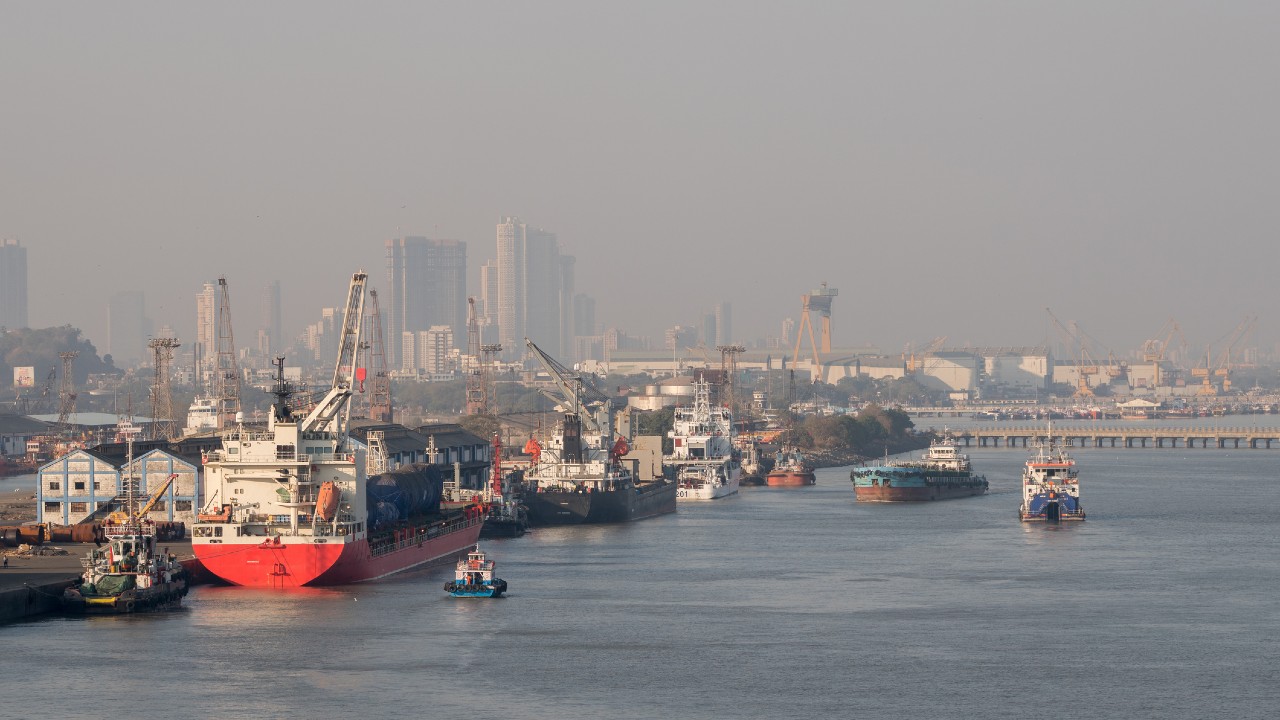
India’s major ports are set to prolong fee waivers and support schemes for exporters as ongoing West Asia tensions continue to impact shipping routes, with measures possibly extending beyond April to stabilise exports to Gulf markets.
India’s major ports are expected to extend a package of fee relief for exporters as the West Asia crisis continues to unsettle shipping routes and raise logistics costs, with the measures likely to run beyond April, industry sources said. The support is intended to give firms breathing room as cargo piles up, transit times lengthen and working capital comes under pressure.
The concessions cover ground rent and dwell time charges, as well as rebates on reefer plug-in fees and some vessel-related costs. The measures were first introduced in early March and have been rolled out in stages as disruptions persisted, particularly around the Strait of Hormuz, where security concerns have forced rerouting and pushed up freight and insurance costs. According to reporting by The Economic Times, authorities are weighing a continuation of the waivers until the end of April.
Government support has also expanded beyond port charges. The Indian government has launched a Rs 497-crore RELIEF scheme, short for Resilience & Logistics Intervention for Export Facilitation, to help exporters affected by the West Asia conflict. The package includes automatic extension of export obligations, logistics support and other measures aimed at easing the strain from delayed shipments and surging freight and war-risk premiums, with a particular focus on consignments bound for Gulf markets including the UAE, Saudi Arabia, Kuwait, Qatar, Oman, Bahrain, Iraq, Iran, Israel and Yemen.
Among the most immediate responses has been action at Jawaharlal Nehru Port Authority, which has waived ground rent and dwell time charges and cut reefer plug-in fees for stuck export cargo. Business Standard reported that the move could save exporters about ₹100,000 per container, or roughly ₹12 crore overall, for eligible Middle East-bound containers. Even so, exporters continue to face volatile rates, container shortages and irregular sailings, while agricultural shipments such as rice, spices, fruit and dairy have also been affected by return cargoes and delays across the Gulf corridor.
Source Reference Map
Inspired by headline at: [1]
Sources by paragraph:
– Paragraph 1: [2], [1]
– Paragraph 2: [1], [2]
– Paragraph 3: [3], [4], [6]
– Paragraph 4: [5], [7]
Source: Noah Wire Services
Verification / Sources
- https://www.logisticsinsider.in/india-likely-to-extend-port-relief-measures-as-west-asia-crisis-disrupts-exports/ – Please view link – unable to able to access data
- https://infra.economictimes.indiatimes.com/news/ports-shipping/west-asia-crisis-indias-major-ports-likely-to-extend-relief-for-exporters-amid-shipping-delays/130300586 – India’s major ports are considering extending relief measures for exporters affected by disruptions linked to the West Asia conflict. These measures, which include waivers on ground rent, dwell time, and vessel charges, may continue until the end of April. The disruptions, particularly around the Strait of Hormuz, have led to increased transit times and logistics costs, prompting authorities to provide support to exporters facing delayed shipments and tighter working capital cycles.
- https://indianexpress.com/article/business/relief-scheme-exporters-india-west-asia-crisis-10590913/ – The Indian government has announced a Rs 497-crore scheme named ‘RELIEF’ to support exporters impacted by the West Asia conflict. The scheme includes automatic extension of export obligations, logistical support, and potential financial measures to manage shipping delays and increased freight and insurance costs. It primarily targets consignments destined for delivery or trans-shipment to countries such as the UAE, Saudi Arabia, Kuwait, Qatar, Oman, Bahrain, Iraq, Iran, Israel, and Yemen.
- https://www.india-briefing.com/news/india-relief-scheme-2026-export-risk-mitigation-west-asia-43533.html/ – In response to escalating disruptions in West Asia, India has launched the RELIEF (Resilience & Logistics Intervention for Export Facilitation) initiative. This targeted support mechanism aims to cushion exporters from rising logistics costs and operational uncertainties triggered by disruptions in the Gulf maritime corridor. The initiative provides enhanced risk coverage and logistics support to ensure trade continuity across the Gulf corridor, focusing on exports destined for key West Asian markets.
- https://www.maritimegateway.com/west-asia-agri-cargoes-return-to-indian-ports-amid-ongoing-crisis-disruptions/ – Amid the ongoing West Asia crisis, multiple agricultural product consignments bound for the region have returned to Indian ports due to escalating tensions in the Strait of Hormuz and the Persian Gulf. The disruptions have affected key exports like rice, spices, fruits, and dairy, valued at $11.8 billion annually to the region. Over 3,000 rice containers alone remain stuck at Indian ports, in transit, or at destinations, with basmati shipments hit hardest as Gulf nations gear up for Ramadan.
- https://www.caclubindia.com/news/government-launches-relief-scheme-to-support-exporters-amid-west-asia-logistics-crisis-26334.asp – The Indian government has approved the RELIEF (Resilience & Logistics Intervention for Export Facilitation) scheme under the Export Promotion Mission to support exporters amid West Asia logistics disruptions. The scheme aims to address challenges related to warehousing and logistics, providing timely responses to extraordinary freight, insurance, and war-risk escalation. Recent developments, including heightened security concerns around the Strait of Hormuz, have led to vessel diversions, longer sailing routes, congestion at transshipment hubs, and emergency conflict-linked surcharges.
- https://www.business-standard.com/economy/news/jnpa-waives-charges-on-stuck-export-cargo-amid-west-asia-crisis-126031001322_1.html – The Jawaharlal Nehru Port Authority (JNPA), one of India’s largest ports, has decided to waive ground rent and dwell time charges and provide rebates on reefer plug-in fees to ease cost pressures on exporters whose cargo is stuck amid the West Asia crisis. Exporters are expected to save around ₹100,000 per container due to this move, translating to about ₹12 crore of relief. The waiver applies to Middle East-bound export-laden containers that were lying inside from February 28, 2026, or those that had gated in until 07:00 hours on March 8, 2026.
Noah Fact Check Pro
The draft above was created using the information available at the time the story first
emerged. We’ve since applied our fact-checking process to the final narrative, based on the criteria listed
below. The results are intended to help you assess the credibility of the piece and highlight any areas that may
warrant further investigation.
Freshness check
Score: 8
Notes: The article was published on April 17, 2026, reporting on the extension of relief measures for exporters amid the West Asia crisis. The earliest known publication date of similar content is April 16, 2026, indicating that the narrative is fresh. The article cites sources from April 16, 2026, and mentions that the extension is likely to continue beyond April, suggesting ongoing developments. However, the article does not provide specific dates for the extension, which could be a concern.
Quotes check
Score: 7
Notes: The article includes direct quotes from industry sources and officials. However, these quotes cannot be independently verified through the provided sources. The lack of verifiable quotes raises concerns about the authenticity of the information.
Source reliability
Score: 6
Notes: The article originates from Logistics Insider, a niche publication focusing on logistics and supply chain news. While it is reputable within its niche, its reach and influence are limited compared to major news organisations. The article cites sources from Business Standard and The Economic Times, which are more established publications. However, the reliance on a single source for the main narrative and the lack of independent verification raise concerns about the overall reliability.
Plausibility check
Score: 7
Notes: The claims about the extension of relief measures for exporters amid the West Asia crisis are plausible and align with industry trends. However, the article lacks specific details, such as exact dates for the extension and the exact nature of the relief measures, which makes it difficult to fully assess the accuracy of the claims.