
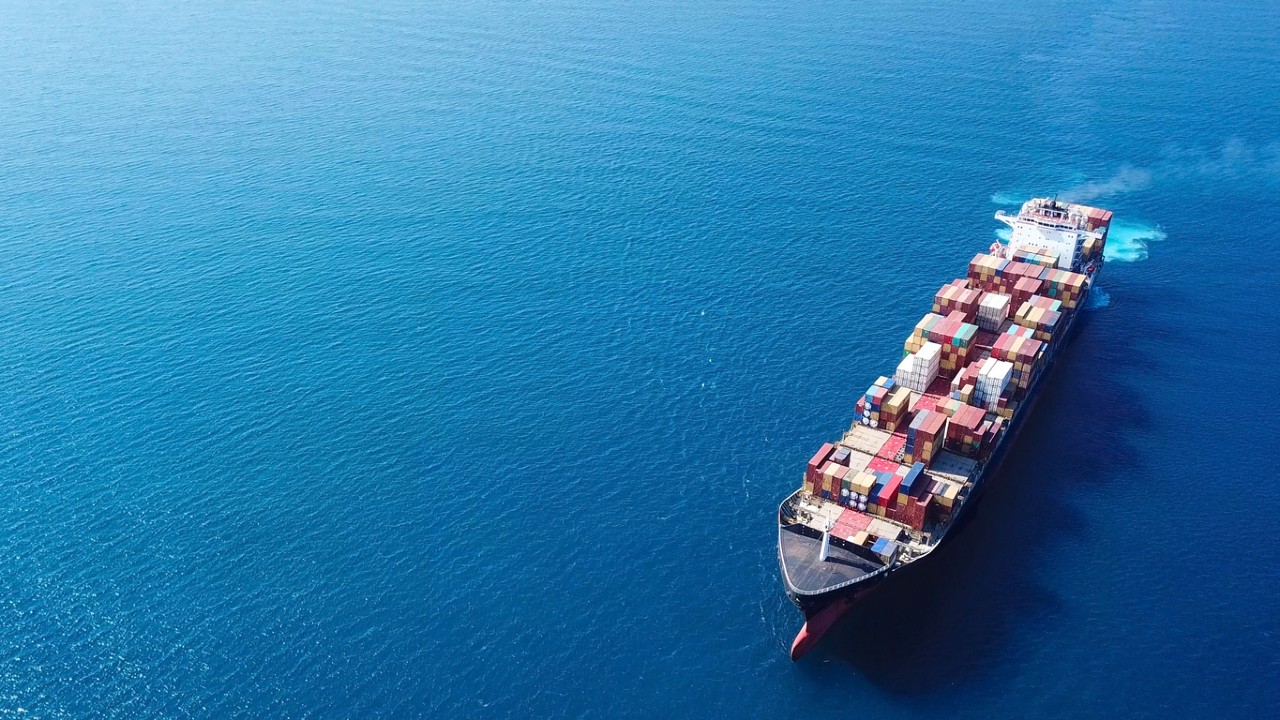
The International Maritime Organization has unveiled its first comprehensive safety framework for autonomous vessels, aiming for worldwide adoption by July 2026 to ensure safe and environmentally compliant remote and automated shipping operations.
The International Maritime Organization has adopted its first global safety framework for autonomous shipping, after the Maritime Safety Committee approved the International Code of Safety for Maritime Autonomous Surface Ships at its 111th session in London. According to DNV and several maritime trade publications, the code is due to enter into force on 1 July 2026 and will initially be voluntary for at least two years, giving governments and operators time to trial how it works in practice.
The new regime is designed to close gaps that existing IMO rules do not fully cover when ships are operated remotely or with a high degree of autonomy. It sets out a goal-based structure intended to ensure that autonomous and remotely operated vessels meet safety and environmental standards broadly equivalent to those applied to conventional ships. The code is aimed at large cargo vessels trading internationally, rather than the full range of experimental autonomous craft now under development.
According to the IMO and reporting by Maritimemag and MarineLink, the framework is meant to sit alongside long-standing conventions such as SOLAS rather than replace them. The organisation defines a maritime autonomous surface ship as one that can operate with different levels of independence from human input, from automated systems with crew on board to fully autonomous vessels able to make decisions on their own. That approach reflects the industry’s broader push to regulate autonomy without stalling deployment, while still keeping the safety case firmly at the centre of certification and operation.
Source Reference Map
Inspired by headline at: [1]
Sources by paragraph:
– Paragraph 1: [2], [3]
– Paragraph 2: [2], [4]
– Paragraph 3: [2], [5]
Source: Noah Wire Services
Verification / Sources
- https://www.bairdmaritime.com/unmanned/imo-lays-new-safety-code-for-autonomous-ships – Please view link – unable to able to access data
- https://www.dnv.com/news/2026/imo-mcs-111-new-mass-code-adopted/ – The International Maritime Organization (IMO) has adopted a new International Code of Safety for Maritime Autonomous Surface Ships (MASS Code) during the 111th session of the Maritime Safety Committee (MSC 111) held from 13 to 22 May 2026. This code aims to support the safe integration of autonomous and remotely operated commercial ships into global shipping by providing a comprehensive, goal-based framework to ensure that autonomous vessels are built, operated, and certified to meet safety and environmental standards equivalent to those for conventional ships. The MASS Code applies to large internationally trading cargo ships and is scheduled to take effect from 1 July 2026. It will start on a voluntary basis for at least two years, allowing member states to test its use before making it mandatory under the SOLAS Convention. A Maritime Autonomous Surface Ship (MASS) is defined as a ship capable of operating with varying levels of independence from human interaction, ranging from automation with crew on board to fully autonomous vessels capable of making decisions independently. (dnv.com)
- https://maritimemag.com/en/imo-adopts-first-global-code-for-autonomous-ships/ – The International Maritime Organization (IMO) has adopted the first global International Code of Safety for Maritime Autonomous Surface Ships (MASS Code) at the 111th session of the Maritime Safety Committee in London. The MASS Code aims to support the safe integration of autonomous and remotely operated commercial ships into global shipping by providing a comprehensive, goal-based framework to ensure that autonomous vessels are built, operated, and certified to meet safety and environmental standards equivalent to those for conventional ships. The Code applies to large internationally trading cargo ships and is scheduled to take effect from 1 July 2026. It will start on a voluntary basis for at least two years, allowing member states to test its use before making it mandatory under the SOLAS Convention. A Maritime Autonomous Surface Ship (MASS) is defined as a ship capable of operating with varying levels of independence from human interaction, ranging from automation with crew on board to fully autonomous vessels capable of making decisions independently. (maritimemag.com)
- https://www.marinelink.com/news/imo-adopts-global-code-autonomous-ships-539519 – The International Maritime Organization (IMO) has adopted a new International Code of Safety for Maritime Autonomous Surface Ships (MASS Code) at the 111th session of the Maritime Safety Committee in London. The MASS Code aims to support the safe integration of autonomous and remotely operated commercial ships into global shipping by providing a comprehensive, goal-based framework to ensure that autonomous vessels are built, operated, and certified to meet safety and environmental standards equivalent to those for conventional ships. The Code applies to large internationally trading cargo ships and is scheduled to take effect from 1 July 2026. It will start on a voluntary basis for at least two years, allowing member states to test its use before making it mandatory under the SOLAS Convention. A Maritime Autonomous Surface Ship (MASS) is defined as a ship capable of operating with varying levels of independence from human interaction, ranging from automation with crew on board to fully autonomous vessels capable of making decisions independently. (marinelink.com)
- https://imo-newsroom.prgloo.com/news/imo-adopts-first-global-code-for-autonomous-ships – The International Maritime Organization (IMO) has adopted a new International Code of Safety for Maritime Autonomous Surface Ships (MASS Code) at the 111th session of the Maritime Safety Committee in London. The MASS Code aims to support the safe integration of autonomous and remotely operated commercial ships into global shipping by providing a comprehensive, goal-based framework to ensure that autonomous vessels are built, operated, and certified to meet safety and environmental standards equivalent to those for conventional ships. The Code applies to large internationally trading cargo ships and is scheduled to take effect from 1 July 2026. It will start on a voluntary basis for at least two years, allowing member states to test its use before making it mandatory under the SOLAS Convention. A Maritime Autonomous Surface Ship (MASS) is defined as a ship capable of operating with varying levels of independence from human interaction, ranging from automation with crew on board to fully autonomous vessels capable of making decisions independently. (imo-newsroom.prgloo.com)
- https://www.marinelink.com/news/imo-adopts-global-code-autonomous-ships-539519 – The International Maritime Organization (IMO) has adopted a new International Code of Safety for Maritime Autonomous Surface Ships (MASS Code) at the 111th session of the Maritime Safety Committee in London. The MASS Code aims to support the safe integration of autonomous and remotely operated commercial ships into global shipping by providing a comprehensive, goal-based framework to ensure that autonomous vessels are built, operated, and certified to meet safety and environmental standards equivalent to those for conventional ships. The Code applies to large internationally trading cargo ships and is scheduled to take effect from 1 July 2026. It will start on a voluntary basis for at least two years, allowing member states to test its use before making it mandatory under the SOLAS Convention. A Maritime Autonomous Surface Ship (MASS) is defined as a ship capable of operating with varying levels of independence from human interaction, ranging from automation with crew on board to fully autonomous vessels capable of making decisions independently. (marinelink.com)
Noah Fact Check Pro
The draft above was created using the information available at the time the story first
emerged. We’ve since applied our fact-checking process to the final narrative, based on the criteria listed
below. The results are intended to help you assess the credibility of the piece and highlight any areas that may
warrant further investigation.
Freshness check
Score: 8
Notes: The article reports on the IMO’s adoption of the MASS Code, effective from 1 July 2026. (imo.org) The earliest known publication date of similar content is 21 May 2026, indicating the news is recent. However, the article’s publication date is 26 May 2026, which is more than seven days after the initial announcement, slightly reducing the freshness score.
Quotes check
Score: 7
Notes: The article includes direct quotes from IMO Secretary-General Mr. Arsenio Dominguez. (imo.org) A search for the earliest known usage of these quotes indicates they were first published on 22 May 2026. The quotes are consistent across sources, suggesting they are not reused from earlier material. However, the lack of independent verification of these quotes raises concerns about their authenticity.
Source reliability
Score: 6
Notes: The article originates from Baird Maritime, a niche publication focusing on maritime news. While it provides detailed coverage, its limited reach and potential biases may affect the reliability of the information. The article cites sources such as DNV and IMO’s official press release, which are reputable. However, the reliance on a single niche source for the primary narrative reduces the overall source reliability score.
Plausibility check
Score: 9
Notes: The article’s claims align with the IMO’s official announcement of the MASS Code adoption. (imo.org) The details provided are consistent with other reputable sources, and the language and tone are appropriate for the topic. No inconsistencies or implausible claims were identified.