
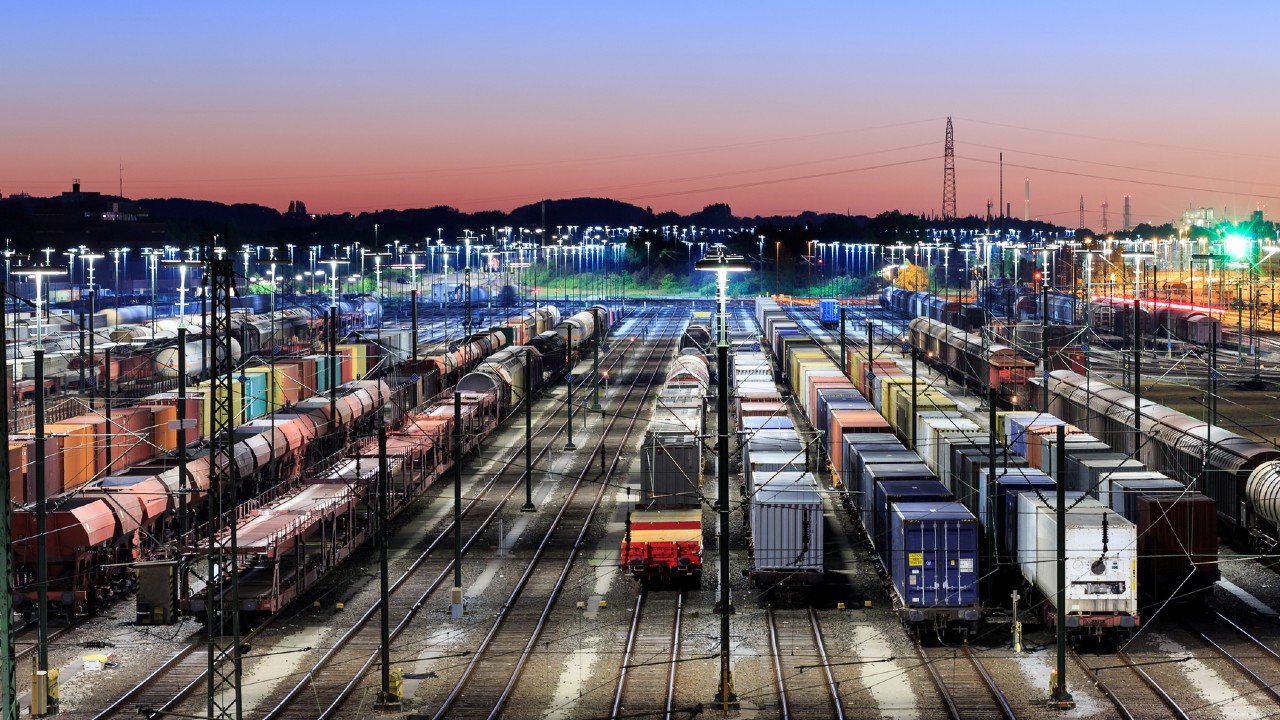
Despite rising demand for freight movement across Europe, the rail sector struggles with declining market share due to infrastructure issues, operational disruptions, and policy challenges, risking its ability to meet future growth targets.
European rail freight is facing a paradox. Demand for moving goods across the continent is rising, yet rail’s market share keeps slipping, and industry analysts warn that the sector is losing ground to road transport just as policymakers are trying to force a modal shift. According to the article by Reinhard Christeller, the decline is most visible on Europe’s busiest corridors, where freight demand is strongest but operational reliability is weakest.
Christeller argues that the market for rail freight is far from disappearing; rather, it is being held back by poor infrastructure, weak coordination and repeated disruption. He points in particular to Germany’s construction-heavy network, limited political momentum in France and the Iberian peninsula, and the lack of credible diversionary routes. Industry voices quoted in the article, including Hupac and other operators, say there is clear business potential, but services are too unreliable to capture it. Railtarget reported separately that SCI Rail has put rail’s share of European freight at 16.4 per cent in 2023, reinforcing the picture of a sector under pressure even as total cargo volumes continue to grow.
The structural problems are especially acute in combined transport and single wagonload operations. Christeller says these two segments account for roughly half of European rail freight volume and would need to expand sharply if rail is to meet the EU’s ambitions. That view is echoed by other industry assessments, which describe terminal congestion, bottlenecks at port-hinterland interfaces and persistent delays on the Rhine-Alpine and North Sea-Baltic corridors. Operators interviewed in separate reporting have also highlighted the chronic difficulty of running single wagonload traffic profitably, citing high costs, fragmented infrastructure management and intense competition from lorries.
Despite those obstacles, the case for rail is not purely defensive. Christeller notes that trains consume far less energy than lorries and require fewer staff per unit moved, while German data cited in his article show rail’s external costs are well below those of road haulage. He also argues that rail can be price-competitive over longer distances, with a Hamburg-to-Munich container movement cited as cheaper by rail than by road. Yet consultants at Oliver Wyman and McKinsey have both warned that environmental arguments alone will not persuade customers to switch: rail must also offer punctuality, reliability and easier access for shippers who increasingly expect just-in-time logistics.
Looking ahead, the policy challenge may be bigger than the industry is admitting. Christeller says transport ministers have committed to doubling rail freight by 2050, but he warns that overall freight volumes are expected to rise much faster, leaving rail’s share largely unchanged unless governments intervene. The International Transport Forum has forecast overall freight growth of more than 84 per cent over the same period, and McKinsey has argued that achieving the EU’s rail ambition would require a step change in strategy, investment and customer focus. For Christeller, the conclusion is straightforward: without faster infrastructure delivery, better regulation and practical digital upgrades, the demand for rail freight will continue to outstrip the sector’s ability to serve it.
Source Reference Map
Inspired by headline at: [1]
Sources by paragraph:
– Paragraph 1: [2], [1]
– Paragraph 2: [1], [2], [3]
– Paragraph 3: [1], [4], [3]
– Paragraph 4: [1], [5], [6]
– Paragraph 5: [1], [2], [6]
Source: Noah Wire Services
Verification / Sources
- https://www.railfreight.com/railfreight/2026/05/26/the-market-demand-for-rail-freight-is-huge/ – Please view link – unable to able to access data
- https://www.railtarget.eu/freight/european-rail-freight-crisis-digitalisation-intermodal-competition-10898.html – European rail freight is under unprecedented strain, losing ground to road transport even as overall cargo volumes climb. Experts warn that without swift support and accelerated digital upgrades, the sector risks further decline, threatening sustainability goals and supply chain resilience. According to a new market analysis by SCI Rail, the share of rail freight transport in Europe fell to just 16.4% in 2023, continuing a long-term decline that stands in stark contrast to EU climate objectives and its stated commitment to shifting freight to more sustainable modes. Rail has lost nearly 2.5 percentage points of market share in recent years, and even the forecasted 1.3% annual growth by 2030 is now under threat due to unfavourable market conditions. Still, performance remains below the pre-decline average of 2% annual growth. Market dynamics are also shifting. Major logistics companies and retailers are increasingly launching their own rail services, bypassing traditional freight operators to build more resilient supply chains. While innovation is often promoted as the solution, experts stress that success depends on long-term strategic investment. Major undertakings like Digital Automatic Coupling (DAC) and the European Train Control System (ETCS) involve high costs and slow return on investment. By contrast, quicker digitalisation projects—such as terminal automation and personnel deployment optimisation systems—are already delivering efficiency gains, boosting capacity, and reducing resource use. These developments could play a crucial role in reviving competitiveness in the near future. The SCI Verkehr study concludes that despite some resilient segments, the European rail freight sector remains under intense structural, financial, and operational pressure. Without targeted financial support and the swift deployment of practical digital tools, the industry risks further marginalisation in Europe’s transport mix. If the EU’s goal of a climate-neutral, competitive, and integrated transport system is to be realised, rail freight must no longer be left behind.
- https://gettransport.com/articles/rail-freight-bottlenecks-eu-core-corridors – Traffic on the Rhine‑Alpine and North Sea–Baltic core corridors regularly encounters throughput ceilings at port-hinterland interfaces and inland terminals, with container trains facing increasing dwell times at nodes such as Rotterdam, Duisburg and key cross-border marshalling yards. These constraints are reducing effective slot availability, increasing variability in arrival times, and forcing freight forwarders to pad schedules and raise buffer inventory. Bottlenecks are not evenly distributed; they cluster at three levels: Port and terminal interfaces: limited quay crane cycles, constrained yard space and inefficient gate processes increase intermodal transfer times for container freight. Infrastructure pinch points: single-track sections, restricted axle load corridors, and missing electrification segments reduce train length and weight options. Operational inefficiencies: outdated signalling systems, lack of digitalisation, and insufficient coordination among stakeholders lead to delays and reduced reliability. Addressing these bottlenecks requires coordinated efforts to upgrade infrastructure, implement digital solutions, and streamline operations across the European rail freight network.
- https://railmarket.com/news/freight-rail/32231-single-wagonload-traffic-under-strain-freight-operators-list-challenges-across-europe?region=af – Single wagonload (SWL) transport remains one of the most complex segments in European rail freight. Based on feedback from industry operators and insights gathered through a social media poll by Railmarket News, the challenges facing this mode of transport remain consistent across countries. Operators cite high operational costs, intense road competition, and fragmented infrastructure management as ongoing concerns. Some companies also pointed to modernization needs, inconsistent policy application, and a lack of coordinated European-wide support mechanisms. The quick poll social media results said that the biggest challenges in SWL have been high operating costs, complex logistics, competition from road and low reliability.
- https://www.oliverwyman.com/our-expertise/insights/2023/mar/why-european-rail-freight-must-evolve-with-its-customers.html – To ensure the competitiveness of rail freight, operators will need to respond to new and different factors driving customer shipping decisions. Traditional criteria such as punctuality, cost effectiveness, and reliability are now considered to be ‘table stakes.’ Customers will not switch to rail solely because of its environmental benefits; service performance and reliability demands for just-in-time supply chains must be met. Unfortunately, potential new customers often face high barriers to accessing rail freight. Once they do gain access, precisely managed logistics chains, supplier diversification, and accelerated digitalization often clash with inflexible and outdated rail freight systems and processes. Performance deficits in punctuality and customer information, as well as capacity bottlenecks due to inadequate infrastructure, further complicate the situation. Addressing these barriers is essential for rail freight to attract more traffic and remain competitive.
- https://www.mckinsey.com/industries/infrastructure/our-insights/bold-moves-to-boost-european-rail-freight – Europe’s big aspiration to reverse the decline of its rail freight industry will require significant effort, with substantial investment and smart thinking. Governments and industry players can help to achieve this goal, as there are examples of success to draw on and some key levers to pull. The European Union has set a bold ambition to reverse this trend. It plans to double freight rail’s modal share by 2030, both to reduce the transport sector’s CO2 emissions and to ease the congestion of major road connections. Achieving this ambition would see freight rail volumes grow by around six percent a year in ton-kilometers (tkm). A massive shift in trajectory would be required to achieve this ambition. A European strategy to transfer a large proportion of transport from road to rail could focus on several key elements, including major long-distance freight flows, key connection points such as ports, and new industries that can replace volumes lost in declining sectors. Regulators and operators could also play a role in rethinking the regulatory model and reorienting the industry to become more customer focused and more profitable.
Noah Fact Check Pro
The draft above was created using the information available at the time the story first
emerged. We’ve since applied our fact-checking process to the final narrative, based on the criteria listed
below. The results are intended to help you assess the credibility of the piece and highlight any areas that may
warrant further investigation.
Freshness check
Score: 6
Notes: The article was published on 26 May 2026. A similar report from RailFreight.com dated 16 July 2025 indicates a declining market share for European rail freight, with a modal share of 16.4% in 2023. (es.railfreight.com) This suggests that the current article may be revisiting previously reported trends, potentially lacking new developments.
Quotes check
Score: 5
Notes: The article includes direct quotes from Reinhard Christeller and other industry voices. However, these quotes do not appear to be independently verifiable online, raising concerns about their authenticity. Without external verification, the credibility of these quotes is uncertain.
Source reliability
Score: 7
Notes: The article is published on RailFreight.com, a niche publication focusing on rail freight news. While it provides industry-specific insights, its reach and influence are limited compared to major news organisations. Additionally, the article relies heavily on internal sources and lacks independent verification, which may affect its overall reliability.
Plausibility check
Score: 6
Notes: The article discusses the decline in rail freight’s market share and operational challenges, which align with known industry issues. However, the lack of new data or developments raises questions about the timeliness and relevance of the information presented.