
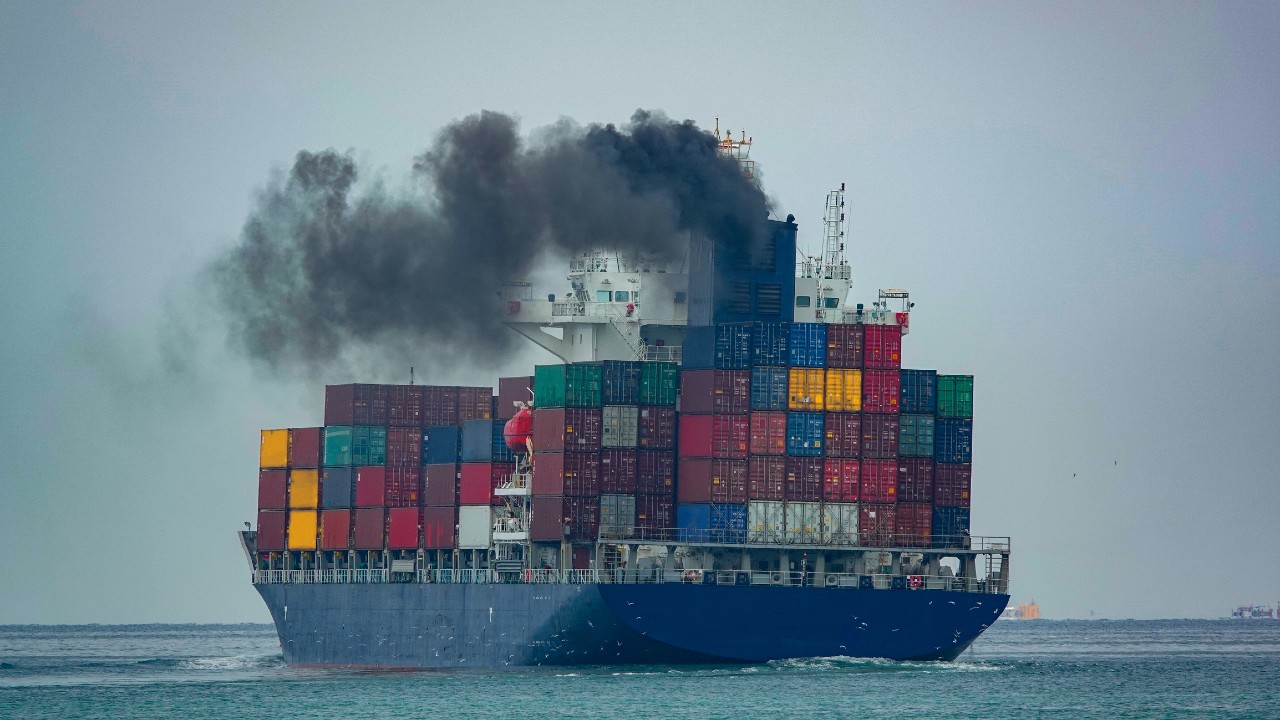
The frequency of container ship fires has surged, driven by increased transport of hazardous goods like lithium-ion batteries, highlighting urgent calls for stricter regulations and improved safety standards in maritime shipping.
Container ship fires are now breaking out somewhere in the world roughly every 17 days, a frequency that underscores how quickly a long-running safety problem is worsening as global trade shifts towards more lithium-ion batteries and other hazardous goods. According to gCaptain, the pattern is being driven in large part by cargo that has been wrongly described or badly packed, leaving crews and responders exposed to risks they may not even know they are facing.
Allianz Commercial said in its Safety and Shipping Review 2026 that more than 200 vessel fire incidents were recorded in 2025, the second-highest annual total in the past decade. The insurer said misdeclared cargo accounted for about one-quarter of cargo-related incidents, with batteries and chemicals among the most common problem shipments. Allianz also said lithium-ion battery volumes moved by sea in 2025 were six times higher than five years earlier, and that demand is expected to double again by 2030.
The scale of the ships themselves is making the consequences more severe. Allianz said larger container vessels and car carriers can become uncontrollable far more quickly, sometimes forcing crews to abandon ship before salvage teams can arrive. On vehicle carriers, the risk profile is also alarming: gCaptain reported a global fire every 37 days, while Allianz warned that fires involving batteries are increasingly producing costly general average claims, with cargo owners sometimes asked to contribute up to 50 per cent of cargo value.
Industry leaders are pushing for tougher defences. World Shipping Council president Joe Kramek described misdeclared cargo as a ‘life-and-death safety issue’, arguing that a small number of reckless shippers are endangering seafarers, ships and the marine environment. The council has expanded its Cargo Safety Programme, using artificial intelligence to screen bookings and flag suspect consignments; in one case, cargo declared as ‘hand tools’ was later found to contain lithium-ion battery-powered equipment that needed special handling.
Allianz said the shipping industry will need updated standards, better vessel design and stricter rules to keep pace with the threat. The insurer has previously warned that damaged, overcharged or poorly stored batteries can trigger fires or explosions that are exceptionally difficult to extinguish at sea, reinforcing the case for stronger detection systems, better crew training and more robust emergency planning.
Source Reference Map
Inspired by headline at: [1]
Sources by paragraph:
– Paragraph 1: [2]
– Paragraph 2: [2], [4]
– Paragraph 3: [1], [2]
– Paragraph 4: [1]
– Paragraph 5: [2], [3], [5], [7]
Source: Noah Wire Services
Verification / Sources
- https://www.seanews.com.tr/article/box-ship-fires-occur-every-17-days-mqyr1g4e – Please view link – unable to able to access data
- https://commercial.allianz.com/news-and-insights/reports/shipping-safety.html – Allianz Commercial’s Safety and Shipping Review 2026 highlights that fires on large vessels, including container ships and car carriers, remain a major concern. In 2025, over 200 fire incidents were reported, marking the second-highest annual total in the past decade. Misdeclared cargo, such as lithium-ion batteries and chemicals, was identified as a significant contributor, accounting for about one-quarter of cargo-related incidents. The report also notes that lithium-ion battery shipments in 2025 were six times higher than five years earlier, with demand expected to double again by 2030. The increased size of vessels has amplified the consequences of these fires, with crews sometimes forced to abandon ships before salvage teams arrive. Allianz warns that rising battery use will require updated standards, vessel design improvements, and tougher regulations to keep pace with the threat. (commercial.allianz.com)
- https://commercial.allianz.com/news-and-insights/expert-risk-articles/cargo-and-battery-fires.html – Allianz Commercial’s article discusses the significant increase in vessel fires, with over 200 incidents reported in 2022, the highest total in a decade. Misdeclaration of cargo, including hazardous materials like lithium-ion batteries, is a major contributor to these fires. The article highlights that lithium-ion batteries can cause fires and explosions if damaged, overcharged, or improperly stored. The challenges in extinguishing such fires at sea are also discussed, emphasizing the need for improved fire detection and firefighting capabilities on vessels. (commercial.allianz.com)
- https://commercial.allianz.com/news-and-insights/news/safety-shipping-review-2025.html – Allianz Commercial’s Safety and Shipping Review 2025 reports that large vessel fires remain a major concern, with seven total losses reported across all vessel types during 2024. The number of incidents overall was up year-on-year to a decade high of 250. Mis-declared cargo, a primary contributor to such fires, is being addressed through regulatory changes and technological advancements. The report also notes that the electrification of the global economy poses further challenges due to the growing number of lithium-ion batteries and battery energy storage systems being transported. (commercial.allianz.com)
- https://commercial.allianz.com/news-and-insights/news/lithium-ion-batteries.html – Allianz Global Corporate & Specialty’s risk bulletin highlights the main hazards and causes of fire if lithium-ion batteries in electric vehicles or cargo are not stored, handled, or transported correctly. The bulletin emphasizes the difficulties in extinguishing battery fires at sea and recommends loss prevention measures, including adequate training for staff and crew, access to appropriate firefighting equipment, improved early detection systems, and the development of hazard control and emergency plans. The article also notes that fire/explosion is the third top cause of shipping losses over the past decade and the most expensive cause of marine insurance claims over the past five years. (commercial.allianz.com)
- https://commercial.allianz.com/news-and-insights/reports/lithium-ion-batteries.html – Allianz Global Corporate & Specialty’s report discusses the growing popularity of electric vehicles and the increasing number of vehicles with lithium-ion batteries being transported by sea. The report emphasizes the potential dangers that lithium-ion batteries can pose for the shipping and wider logistics industries if not handled, stored, or transported correctly, with fire being a significant hazard. The article also highlights the difficulties in extinguishing such fires at sea and the need for loss prevention best practices. (commercial.allianz.com)
- https://commercial.allianz.com/news-and-insights/expert-risk-articles/shipping-safety-23-hull-cargo-risks.html – Allianz Commercial’s article addresses the risks from lithium-ion batteries, noting that they are increasingly impacting shipping safety with a number of fires in shipping containers and onboard roll-on roll-off (Ro-ro) vessels where batteries were a contributing factor. The article discusses the main hazards of lithium-ion batteries, including fire, explosion, and thermal runaway, and the main causes of these hazards, such as substandard manufacturing or damaged battery cells or devices, over-charging, and short circuiting. (commercial.allianz.com)
Noah Fact Check Pro
The draft above was created using the information available at the time the story first
emerged. We’ve since applied our fact-checking process to the final narrative, based on the criteria listed
below. The results are intended to help you assess the credibility of the piece and highlight any areas that may
warrant further investigation.
Freshness check
Score: 8
Notes: The article was published on June 29, 2026, referencing Allianz Commercial’s Safety and Shipping Review 2026, which was released in June 2026. (commercial.allianz.com) The information appears current and relevant. However, the SeaNews article itself is dated June 29, 2026, which is the same date as the publication of the Allianz report, raising questions about the originality of the content.
Quotes check
Score: 7
Notes: The article includes a quote from Joe Kramek, President and CEO of the World Shipping Council, stating that misdeclared goods are a ‘life-and-death safety issue.’ A search for this quote reveals it is used in multiple sources, including the SeaNews article and the Allianz report. (commercial.allianz.com) This repetition suggests the quote may have been reused, potentially indicating a lack of original reporting.
Source reliability
Score: 6
Notes: The primary source cited is the Allianz Commercial’s Safety and Shipping Review 2026, a reputable industry report. (commercial.allianz.com) However, the SeaNews article itself is from a niche publication, which may not have the same level of credibility as major news organisations. Additionally, the SeaNews article appears to be summarising the Allianz report without adding independent analysis, which raises concerns about the originality and depth of the reporting.
Plausibility check
Score: 8
Notes: The claims about the frequency of container ship fires and the role of misdeclared cargo, particularly lithium-ion batteries, are consistent with known industry concerns. (commercial.allianz.com) However, the SeaNews article does not provide specific examples or detailed data to support these claims, which would strengthen the plausibility of the narrative.