
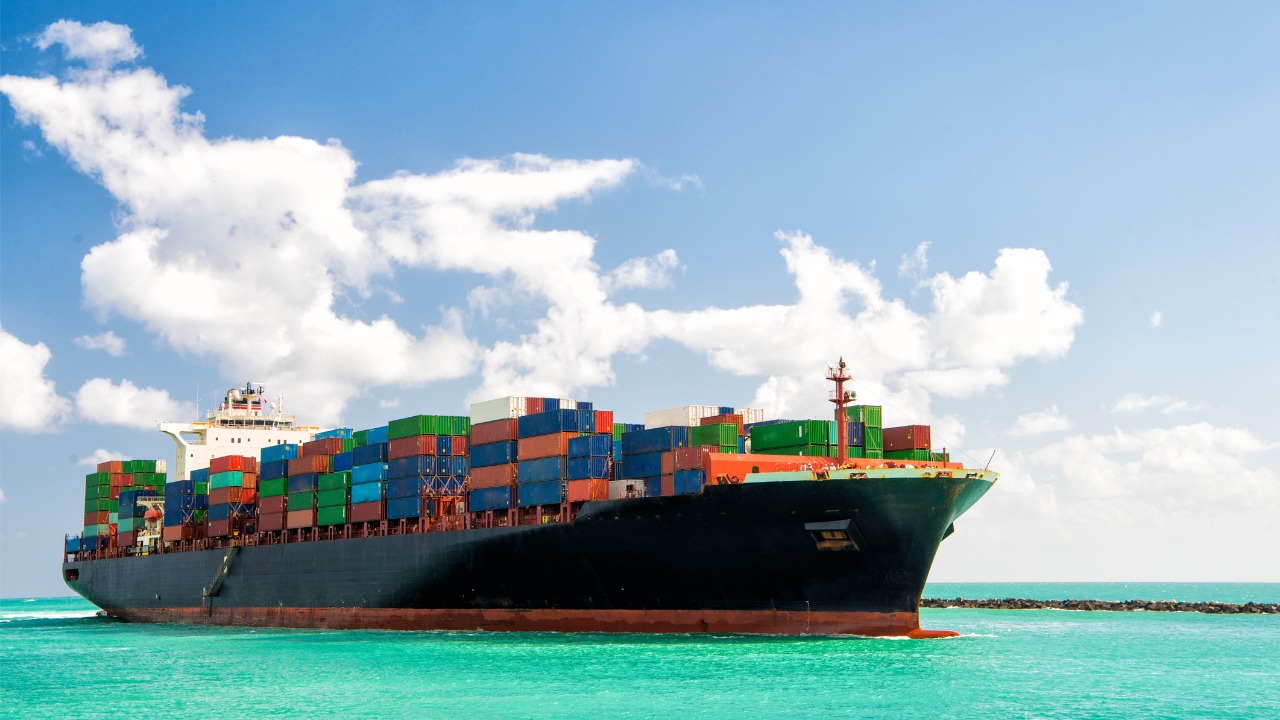
Maritime freight is forecast to exceed $529bn by 2030 as Asian trade expands and carriers invest in digital systems, efficient vessels and lower-emission operations.
The maritime freight transport market is set for continued expansion as global trade volumes rise and shipping lines adapt to tighter environmental rules, digital operations and shifting trade lanes. According to The Business Research Company, the sector is on track to surpass $529 billion by 2030, with growth driven by stronger demand for cost-efficient cargo movement and by investment in technologies that improve safety, fuel efficiency and route planning. That upbeat outlook comes amid a wider range of market estimates: other research houses place the sector’s 2025 value anywhere from about $158.6 billion to nearly $600 billion, reflecting differences in scope and methodology, but they broadly point to steady growth over the rest of the decade.
Asia-Pacific is expected to remain the main engine of growth, with The Business Research Company forecasting the region will reach $208 billion by 2030, up from $146 billion in 2025. The report links that performance to deeper intra-Asian trade, port modernisation, expanded container handling and more sophisticated smart-port systems across hubs in China, Singapore, South Korea, Japan and south-east Asia. Other market analyses also highlight the importance of Asia-Pacific, Europe and North America as trade corridors evolve and fleet operators shift capacity towards routes with stronger demand.
The market remains moderately fragmented, although scale still matters. The Business Research Company says the top 10 carriers accounted for 26 per cent of revenue in 2025, with Maersk Line leading on 5 per cent, followed by Hapag-Lloyd and CMA CGM on 4 per cent apiece. That concentration reflects the competitive advantages of large networks, broad service offerings and long-standing port partnerships, as well as the cost of meeting safety, security and regulatory requirements. Rival research points to similar structural themes, including vessel rerouting, alliance realignments and compliance with the EU Emissions Trading System, all of which are reshaping how carriers manage capacity and cost.
Container ships are expected to remain the largest vessel category by 2030, underpinned by the growth of containerised trade, automated terminal handling and investment in larger, more fuel-efficient ships. The Business Research Company says the segment will represent 43 per cent of the market and be worth $229 billion, while the wider market is forecast to grow at a 6 per cent compound annual rate through the end of the decade. The report also identifies short-distance and long-distance shipping, together with sectors such as food and beverages, manufacturing, oil and ores, and electronics, as important demand pools. Its broader message is that the industry’s next phase will be defined less by volume alone than by efficiency, resilience and decarbonisation.
Source Reference Map
Inspired by headline at: [1]
Sources by paragraph:
– Paragraph 1: [2], [3], [4]
– Paragraph 2: [2], [6], [7]
– Paragraph 3: [4], [5], [7]
– Paragraph 4: [2], [4], [5]
Source: Noah Wire Services
Verification / Sources
- https://natlawreview.com/press-releases/global-maritime-freight-transport-market-size-forecast-cross-5293-billion – Please view link – unable to able to access data
- https://www.rwmarketintelligence.com/reports/global-maritime-freight-transport-market-size-share-trends-report-2026-2031 – This report provides an analysis of the global maritime freight transport market, highlighting its valuation at USD 158.6 billion in 2025 and forecasting growth to USD 206.3 billion by 2031, with a compound annual growth rate (CAGR) of 5.4%. The market encompasses various vessel types, including bulk carriers, container ships, tankers, and general cargo vessels, facilitating the movement of bulk, containerized, and liquid cargo across global trade routes. The report also discusses the demand driven by rising global containerized trade volumes, growing bulk commodity trade, and expanding energy trade requiring tanker capacity across different regions.
- https://hub.claight.com/statistics/maritime-freight-transport-market – This article presents statistics on the maritime freight transport market, noting its valuation at approximately $599.78 billion in 2025 and projecting growth to nearly $783.94 billion by 2030, driven by a compound annual growth rate (CAGR) of around 5.5%. The market includes containerized cargo, dry bulk, liquid bulk, and general cargo segments. It also highlights that maritime transport accounts for roughly 90% of world trade by volume, underscoring its critical role in international commerce. The growth is supported by infrastructure investments, fleet modernization, and increasing consumer and industrial demand across regions such as Asia-Pacific, Europe, and North America.
- https://www.verifiedmarketreports.com/product/maritime-freight-transport-market/ – This report offers insights into the global maritime freight transport market, detailing its valuation at USD 632.36 billion in 2026 and estimating it will reach USD 823.57 billion by 2032, exhibiting a CAGR of 5.43% from 2026 to 2032. The market encompasses various cargo types, including bulk cargo, containerized cargo, and liquid cargo, and vessel types such as bulk carriers and container ships. The report also discusses the market’s structural overview, highlighting its role as the backbone of global trade, facilitating the movement of approximately 80% of the world’s merchandise by volume.
- https://www.mordorintelligence.com/industry-reports/global-maritime-freight-transport-market – This analysis by Mordor Intelligence examines the maritime freight transport market, noting its valuation at USD 599.78 billion in 2025 and estimating it will grow from USD 632.36 billion in 2026 to reach USD 823.57 billion by 2031, at a CAGR of 5.43% during the forecast period (2026-2031). The report highlights factors such as resilient global trade volumes, rerouting of vessels around congestion and conflict zones, and the shift of cargo toward South-South corridors that intensify intra-Asian flows as key drivers of market expansion. It also discusses compliance with the EU Emissions Trading System (EU ETS) and alliance realignments like the Gemini Cooperation between Maersk and Hapag-Lloyd.
- https://eurozone.einnews.com/pr_news/952301775/global-maritime-freight-transport-market-size-forecast-to-cross-5293-billion-by-2030 – This press release from EIN News discusses the global maritime freight transport market, highlighting its projected growth to exceed $529 billion by 2030. The article emphasizes the dominance of the Asia-Pacific region in the market, with expectations to reach $208 billion by 2030, up from $146 billion in 2025. It attributes this growth to increasing intra-Asia trade, substantial investments in port modernization and capacity expansion, greater containerization of manufactured exports, enhanced regional trade agreements, and improved supply chain integration. The region benefits from advanced smart port and vessel traffic management technologies and the strategic importance of key shipping hubs in China, Singapore, South Korea, Japan, and Southeast Asia.
- https://www.consainsights.com/reports/maritime-freight-transport-market – This report provides insights into the maritime freight transport market, noting its valuation at $185 billion in 2023 and projecting growth to $298.50 billion by 2033, with a compound annual growth rate (CAGR) of 4.8%. The report highlights key players in the market, including Maersk, MSC (Mediterranean Shipping Company), CMA CGM Group, Hapag-Lloyd, and Evergreen Marine Corporation. It also discusses the market’s segmentation by cargo type, service, end-user, and region, providing a comprehensive analysis of the industry’s growth prospects and trends.
Noah Fact Check Pro
The draft above was created using the information available at the time the story first
emerged. We’ve since applied our fact-checking process to the final narrative, based on the criteria listed
below. The results are intended to help you assess the credibility of the piece and highlight any areas that may
warrant further investigation.
Freshness check
Score: 8
Notes: The article was published today, indicating high freshness. However, the content is based on a press release from The Business Research Company, which is typically considered a primary source. This warrants a moderate freshness score due to potential biases in self-reported data.
Quotes check
Score: 7
Notes: The article includes direct quotes attributed to The Business Research Company. While these quotes are consistent with the press release, they cannot be independently verified, raising concerns about their authenticity.
Source reliability
Score: 6
Notes: The primary source is The Business Research Company, a market intelligence firm. While reputable, reliance on a single source without independent verification introduces potential biases and limits the reliability of the information.
Plausibility check
Score: 7
Notes: The projected market size of $529.3 billion by 2030 aligns with industry expectations. However, the lack of independent verification and reliance on a single source diminishes the overall credibility of the claim.