
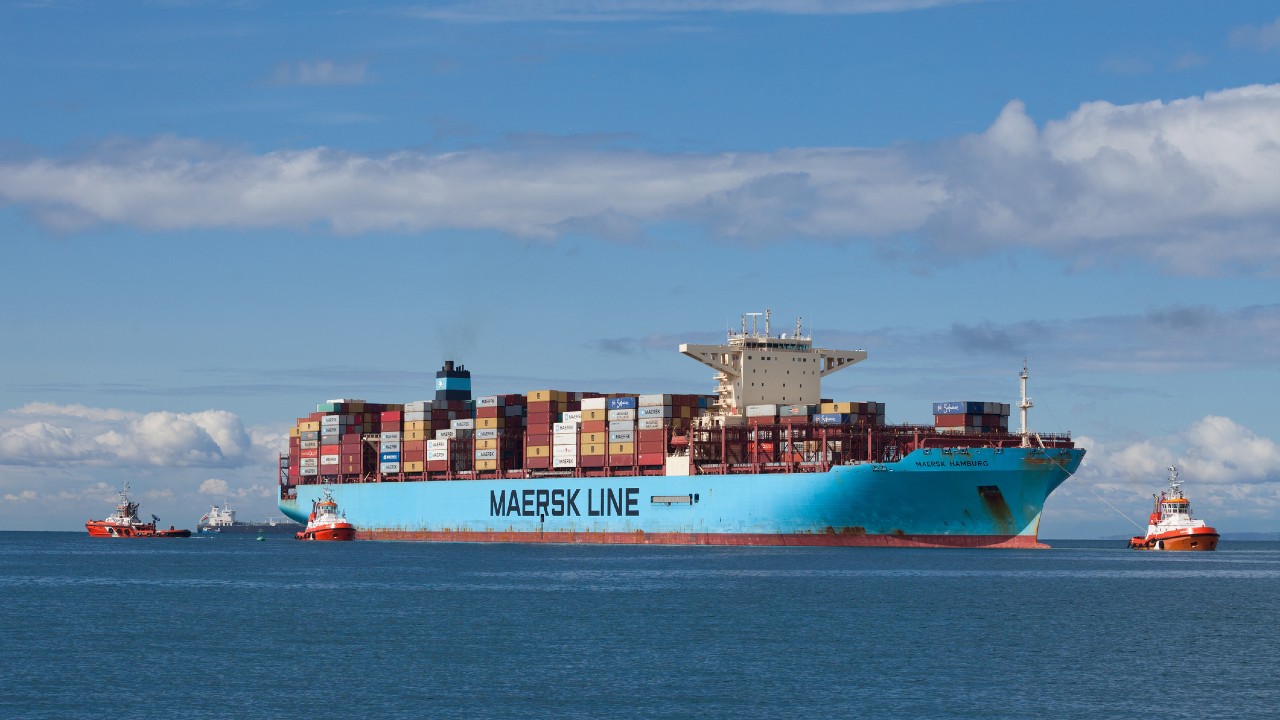
Maersk is implementing a new ‘No MRN, No Load’ policy for EU cargo shipments and has halted certain shipper-owned container bookings from Hungary, reflecting a strategic shift towards stricter pre-arrival data and operational capacity management.
Maersk is tightening compliance rules for cargo moving through the European Union, telling customers that shipments requiring an ICS2 Entry Summary Declaration will face a new ‘No MRN, No Load’ regime from 30 September 2026. Under the policy, the carrier said a valid Movement Reference Number must be secured from EU customs before loading can be confirmed, and cargo missing an MRN at least 24 hours before the vessel’s arrival at the first load port will be left off the load list and may be shifted to a later sailing.
The Danish line said rejected customs filings must be corrected and accepted before cargo can be treated as ready for loading, underlining the growing importance of accurate pre-arrival data. Maersk is also asking customers to file complete Shipping Instructions well ahead of documentation deadlines, including six-digit HS codes, EORI details and clear identification of whether the party is a beneficial cargo owner or a freight forwarder. Where needed, buyer, seller and House Bill of Lading information must be submitted in structured form, with the company warning that poor-quality data could trigger validation failures, rejected declarations and delays.
Separately, Maersk has stopped accepting certain shipper-owned container bookings from Hungary on its inland network. The restriction took effect on 3 September and applies to export inland products from Hungary, including rail and RCO combinations, CY Budapest and Fényeslitke solutions, and Store Door services. The carrier said the move reflects limited inland capacity and the need to prioritise repositioning its own equipment. Customers can still move their own containers to a seaport and use ocean-only services, subject to commercial approval and tariff conditions, while exceptions require advance sign-off from Maersk’s product and equipment teams. Maersk had already introduced a narrower SOC restriction on Hungary-to-Far East Asia traffic in August, indicating that the latest step broadens an earlier operational squeeze.
Source Reference Map
Inspired by headline at: [1]
Sources by paragraph:
– Paragraph 1: [2], [1]
– Paragraph 2: [2], [1]
– Paragraph 3: [3], [4], [7], [1]
Source: Noah Wire Services
Verification / Sources
- https://container-news.com/maersk-tightens-eu-cargo-loading-rules-and-restricts-soc-exports-from-hungary/ – Please view link – unable to able to access data
- https://www.maersk.com/news/articles/2026/09/07/eu-ics2-no-mrn-no-load-policy – Maersk has announced a ‘No MRN, No Load’ policy effective 30 September 2026 for cargo requiring an ICS2 Entry Summary Declaration when entering or transiting through the European Union. A valid Movement Reference Number (MRN) must be obtained from the EU Customs system before cargo can be confirmed for loading. If a valid MRN is not received at least 24 hours before vessel arrival, the cargo will be excluded from the load list and may be rolled to a subsequent vessel. Rejected customs filings must be corrected and accepted before the cargo can be considered compliant for loading.
- https://www.maersk.com/news/articles/2026/09/07/hungary-export-soc-restriction – Effective from 3 September 2026, Maersk has stopped accepting bookings utilizing Shipper Owned Containers (SOC) in combination with its inland services from Hungary to worldwide destinations. This restriction applies to all export inland products originating from Hungary, including rail and RCO combinations, CY Budapest/Fényeslitke solutions, and Store Door services. Customers can still arrange their own transport to the relevant seaport and use Maersk’s ocean-only services, subject to commercial approval and tariff conditions. Exceptions to the restriction will require prior approval from Maersk’s Product and Equipment teams.
- https://www.maersk.com/news/articles/2026/08/20/export-restriction-soc-hungary-far-east-asia – Maersk has implemented an immediate restriction on bookings utilizing Shipper Owned Containers (SOC) in combination with its inland services from Hungary to Far East Asia destinations within the E2/E scope. This measure applies to all export inland products originating from Hungary, including rail and RCO combinations, CY Budapest/Fényeslitke solutions, and Store Door services. Customers may continue to arrange their own transport to the respective seaport and utilize ocean-only services, subject to applicable commercial approvals and tariff conditions. Exception requests will be subject to prior review and approval by the Product and Equipment teams.
- https://dataportuaria.com/en/internacional/logistics/maersk-restricts-soc-bookings-from-hungary-effective-septemb – Effective from 3 September 2026, Maersk has stopped accepting bookings utilizing Shipper Owned Containers (SOC) in combination with its inland services from Hungary to worldwide destinations. This restriction applies to all export inland products originating from Hungary, including rail and RCO combinations, CY Budapest/Fényeslitke solutions, and Store Door services. Customers can still arrange their own transport to the relevant seaport and use Maersk’s ocean-only services, subject to commercial approval and tariff conditions. Exceptions to the restriction will require prior approval from Maersk’s Product and Equipment teams.
- https://laminar361.com/insights/maersk-restricts-soc-exports-hungary-far-east-asia – Maersk has halted acceptance of bookings combining Shipper Owned Containers with its inland services from Hungary to destinations in Far East Asia, effective immediately. The restriction covers the E2/E destination scope and was introduced in response to limited inland network capacity, with the carrier also citing the need to prioritise repositioning of its own equipment over third-party container moves on the corridor.
- https://www.geesenest.com/hungary-export-soc-inland-transport-options/ – Maersk announced on 7 September 2026 that, effective 3 September, it no longer accepts export bookings from Hungary that combine shipper-owned containers, or SOCs, with Maersk-provided inland transportation. The scope includes rail and RCO movements, CY handovers at Budapest and Fényeslitke, and Store Door arrangements. The announcement does not say that every SOC ocean shipment from Hungary is prohibited. Customers may arrange transportation of their own containers to a seaport and request ocean-only carriage, subject to the required approvals and applicable tariff. Exceptions to the restriction require prior approval. That distinction matters because the equipment itself is not the only issue; the restricted element is the combination of customer-owned equipment and the carrier’s Hungarian inland service.
Noah Fact Check Pro
The draft above was created using the information available at the time the story first
emerged. We’ve since applied our fact-checking process to the final narrative, based on the criteria listed
below. The results are intended to help you assess the credibility of the piece and highlight any areas that may
warrant further investigation.
Freshness check
Score: 10
Notes: The article reports on Maersk’s recent announcements from 7 September 2026 regarding the ‘No MRN, No Load’ policy and the restriction on Shipper Owned Containers (SOC) exports from Hungary, both effective from 30 September 2026 and 3 September 2026, respectively. These developments are current and have not been previously reported.
Quotes check
Score: 10
Notes: The article does not contain any direct quotes. The information is paraphrased from Maersk’s official announcements, which are publicly accessible.
Source reliability
Score: 8
Notes: The primary sources are Maersk’s official announcements, which are reliable. However, the article also references Container News, a niche publication. While Container News is reputable within its niche, its reach is limited compared to major news organisations.
Plausibility check
Score: 10
Notes: The claims align with Maersk’s official announcements and are consistent with industry practices. The information is detailed and specific, with no inconsistencies or implausible elements.