
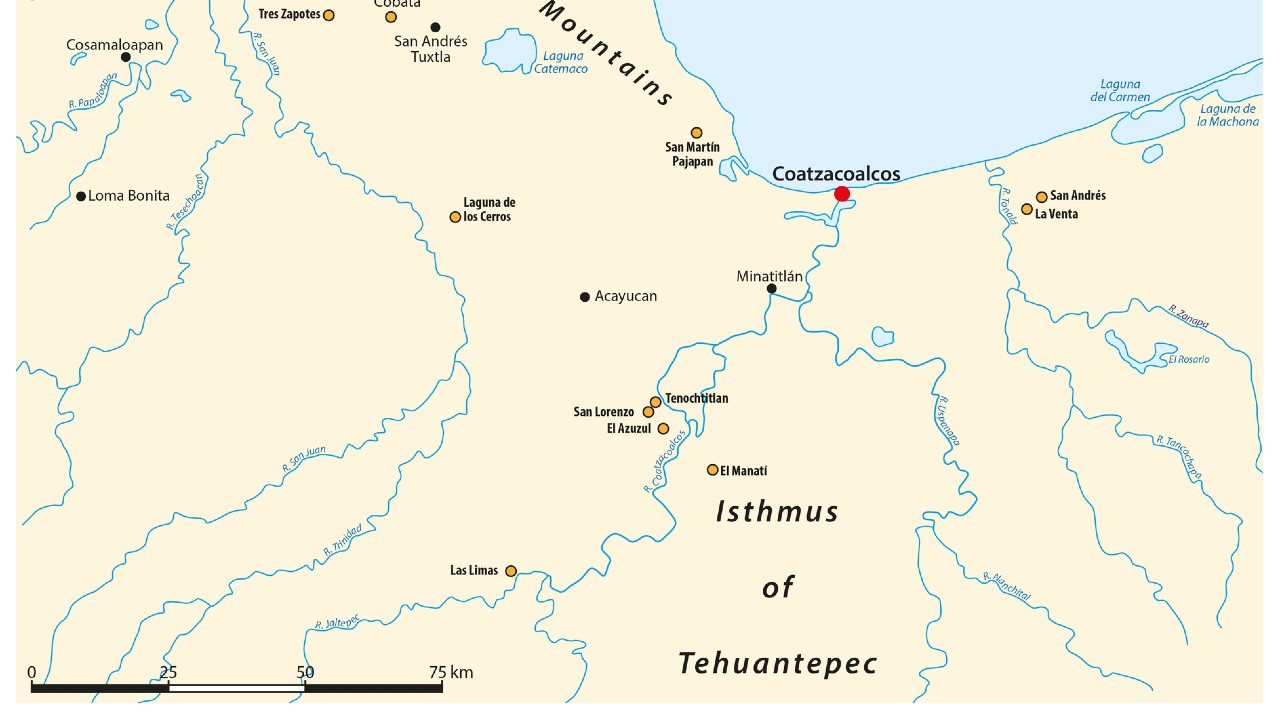
As disruptions at sea lanes increase, Mexico advances its historic land corridor project, the Interoceanic Corridor of the Isthmus of Tehuantepec, aiming to offer a resilient alternative for international freight movement despite significant logistical and security hurdles.
Mexico is trying to turn one of its oldest geographic ambitions into a modern answer to one of global trade’s newest headaches. As disruptions pile up at sea lanes ranging from the Panama Canal to the Red Sea and the Strait of Hormuz, the government is promoting a land bridge across the Isthmus of Tehuantepec as a practical backup for freight moving between the Atlantic and Pacific.
The project, known as the Interoceanic Corridor of the Isthmus of Tehuantepec, or CIIT, links Salina Cruz on the Pacific with Coatzacoalcos on the Gulf of Mexico. According to reporting in the Los Angeles Times, Mexico has spent at least $4bn since 2019 on rehabilitating railways, upgrading ports, buying land and preparing industrial sites along the route. The corridor’s backers say the crossing can move cargo by rail in a matter of hours, with the full transfer between ports completed within a day, though the project still remains far from a serious rival to the Panama Canal’s scale.
That gap matters. The corridor is being pitched as a complement to Panama rather than a replacement, and even government ambitions look modest beside the volume handled in Central America. Mexico’s official target is to move 1.4 million containers a year by 2035, a fraction of the roughly 20 million that pass through the Panama Canal annually, according to the Los Angeles Times. Industry coverage from S&P Global and other outlets has also noted that the Mexican route is intended to offer an alternative for selected cargo, not the giant container ships that define the canal trade.
The argument for the corridor is not only about speed but also resilience. Drought has repeatedly slowed traffic through Panama, while conflict and security risks have unsettled other major maritime chokepoints. Mexico’s officials believe companies increasingly want contingency routes, especially as climate stress and geopolitical volatility make global shipping less predictable. A commercial test this year by Hyundai, which used the corridor to move vehicles across Mexico before onward shipment to the United States, has been presented by supporters as proof that the line can handle real cargo, not just government rhetoric.
Yet the southern route faces formidable obstacles. The region remains one of Mexico’s poorest, and the corridor cuts through remote terrain where road links are weak, electricity supply is limited and industrial demand is still thin. Business groups have pointed to shortages of natural gas, limited basic services and legal uncertainty as reasons why investment has been slow. Even with generous incentives and a revamped concession model, only part of the planned industrial hub system has been awarded, and the government has had to take back some concessions after investors failed to meet commitments.
Security and reliability are also in question. The corridor has suffered derailments on its main line, including a passenger crash that killed 14 people and injured dozens, followed by a freight derailment months later. Officials say repairs and realignments are under way, but the incidents have underscored how much remains to be done before the route can operate as a dependable international logistics channel. Mexico’s navy, which oversees the project, says it is trying to accelerate implementation, while President Claudia Sheinbaum has made the corridor one of her administration’s economic priorities.
For Mexico, the corridor is as much a development strategy as a transport scheme. Success would help draw factories, create a steady flow of manufacturing cargo and bring investment to a neglected part of the country. Failure would leave the project as another ambitious but underused piece of infrastructure. For now, the dry canal exists; whether global trade will flow through it remains an open question.
Source Reference Map
Inspired by headline at: [1]
Sources by paragraph:
– Paragraph 1: [2], [4]
– Paragraph 2: [2], [3], [7]
– Paragraph 3: [2], [3], [4]
– Paragraph 4: [6], [4], [5]
– Paragraph 5: [5], [6], [3]
– Paragraph 6: [1], [4], [5], [6]
– Paragraph 7: [1], [2], [5]
Source: Noah Wire Services
Verification / Sources
- https://www.latimes.com/world-nation/story/2026-08-17/mexico-pitches-dry-canal-land-corridor-as-alternatives-to-troubled-waterways – Please view link – unable to able to access data
- https://www.latimes.com/world-nation/story/2026-08-17/mexico-pitches-dry-canal-land-corridor-as-alternatives-to-troubled-waterways – Mexico is promoting the Interoceanic Corridor of the Isthmus of Tehuantepec (CIIT) as an alternative to disrupted global waterways. The CIIT is a 190-mile rail link between the Gulf of Mexico and the Pacific Ocean, aiming to alleviate congestion in the Panama Canal and other global chokepoints. Despite significant investment, the corridor faces challenges in attracting sufficient cargo and developing the necessary infrastructure to support its operations.
- https://www.riotimesonline.com/mexico-interoceanic-corridor-panama-canal-alternative-explained/ – Mexico’s Interoceanic Corridor of the Isthmus of Tehuantepec (CIIT) is a 303-kilometre rail line connecting the Pacific port of Salina Cruz with the Gulf port of Coatzacoalcos. This ‘dry canal’ allows containers to be unloaded, transported by train in under six hours, and reloaded onto vessels on the opposite coast. While it offers a faster transit time compared to the Panama Canal, the CIIT serves as a complement rather than a replacement, given the larger capacity of Panama Canal ships.
- https://www.spglobal.com/energy/en/news-research/latest-news/shipping/051925-panama-canal-traffic-gets-an-alternative-route-with-the-isthmus-of-tehuantepec – The Interoceanic Corridor of the Isthmus of Tehuantepec in Mexico provides an alternative route for Panama Canal traffic. This high-capacity freight train network connects the Pacific and Atlantic Oceans, offering a quicker transit time. However, security concerns persist, and the benefits of this alternative route are still being evaluated.
- https://elpais.com/mexico/2023-10-01/el-corredor-interoceanico-una-gran-oportunidad-amenazada-por-la-competencia-global-y-el-cambio-climatico.html – The Interoceanic Corridor of the Isthmus of Tehuantepec is a significant project by President Andrés Manuel López Obrador, aiming to create a railway connection between the Gulf of Mexico and the Pacific Ocean. This initiative promises substantial economic opportunities, including the creation of ten special economic zones and attracting billions of dollars in investments. However, it faces serious challenges such as global competition, logistical efficiency compared to the Panama Canal, and climate change impacts. Additionally, there have been reports of land dispossession and violence associated with the project’s construction, affecting local communities and leading to conflicts with organized crime and authorities.
- https://as.com/actualidad/politica/adios-al-canal-de-panama-el-pais-vecino-de-eeuu-esta-montando-una-ruta-alternativa-en-el-pacifico-con-ayuda-de-asia-f202605-n/ – A logistics test led by Hyundai challenges the supremacy of the Panama Canal as the main commercial route between Asia and the U.S. East Coast. The South Korean company transported 900 vehicles from South Korea to Georgia using Mexico’s Interoceanic Corridor of Tehuantepec. The journey included a brief rail connection between Salina Cruz (Oaxaca) and Coatzacoalcos (Veracruz), taking a total of about 72 hours. This operation represents the first major commercial demonstration of this Mexican infrastructure. The Interoceanic Corridor, managed by the Mexican Navy, functions as a ‘dry canal’ connecting Pacific and Gulf ports via trains, aiming to become a strategic alternative to the Panama Canal, especially amid risks from droughts caused by climate change. It is also driven by the nearshoring boom. However, it faces environmental impact concerns in indigenous areas and security issues following a railway accident in 2025. Despite these challenges, the successful test reinforces its potential as a key route for international trade.
- https://www.huffingtonpost.es/global/golpe-historico-canal-de-panama-mexico-estrena-un-megacorredor-ferroviario-entre-el-atlantico-y-el-pacifico-rebaja-costes-15-f202605.html – Mexico has inaugurated the Interoceanic Corridor of the Isthmus of Tehuantepec (CIIT), a 302-kilometre railway infrastructure connecting the ports of Salina Cruz in the Pacific and Coatzacoalcos in the Atlantic, presenting a partial alternative to the Panama Canal. This decision arises in a global context of maritime tensions and droughts affecting the Panama Canal, reducing its operational capacity. The new Mexican corridor, which allows goods to be transported by train in about nine hours, promises to reduce logistics costs by up to 15% and save nearly five days of transit compared to the canal. The project includes not only the railway line but also the modernization of ports, industrial zones, and logistics centres, aiming to boost ‘nearshoring’ and position southern Mexico as a strategic node in international trade. Although it does not replace the Panama Canal, the CIIT is presented as a viable option for certain types of cargo, especially during periods of saturation or crisis of the traditional canal.
Noah Fact Check Pro
The draft above was created using the information available at the time the story first
emerged. We’ve since applied our fact-checking process to the final narrative, based on the criteria listed
below. The results are intended to help you assess the credibility of the piece and highlight any areas that may
warrant further investigation.
Freshness check
Score: 10
Notes: The article was published on August 17, 2026, making it highly current. No evidence of prior publication or recycled content was found. The narrative appears original and timely.
Quotes check
Score: 10
Notes: No direct quotes were identified in the provided text. The absence of quotes suggests the content is paraphrased or summarised, which is acceptable for factual reporting.
Source reliability
Score: 10
Notes: The article originates from the Los Angeles Times, a reputable major news organisation known for its journalistic standards and independence.
Plausibility check
Score: 10
Notes: The claims about Mexico’s Interoceanic Corridor of the Isthmus of Tehuantepec align with known developments and reports from other reputable sources. The narrative is consistent with established facts and recent events.