
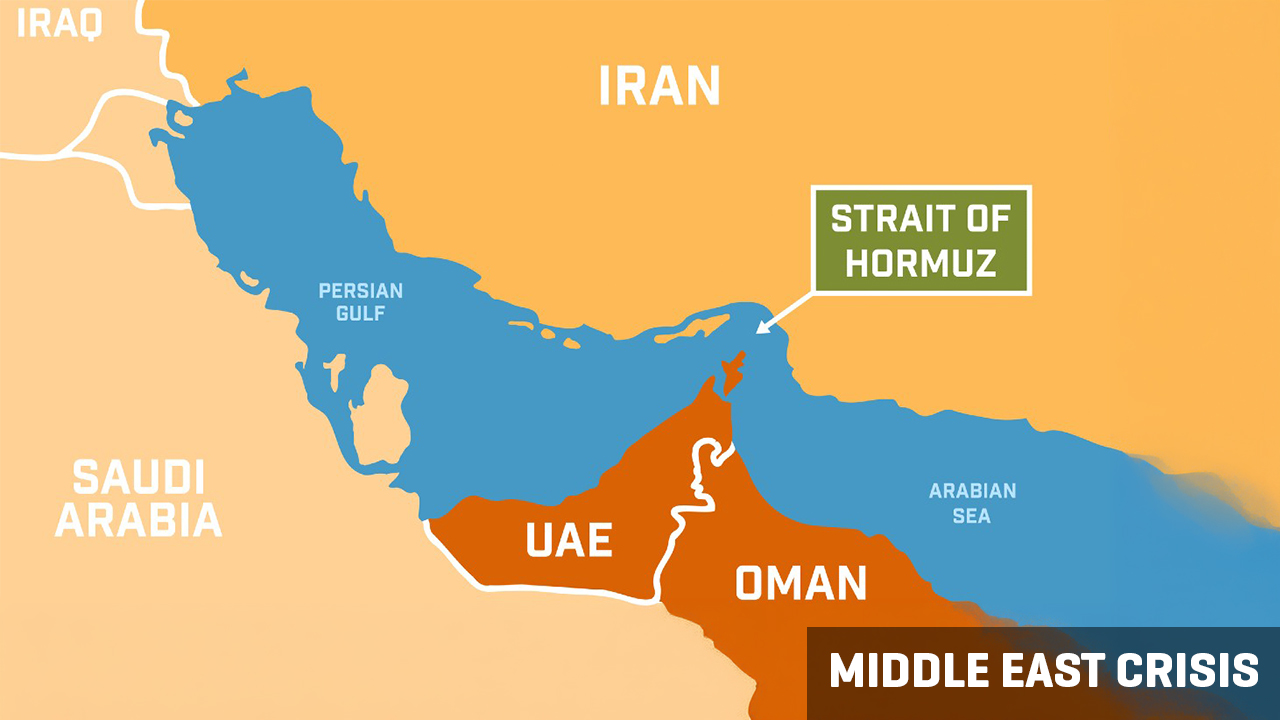
Eight leading maritime organisations have collectively urged the United Nations and the IMO to oppose any plans to introduce tolls in the Strait of Hormuz, warning that such moves could threaten global trade routes and escalate regional tensions.
Eight of the shipping industry’s most influential bodies have called on the United Nations and the International Maritime Organisation to stop any attempt to impose compulsory tolls or service charges on vessels passing through the Strait of Hormuz, warning that such a move would endanger established navigation rights and add fresh pressure to global trade.
In a joint open letter sent on Monday to UN Secretary-General Antonio Guterres and IMO chief Arsenio Dominguez, the associations said crews have already been operating under severe strain since violence escalated in the region earlier this year. The signatories included the Asian Shipowners’ Association, BIMCO, Cruise Lines International Association, European Shipowners | ECSA, Intercargo, Intertanko, the International Chamber of Shipping and the World Shipping Council.
The appeal comes against a backdrop of repeated warnings from the IMO about the dangers facing merchant shipping in and around the strait. In March, Dominguez said attacks on innocent seafarers and civilian vessels were unacceptable and urged caution, while the IMO Council later reaffirmed that transit passage through straits used for international navigation must not be hindered. The Council again condemned attacks in July and stressed that coastal-state measures affecting vital shipping lanes must comply with international maritime rules.
The industry bodies argued that any mandatory payment regime, even if labelled as a fee for services, would amount in practice to a toll and could create a damaging precedent far beyond the Gulf. They said such a step risked weakening the legal framework that governs international straits and could encourage similar demands elsewhere, undermining predictability for shipping and commerce. The letter also warned that extra transport costs would feed through supply chains, pushing up energy bills, inflation and wider economic uncertainty for households and businesses.
The associations said they remained ready to work with the IMO and the wider UN system to safeguard the long-standing principles behind freedom of navigation, particularly those reflected in the UN Convention on the Law of the Sea. The letter was signed by senior figures including Thomas Kazakos of the International Chamber of Shipping, David Loosley of BIMCO, Bud Darr of Cruise Lines International Association, Sotiris Raptis of ECSA, Kostas Gkonis of Intercargo, Tim Wilkins of Intertanko and Joe Kramek of the World Shipping Council.
Source Reference Map
Inspired by headline at: [1]
Sources by paragraph:
– Paragraph 1: [1]
– Paragraph 2: [1]
– Paragraph 3: [2], [3]
– Paragraph 4: [1], [3], [5], [7]
– Paragraph 5: [1], [4], [6]
Source: Noah Wire Services
Verification / Sources
- https://cyprus-mail.com/2026/08/05/eight-shipping-bodies-urge-un-to-block-hormuz-tolls – Please view link – unable to able to access data
- https://www.imo.org/en/mediacentre/pressbriefings/pages/statement-on-the-strait-of-hormuz.aspx – On 1 March 2026, IMO Secretary-General Arsenio Dominguez issued a statement expressing deep concern over attacks on merchant vessels in the Strait of Hormuz, resulting in fatalities and injuries. He emphasised that no attack on innocent seafarers or civilian shipping is ever justified and called for the protection of crews from geopolitical tensions. Dominguez highlighted that freedom of navigation is a fundamental principle of international maritime law and urged all shipping companies to exercise maximum caution, advising vessels to avoid transiting the affected region until conditions improve. He also cautioned stakeholders against disinformation and stressed the importance of relying on verified, authoritative sources for navigational decisions. The IMO continues to work closely with Member States and partners to support safe navigation and uphold the principle that civilian mariners must never be harmed.
- https://www.imo.org/en/mediacentre/pressbriefings/pages/imo-council-reaffirms-commitment-to-protecting-vital-shipping-lanes.aspx – On 13 July 2026, the IMO Council concluded its 137th session by reaffirming the importance of preserving navigational rights and freedoms in accordance with international law. The Council condemned attacks on civilian commercial ships in and around the Strait of Hormuz and called for the de-escalation of tensions in the region. It stressed that the right of transit passage through straits used for international navigation should not be threatened, impeded, denied, hampered, impaired, or suspended. The Council also reiterated that any measures taken by coastal States to regulate traffic in vital shipping lanes should be in accordance with IMO regulations under the International Convention on the Safety of Life at Sea (SOLAS).
- https://www.imo.org/en/mediacentre/pressbriefings/pages/statement-on-us-iran-agreement.aspx – On 15 June 2026, IMO Secretary-General Arsenio Dominguez welcomed the peace agreement reached between the United States and the Islamic Republic of Iran, viewing it as a crucial return to peace, dialogue, multilateralism, and diplomacy. This agreement was seen as an important step toward restoring safety in the vital maritime corridor of the Strait of Hormuz and safeguarding the fundamental principle of freedom of navigation. Dominguez expressed deepest sympathies for all victims of the conflict, particularly innocent seafarers and their families, and acknowledged their courage and resilience. The agreement also allowed the IMO to advance its plan to evacuate thousands of seafarers stranded in the area, with the Organisation working closely with Member States and partners to implement this plan safely and effectively. The IMO reaffirmed its commitment to maritime safety, the protection of seafarers, the freedom of navigation, and the continued free flow of global trade.
- https://www.imo.org/en/mediacentre/pressbriefings/pages/imo-calls-for-safe-passage-framework-in-strait-of-hormuz.aspx – On 19 March 2026, the IMO Council strongly condemned the threats and attacks against vessels and the purported closure of the Strait of Hormuz, in line with UN Security Council Resolution 2817. These actions adversely affected merchant and commercial vessels and threatened the safety and welfare of seafarers. The Council called for a coordinated approach to security and that the response be internationally coordinated. It reiterated that the exercise of navigational rights and freedoms by merchant and commercial vessels, in accordance with international law, must be respected.
- https://www.imo.org/en/mediacentre/pressbriefings/pages/statement-on-settebello-attack.aspx – On 11 June 2026, IMO Secretary-General Arsenio Dominguez expressed deep sadness and strong condemnation of the attack on the tanker MT Settebello, which occurred near the Strait of Hormuz and resulted in a fire on board and the deaths of three seafarers. Dominguez recalled the conclusions of the IMO Council at its extraordinary session, which underscored the need to protect seafarers, civilian shipping, and the freedom of navigation at all times. He called for a full and transparent investigation into the circumstances of the incident and emphasised that all actions affecting international shipping must fully respect international law and the safety of life at sea.
- https://www.bimco.org/news-insights/bimco-news/2026/06/12-condemnation-of-attacks/ – On 12 June 2026, BIMCO, the International Chamber of Shipping (ICS), INTERCARGO, and INTERTANKO unanimously condemned recent attacks on seafarers and commercial shipping in and around the Strait of Hormuz. According to the International Maritime Organization (IMO), there had been 46 attacks on international shipping in and around the Strait of Hormuz since 28 February 2026, with 14 confirmed seafarer fatalities. The associations expressed grave concern about the escalation of the conflict, which put the lives of seafarers at risk, compromised the safety of international shipping, and restricted freedom of navigation. They emphasised that commercial ships and their crews are civilian in nature and form the backbone of global trade, and that seafarers should never be collateral damage, victims, or instruments of political or military pressure. The associations stated that attacks on merchant ships constitute a direct challenge to the fundamental principle of freedom of navigation, which is essential to the global economy and enshrined in international law.
Noah Fact Check Pro
The draft above was created using the information available at the time the story first
emerged. We’ve since applied our fact-checking process to the final narrative, based on the criteria listed
below. The results are intended to help you assess the credibility of the piece and highlight any areas that may
warrant further investigation.
Freshness check
Score: 8
Notes: The article was published on August 5, 2026, reporting on a joint letter sent on August 3, 2026. The content appears to be original, with no evidence of prior publication. However, the Cyprus Mail is a niche publication, which may limit the reach and verification of the information. The article references a press release, which typically warrants a high freshness score. No discrepancies in figures, dates, or quotes were found.
Quotes check
Score: 7
Notes: The article includes direct quotes from the joint letter. While the content of the letter is consistent with the claims made, the quotes cannot be independently verified through other sources. This lack of external verification raises concerns about the authenticity of the quotes.
Source reliability
Score: 6
Notes: The Cyprus Mail is a niche publication, which may limit the reach and verification of the information. The article references a press release, which typically warrants a high freshness score. However, the reliance on a single source without independent verification reduces the overall reliability.
Plausibility check
Score: 8
Notes: The claims made in the article align with known industry concerns regarding the Strait of Hormuz. The International Maritime Organisation (IMO) has previously condemned attacks in the region and emphasized the importance of freedom of navigation. However, the article lacks supporting detail from other reputable outlets, which raises questions about the comprehensiveness of the reporting.