
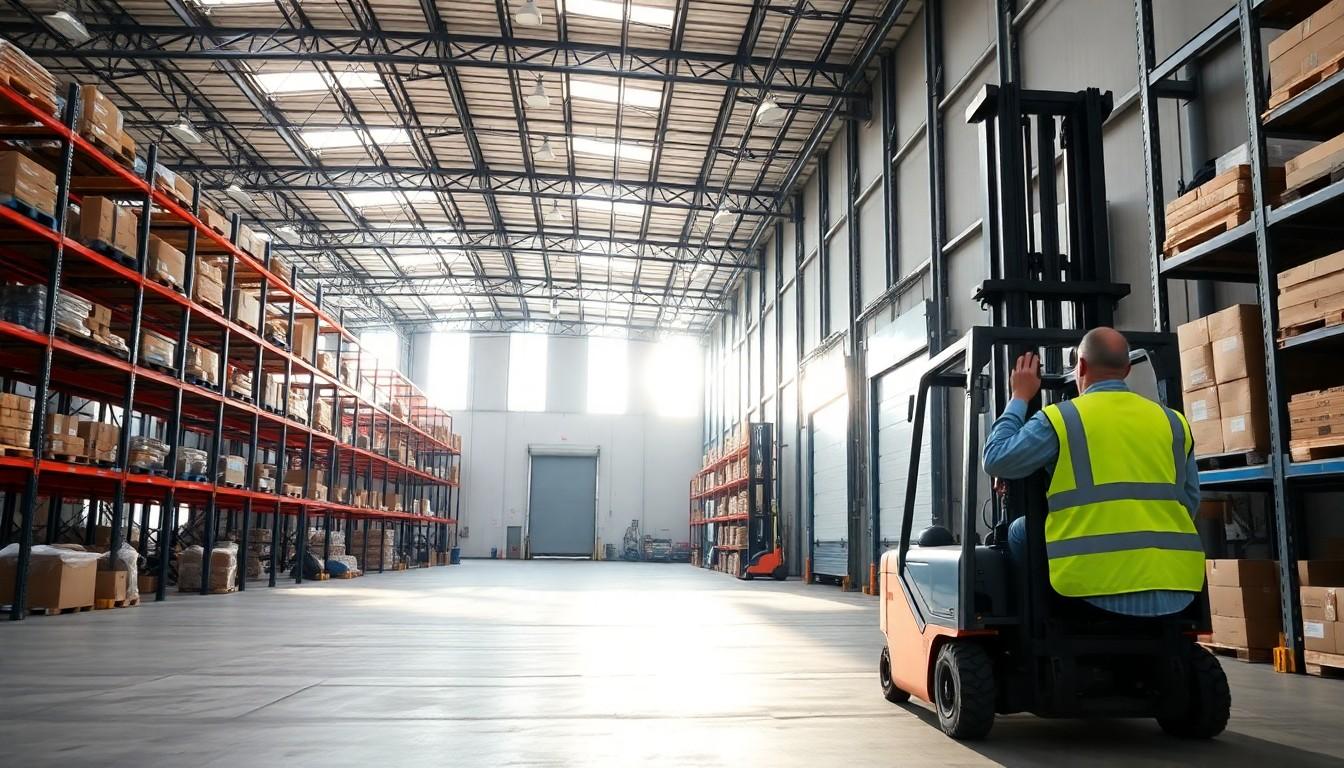
A new report highlights a 61 per cent growth in Britain’s warehousing sector over a decade, driven by the rise of online shopping, larger distribution centres, and increased stock resilience amid global supply chain disruptions.
A new report commissioned by the UK Warehousing Association and produced by Savills suggests that Britain’s warehouse sector has quietly become one of the clearest markers of how business has changed over the past decade. According to the findings, the sector has expanded by 61 per cent since 2015 and now covers nearly 700 million square feet, with the total value of the market estimated at £38.2 billion.
The scale of that growth points to more than just a rise in bricks, mortar and storage racks. Savills and the UK Warehousing Association say the biggest shifts have been driven by the rise of online retail, longer and more complicated supply chains, and a stronger preference among firms for holding additional stock rather than relying on lean, just-in-time systems. The report also shows that warehouses larger than 1 million square feet have increased by 345 per cent over the decade, underlining how much demand has moved towards very large distribution sites.
One of the most striking changes has been in the profile of occupiers. Online retailers have expanded their warehouse footprint by 813 per cent over the past ten years, according to the report, reflecting the pressure on businesses to store more goods closer to customers and fulfil orders more quickly. The trend has also encouraged development near population centres and motorway corridors, where speedy deliveries are easier to achieve.
The shift has been reinforced by years of supply chain disruption. The pandemic exposed how vulnerable global networks could be, while freight bottlenecks, geopolitical tensions and rerouted shipping flows have persuaded many firms to build more resilience into their operations. In practice, that means more stock on hand, more storage space and less faith in the old assumption that supplies will always arrive precisely when needed.
For smaller businesses, the implications are significant. As firms expand, warehouse capacity can become as important as customer demand, with excess stock quickly spilling into offices, workshops and other ad hoc spaces. Renting larger premises is costly, particularly in areas where industrial space is in short supply, but holding too little inventory can be just as damaging if delays lead to missed sales or unhappy customers.
Industry groups argue that the change is structural rather than temporary. As ecommerce continues to reshape shopping habits and businesses remain wary of disruption, warehousing is becoming a more strategic part of the economy rather than a back-room necessity. For many firms, the warehouse is no longer simply where products are kept; it is increasingly where resilience, service levels and growth are being decided.
Source Reference Map
Inspired by headline at: [1]
Sources by paragraph:
– Paragraph 1: [2], [6]
– Paragraph 2: [2], [3]
– Paragraph 3: [4], [5]
– Paragraph 4: [6]
– Paragraph 5: [1]
– Paragraph 6: [1], [2], [7]
Source: Noah Wire Services
Verification / Sources
- https://bmmagazine.co.uk/business/uk-warehouse-market-grows-61-in-a-decade-as-firms-hold-more-stock/ – Please view link – unable to able to access data
- https://www.ukwa.org.uk/latest-report-predicts-sustained-growth-and-continued-demand-for-warehousing/ – A report by Savills for the UK Warehousing Association (UKWA) reveals that the UK’s warehousing sector has expanded by 61% since 2015, now encompassing nearly 700 million square feet. The development of warehouses exceeding 1 million square feet has surged by 345% over the past decade, while online retailers’ occupancy has increased by 813%. This growth underscores the critical role of warehousing in supply chains and the broader UK economy, highlighting the sector’s adaptability to evolving social and supply chain trends, including the rise of online shopping and near-shoring.
- https://www.logisticsmatters.co.uk/news/report-marks-long-term-growth-of-warehousing-sector/ – According to a report by Savills for the UK Warehousing Association (UKWA), the UK’s warehousing sector has grown by 61% since 2015, now covering nearly 700 million square feet. The development of warehouses over 1 million square feet has increased by 345% in the last decade, and online retailers’ occupancy has risen by 813%. This growth highlights the sector’s importance to manufacturing and retail supply chains and its adaptability to changing social and supply chain trends, such as the expansion of online shopping and near-shoring.
- https://www.business-money.com/announcements/online-retail-warehouse-occupation-jumps-813-over-the-past-decade/ – A report by Savills and the UK Warehousing Association (UKWA) indicates that the UK’s warehousing sector has expanded by 61% since 2015, now encompassing 690 million square feet. Online retailers have seen the largest increase in occupancy, with their warehouse space growing by 813% over the past decade. This shift reflects the growing dominance of online retailers and the need for more warehouses near population centres and motorway corridors to meet the increasing delivery demands of online consumers.
- https://www.coldchainnews.com/warehousing-demand-continues-but-doubts-remain-about-land-supply/ – A report by Savills and the UK Warehousing Association (UKWA) reveals that the UK’s warehousing sector has grown by 61% since 2015, now covering 690 million square feet. Online retailers have experienced the largest increase in occupancy, with their warehouse space expanding by 813% over the past decade. This growth underscores the sector’s critical role in supply chains and the UK economy, highlighting the need for more warehouses built close to population centres and alongside motorway corridors to meet the ever-shorter delivery demands of online customers.
- https://www.ukwa.org.uk/wp-content/uploads/2024/04/Savills-UKWA-Report-The-size-and-make-up-of-the-UK-warehousing-sector-2024-DIGITAL.pdf – The UK Warehousing Association (UKWA) and Savills have released a report detailing the size and composition of the UK’s warehousing sector. Key findings include a 61% growth since 2015, with the sector now encompassing nearly 700 million square feet. The development of warehouses over 1 million square feet has increased by 345% in the last decade, and online retailers’ occupancy has risen by 813%. The report highlights the critical importance of warehousing to supply chains and the UK economy, emphasizing the need for more warehouses built close to population centres and alongside motorway corridors to meet the ever-shorter delivery demands of online customers.
- https://www.ukwa.org.uk/new-report-reveals-major-growth-and-seismic-changes-in-uk-warehousing-sector/ – A report commissioned by the UK Warehousing Association (UKWA) and produced by Savills highlights significant growth and changes in the UK’s warehousing sector over the past six years. Key points include a 32% overall increase in the number of warehousing units, a trend towards larger warehouses with a 242% rise in units over 1 million square feet, and a radical change in the occupier profile, with online retailers increasing warehouse occupancy by 614%. The report underscores the need for more warehousing and fundamental changes in land use planning to accommodate this growth.
Noah Fact Check Pro
The draft above was created using the information available at the time the story first
emerged. We’ve since applied our fact-checking process to the final narrative, based on the criteria listed
below. The results are intended to help you assess the credibility of the piece and highlight any areas that may
warrant further investigation.
Freshness check
Score: 8
Notes: The article references a report from April 2024, indicating recent data. However, the article was published in July 2026, suggesting a delay of over two years. This gap raises concerns about the timeliness of the information presented. (ukwa.org.uk)
Quotes check
Score: 7
Notes: The article includes direct quotes from UKWA CEO Clare Bottle. While these quotes are attributed, they are not independently verifiable through the provided sources. The lack of direct access to the original statements limits the ability to confirm their authenticity. (ukwa.org.uk)
Source reliability
Score: 6
Notes: The primary source is a report by Savills for the UK Warehousing Association (UKWA), a reputable industry body. However, the article’s reliance on a single source without cross-referencing with other independent publications or data points raises concerns about the comprehensiveness and objectivity of the information presented.
Plausibility check
Score: 7
Notes: The reported growth figures align with industry trends observed over the past decade. However, the absence of corroborating data from other reputable sources makes it difficult to fully validate the claims. The article’s focus on a single source without external verification diminishes its overall credibility. (ukwa.org.uk)