
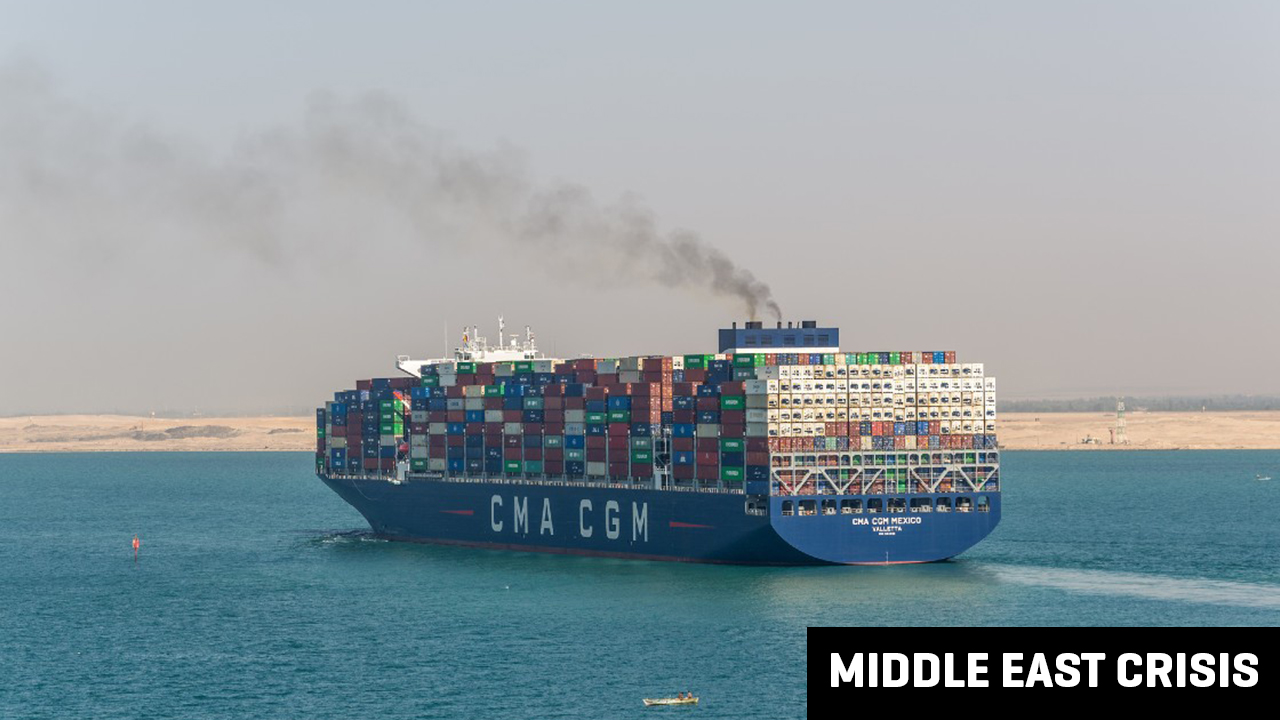
French shipping giant CMA CGM announces a new emergency fuel surcharge of up to $165 per container from August 1, citing rising bunker prices driven by renewed conflict in the Strait of Hormuz, impacting global supply chains.
French container shipping group CMA CGM said it will impose an emergency fuel surcharge from 1 August after a sharp jump in bunker costs linked to renewed fighting around the Strait of Hormuz, one of the world’s most important energy shipping corridors. The company said the latest escalation had reversed recent easing in fuel prices and pushed marine fuel costs higher across trade lanes.
According to the company’s notice, the new charge will range from $65 to $165 per container and will stay in place until further notice. CMA CGM said the increase reflects pressure not only on sea freight but also on the wider logistics chain, including inland transport in affected areas.
The move follows a series of earlier fuel and conflict-related surcharges from the carrier as tensions in the Middle East have intensified. In March, CMA CGM introduced an emergency conflict surcharge on shipments to and from several Gulf and Red Sea countries, and later added an inland fuel levy as higher energy costs spread beyond the ocean leg of transport, according to its advisories and industry reporting.
Shipping costs across the region have risen as vessels face greater disruption, higher insurance burdens and the risk of re-routing. Analysts have warned that continued instability in and around the Strait of Hormuz could further strain global supply chains, given the waterway’s role in moving oil and gas as well as container traffic.
Source Reference Map
Inspired by headline at: [1]
Sources by paragraph:
– Paragraph 1: [2], [5], [6]
– Paragraph 2: [1], [5]
– Paragraph 3: [3], [4], [7]
– Paragraph 4: [6], [7]
Source: Noah Wire Services
Verification / Sources
- https://sana.sy/economy/2534193/ – Please view link – unable to able to access data
- https://www.maritimegateway.com/cma-cgm-fuel-surcharge-increase-hormuz/ – In March 2026, CMA CGM, a French shipping giant, announced an upward revision of its Emergency Fuel Surcharge (EFS) effective from March 27, 2026. This decision was prompted by a significant surge in fuel market prices, driven by escalating geopolitical tensions in the Near and Middle East. The revised EFS, applicable from March 27 onwards, reflects the continued upward pressure on marine fuel costs across all regions and trade lanes. Additionally, CMA CGM implemented an Inland Emergency Fuel Surcharge (IEFS) effective March 23, covering defined geographic areas where inland transport costs have been impacted by rising fuel prices. This inland surcharge affects the cost of container drayage, rail haulage, and river barge movements that are part of the complete door-to-port or port-to-door supply chain, not just the ocean freight component. The combined effect of CMA CGM’s revised EFS, Maersk’s peak season surcharge increase, and various other surcharges means that the all-in cost of container shipping for businesses continues to escalate. Industry bodies have called for regulatory oversight of carrier surcharge practices, but enforcement remains challenging in the short term as carriers hold the operational leverage.
- https://www.cma-cgm.com/news/5344/middle-east-situation-updates?cat=shipping – CMA CGM has issued multiple advisories regarding the Middle East situation, including Advisory #11 on March 19, 2026, which announced the implementation of an Inland Emergency Fuel Surcharge (IEFS) effective March 23, 2026. This surcharge was introduced due to significant upward pressure on fuel costs, impacting not only sea transportation but also inland operations across all modes, affecting the overall cost of moving containers throughout the supply chain. The IEFS is applicable within a defined geographic scope and is subject to applicable regulatory filings where required. CMA CGM remains committed to maintaining service continuity and transparency during this challenging period, closely monitoring the situation, and keeping customers informed of any significant developments.
- https://www.cma-cgm.com/local/vietnam/news/258/advisory-2-middle-east-emergency-conflict-surcharge – On March 2, 2026, CMA CGM issued Advisory #2 regarding the Middle East situation, announcing the implementation of an Emergency Conflict Surcharge (ECS) effective March 2, 2026, and until further notice. The ECS applies to shipments to/from specific countries in the Middle East, including Bahrain, Djibouti, Egypt (Port of Ain Sokhna), Eritrea, Iraq, Jordan, Saudi Arabia, Kuwait, Oman, Qatar, Sudan, UAE, and Yemen. The surcharge details are as follows: USD 2,000 per 20’ Dry Container, USD 3,000 per 40’ Dry Container, and USD 4,000 per Reefer or Special Equipment. This surcharge applies to any booking issued on or after March 2, 2026, cargo not yet shipped, as well as cargo already afloat but not yet discharged or loaded to/from the mentioned countries. CMA CGM remains committed to maintaining service continuity and transparency during this challenging period, closely monitoring the situation, and keeping customers informed of any significant developments.
- https://www.timesofisrael.com/liveblog_entry/shipper-cma-cgm-to-slap-on-fuel-surcharge-over-hormuz-crunch/ – On July 22, 2026, CMA CGM announced the imposition of an emergency fuel surcharge following the renewed escalation of hostilities in the Strait of Hormuz, effective August 1, 2026. The company stated that the recent escalation in the Strait of Hormuz has led to a sharp surge in fuel prices, reversing the easing observed in recent weeks. As a result, bunker costs have significantly increased across all regions and trades, impacting the overall cost of ocean transportation. The surcharge, ranging from $65 to $165 per container, will remain in place until further notice. This decision reflects the ongoing impact of geopolitical tensions on global shipping costs.
- https://www.thenationalnews.com/business/economy/2026/03/02/hormuz-iran-us-shipping-war/ – The escalation in the Strait of Hormuz has significantly impacted global shipping, leading to increased costs due to insurance cancellations and war risk surcharges. Shipping companies like Hapag-Lloyd and CMA CGM have introduced substantial surcharges for containers passing through Gulf regions. Three tankers were attacked in the Strait of Hormuz, leading to heightened security warnings and rerouted shipping lanes. Average spot rates from China to the UAE have increased by 5% due to security concerns in the Arabian Gulf. This situation underscores the broader implications of regional conflicts on international trade and shipping operations.
- https://www.techtimes.com/articles/320023/20260709/cma-cgm-surcharge-hits-1500-per-container-july-22-south-asian-shippers-have-six-days.htm – CMA CGM announced a new Peak Season Surcharge (PSS) earlier in July 2026, introducing a staggered schedule on dry cargo moving from the Indian Subcontinent to Europe, the Mediterranean, and Latin America. The structure is two-tiered: a $500 per container PSS took effect on July 15 on the Europe and Mediterranean lane, then tripled to $1,500 per container on July 22, when Latin America destinations, including Central America’s East Coast, the Caribbean, Mexico’s East Coast, and South America’s West Coast, also hit the $1,500 level. This surcharge is a response to the increased costs associated with rerouting ships around Africa due to disruptions in the Strait of Hormuz. Exporters in India, Pakistan, and Sri Lanka have less than two weeks to decide whether to book cargo at a lower rate or absorb the higher surcharge.
Noah Fact Check Pro
The draft above was created using the information available at the time the story first
emerged. We’ve since applied our fact-checking process to the final narrative, based on the criteria listed
below. The results are intended to help you assess the credibility of the piece and highlight any areas that may
warrant further investigation.
Freshness check
Score: 8
Notes: The article reports on CMA CGM’s announcement of an emergency fuel surcharge effective August 1, 2026, due to increased fuel prices from renewed tensions in the Strait of Hormuz. This information aligns with a Reuters report dated July 22, 2026, confirming the surcharge and its effective date. (timesofisrael.com) The Syrian Arab News Agency (SANA) published a similar report on the same date, indicating the news is current and not recycled.
Quotes check
Score: 7
Notes: The article includes direct quotes from CMA CGM’s official notice regarding the surcharge. These quotes are consistent with the Reuters report, which also cites CMA CGM’s announcement. (timesofisrael.com) However, the SANA report does not provide direct quotes from CMA CGM, which raises questions about the direct sourcing of the quotes in the article. The absence of direct quotes in SANA’s report suggests that the quotes in the article may have been paraphrased or sourced from secondary reports. This lack of direct attribution reduces the verifiability of the quotes.
Source reliability
Score: 6
Notes: The article is sourced from SANA, the Syrian Arab News Agency, which is the state news agency of Syria. While SANA provides official information, its state affiliation may influence the objectivity and independence of its reporting. The Reuters report, dated July 22, 2026, serves as an independent source confirming the surcharge announcement. (timesofisrael.com) The SANA report, also dated July 22, 2026, corroborates the surcharge but lacks direct quotes from CMA CGM, raising concerns about the independence and direct sourcing of the information.
Plausibility check
Score: 8
Notes: The article reports on CMA CGM’s implementation of an emergency fuel surcharge due to increased fuel prices from tensions in the Strait of Hormuz. This is consistent with industry practices during geopolitical disruptions affecting shipping routes. The surcharge amount and effective date align with the Reuters report, indicating the claims are plausible. (timesofisrael.com)