
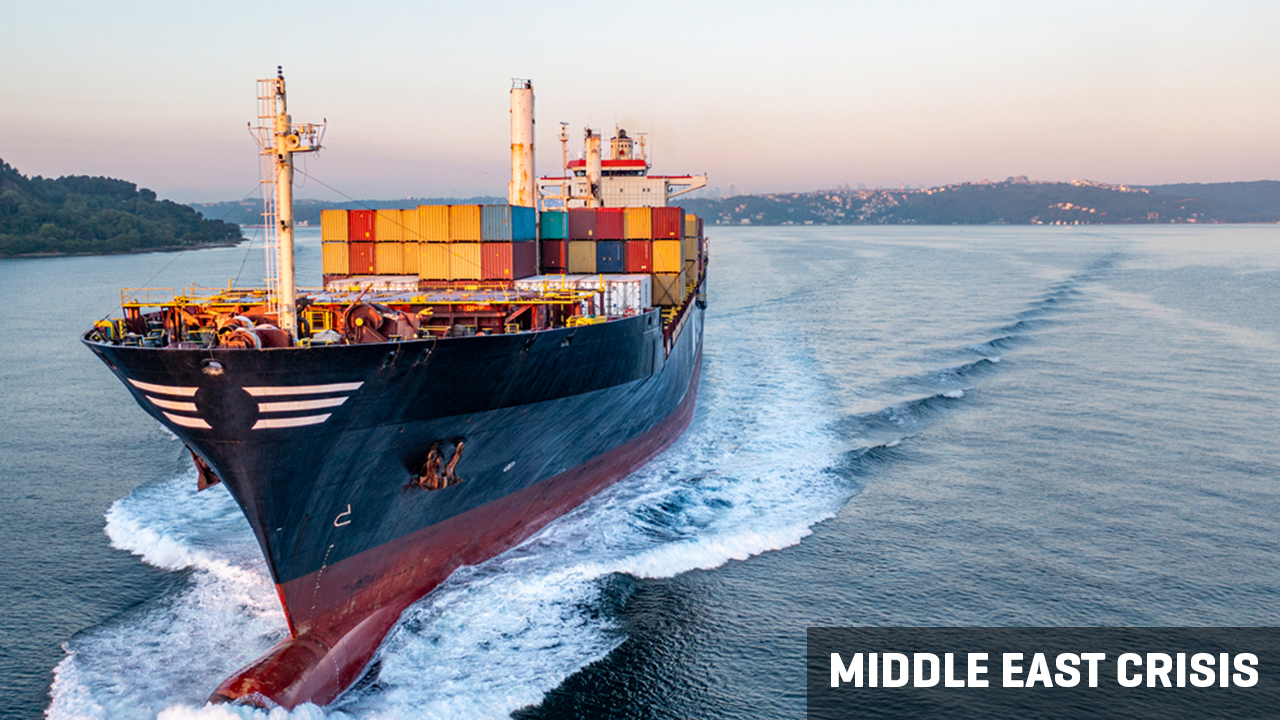
Container shipping rates rose again this week amid soaring fuel costs and ongoing uncertainties over the Strait of Hormuz, with transatlantic rates jumping 25 per cent and carriers seeking emergency bunker surcharges, signalling heightened fragility in the supply chain.
Container freight markets edged higher again this week as a sharp rise in fuel costs and continuing anxiety over the Strait of Hormuz fed through into pricing across several major east-west routes. Drewry’s World Container Index rose 1 per cent to $2,309 per 40-foot container, with gains on transpacific and transatlantic lanes offset by weaker Asia-Europe pricing, according to market data cited by gCaptain.
The most notable move was in the transatlantic market, where Rotterdam-New York rates jumped 25 per cent to $1,968 per container. Drewry said that increase reflected a 13 per cent month-on-month fall in available April capacity, an unusually tight setting for a lane that is normally far steadier than Asia-linked trades. Transpacific rates also climbed, with Shanghai-New York up 7 per cent to $3,671 and Shanghai-Los Angeles rising 9 per cent to $2,910, as carriers pressed for further increases while pointing to higher operating costs linked to the Middle East crisis.
Maersk has now moved to seek approval for an emergency bunker surcharge in the US, asking regulators to let it bypass the usual 30-day notice period. The proposed charge would be $200 per TEU on head-haul cargoes and $100 on backhaul shipments, underscoring how rapidly fuel-market stress is being passed through into freight bills.
The strain is being driven by wider disruption around Hormuz. A temporary two-week ceasefire has allowed only limited shipping activity to resume, and vessels still face coordination requirements with Iranian authorities, with no clear operating rules and reports of possible transit fees. Carriers are prioritising vessels already trapped inside the Persian Gulf rather than committing new tonnage to the region, while oil-flow disruption continues to squeeze bunker supply.
Asia-Europe rates moved in the opposite direction, with Shanghai-Genoa down 3 per cent to $3,420 and Shanghai-Rotterdam off 9 per cent to $2,308. Capacity there remains relatively stable, with only one blank sailing scheduled next week. But analysts and industry reports suggest the broader market remains vulnerable: UNCTAD has warned that prolonged Hormuz disruption could slow global merchandise trade growth sharply and intensify inflationary pressure, especially in developing economies.
Source Reference Map
Inspired by headline at: [1]
Sources by paragraph:
– Paragraph 1: [2], [4]
– Paragraph 2: [1], [7]
– Paragraph 3: [1], [5]
– Paragraph 4: [1], [3], [6]
– Paragraph 5: [1], [3], [7]
Source: Noah Wire Services
Verification / Sources
- https://gcaptain.com/container-rates-rise-again-as-fuel-costs-hormuz-uncertainty-ripple-through-global-trade/ – Please view link – unable to able to access data
- https://gcaptain.com/container-shipping-rates-rise-as-asian-exports-recover-hormuz-tensions-add-uncertainty/ – This article discusses the recent increase in global container shipping rates, attributing the rise to the recovery of Asian exports post-Lunar New Year and escalating tensions in the Middle East, particularly around the Strait of Hormuz. The piece highlights that the Drewry World Container Index rose by 3% to $1,958 per 40-foot container in the week ending March 5, marking the first weekly gain after seven consecutive weeks of declining rates. The article also notes that the improving demand outlook is being overshadowed by rising geopolitical risks, with commercial shipping in the Persian Gulf slowing sharply following coordinated military strikes by the United States and Israel against Iran, raising concerns of potential disruptions around the Strait of Hormuz. The piece concludes by warning that higher fuel costs, increased war-risk insurance premiums, and potential operational disruptions could translate into higher freight rates for container shipping, with the complex interconnectivity of global supply chains meaning that no shipper is insulated from financial or operational risk.
- https://unctad.org/news/hormuz-disruption-deepens-global-economic-strain-across-trade-prices-and-finance – This UNCTAD report highlights the severe impact of the Strait of Hormuz disruption on the global economy, noting that the waterway remains ‘practically closed,’ disrupting a critical share of global oil and gas flows. The report projects that global merchandise trade growth will slow sharply, from about 4.7% in 2025 to between 1.5% and 2.5% in 2026, as global demand weakens and uncertainty rises. It also points out that energy shocks are pushing up prices and increasing the cost of living, with financial stress increasing as investors pull back from developing countries, weakening currencies and raising borrowing costs. The report emphasizes that the effects are most severe in developing economies, where higher energy prices are increasing import costs, while weaker currencies amplify those pressures. It concludes by warning that if disruptions persist, the situation could evolve into a cascading crisis with far-reaching consequences for development.
- https://tankermap.com/news/container-freight-rates-rise-fourth-week-hormuz-fuel-costs – This article reports on the fourth consecutive week of rising container freight rates, attributing the increase to higher bunker costs and Middle East disruptions feeding deeper into global freight markets. The piece notes that the crisis around the Strait of Hormuz is now feeding directly into broader freight pricing beyond oil and LNG cargoes. It highlights that higher bunker bills, longer routing assumptions, and mounting uncertainty over transit security are combining to raise operating costs for carriers across major east-west trade lanes. The article also mentions that the continued advance in container rates reinforces the view that the Hormuz crisis is no longer a localized disruption but a cross-sector shipping cost event, with consequences for freight contracts, carrier margins, and cargo owners worldwide.
- https://www.stonex.com/en/insights/container-shipping-costs-rise-as-routes-shift/ – This article discusses the increase in container shipping costs as vessels divert from the Strait of Hormuz and the Suez Canal due to escalating regional conflict. The rerouting of container ships around the Cape of Good Hope is extending voyage times and raising fuel consumption across global trade lanes. The piece notes that these operational shifts are unfolding in real time as carriers suspend services into high-risk areas and reposition fleets to safer routes. It also highlights that container shipping costs are becoming less about base freight rates and more about embedded inefficiencies, fuel surcharges, and disrupted network reliability.
- https://www.icis.com/explore/resources/news/2026/04/02/11195132/s-korea-prepares-w469-5bn-subsidy-for-naphtha-imports/?news_id=11194396 – This article reports that global ocean freight spot rates remain elevated as the Strait of Hormuz closure hits the five-week mark, showing that the Iran war is a conflict with global repercussions for ocean supply chains. The piece notes that spot rates with direct exposure to the Middle East are up by 30-31% since the end of February, but rates on other trade lanes are up by almost as much. It highlights that the complex interconnectivity of global supply chains means that no shipper is insulated from financial or operational risk. The article also mentions that port congestion in the Middle East has rippled across to key Asian transshipment hubs, including Singapore, Port Klang, and Tanjung Pelepas, which are also vital for feeding goods toward the US.
- https://www.seawayshipservices.com/maritime-intelligence.php?article=container-rates-flatline-capacity-glut-trumps-hormuz-what-it-means-for-your-fleet-60d809 – This article analyses the recent stabilization of container spot freight rates on major east-west trade routes, attributing the flatlining to an abundance of vessel capacity and inconsistent demand, which neutralized recent carrier pricing increases. The piece notes that this stabilization occurs despite ongoing Red Sea disruptions, signalling a complex market dynamic for ship operators and fleet managers. It highlights that excess capacity and uneven demand are neutralizing carrier pricing efforts, offering temporary relief for shipping budgets but also emphasizing market volatility. The article concludes by emphasizing the need for operational efficiency and resilient supply chains.
Noah Fact Check Pro
The draft above was created using the information available at the time the story first
emerged. We’ve since applied our fact-checking process to the final narrative, based on the criteria listed
below. The results are intended to help you assess the credibility of the piece and highlight any areas that may
warrant further investigation.
Freshness check
Score: 8
Notes: The article was published on April 9, 2026, which is recent. However, similar reports on the impact of the Strait of Hormuz closure on container rates have been published in the past month, indicating that the topic is being covered extensively. (gcaptain.com)
Quotes check
Score: 7
Notes: The article includes direct quotes from Drewry and A.P. Moller – Maersk. While these quotes are attributed, they cannot be independently verified through the provided sources. (gcaptain.com)
Source reliability
Score: 8
Notes: gCaptain is a reputable source within the maritime industry, known for its coverage of shipping and logistics news. However, it is a niche publication, which may limit its reach and the diversity of perspectives presented.
Plausibility check
Score: 9
Notes: The claims about rising container rates due to increased fuel costs and the closure of the Strait of Hormuz are consistent with other reports from reputable sources. (gcaptain.com)
Overall assessment
Verdict (FAIL, OPEN, PASS): PASS
Confidence (LOW, MEDIUM, HIGH): MEDIUM
Summary: The article provides recent information on the impact of the Strait of Hormuz closure on container rates, aligning with other reports from reputable sources. However, the reliance on industry-specific sources and the prevalence of similar reports in recent weeks suggest a need for cautious interpretation. (gcaptain.com)