
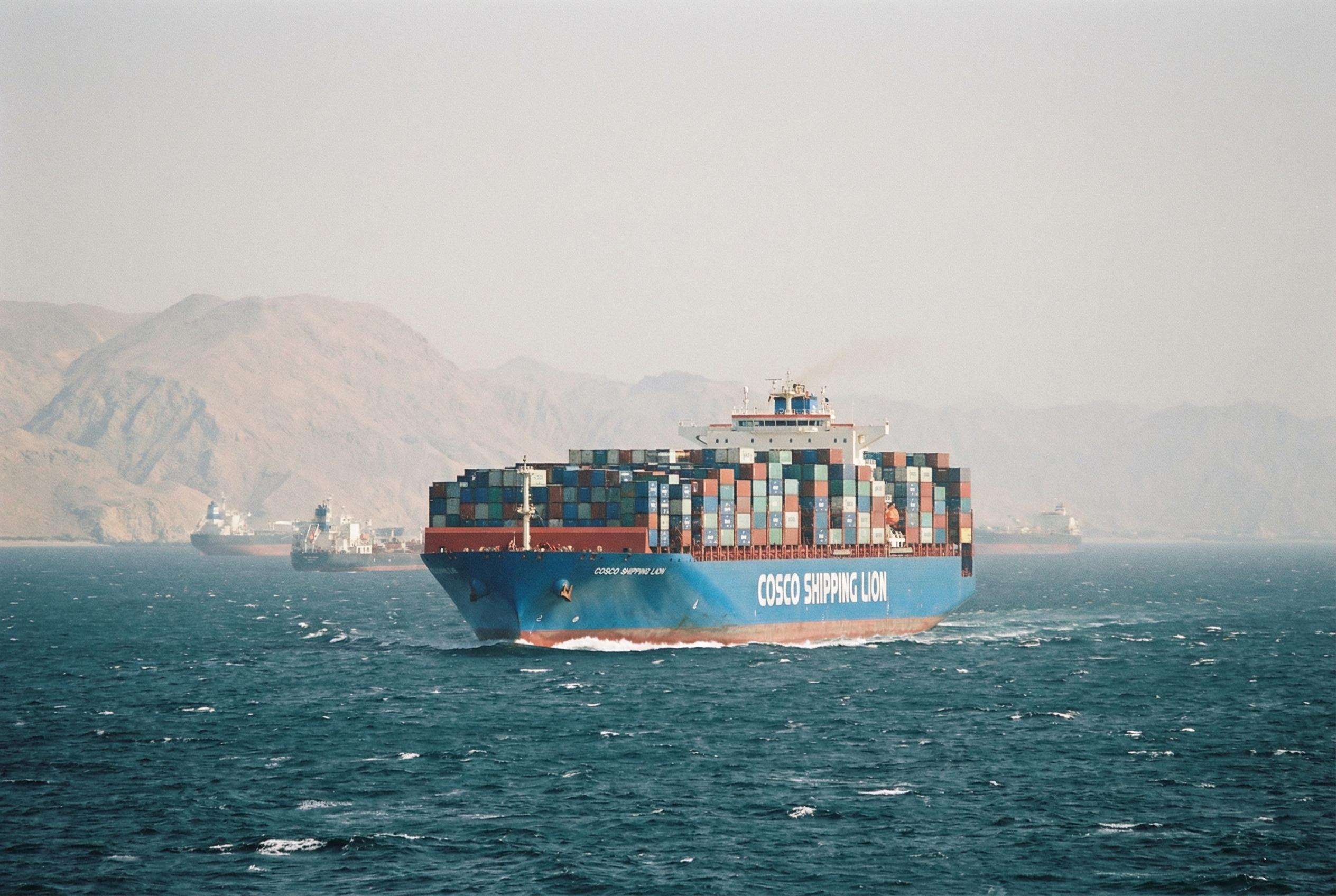
The sudden withdrawal of war-risk insurance cover for vessels around the Strait of Hormuz is forcing shipping operators to reroute, increasing costs and threatening global supply chains amid escalating regional tensions.
The withdrawal of war-risk insurance for vessels operating in and around the Strait of Hormuz is already forcing shipping operators to reprice voyages and reroute sailings, with acute consequences for heavy-lift and project cargo movements into the Gulf. According to reporting by The Guardian and maritime industry bulletins, several leading P&I clubs and marine underwriters have announced cancellations of cover for Iranian and adjacent waters effective in early March, prompting a wave of vessels to divert, anchor or delay transits.
For contractors and owners moving oversized refinery modules, gas turbines, heavy transformers and other project cargoes destined for Saudi Arabia, the UAE and Qatar, insurance withdrawal has transformed routine transits into high-cost, high-risk operations. Industry commentary and insurer notices indicate that the loss of war-risk protections leaves charterers either exposed to uninsured perils or obliged to secure bespoke placements at sharply higher premiums, a recalculation that is particularly painful for fixed-price engineering, procurement and construction contracts.
Rerouting around the Cape of Good Hope is being weighed as an alternative, but multiple sources warn this is no panacea. Diversions add lengthy transit times, raise fuel and crewing costs and can disrupt installation sequences on complex projects, while regional hub ports risk acute breakbulk and out-of-gauge congestion if Gulf transhipments are deferred. Reporting from Project Cargo Journal and Ship & Bunker highlights both the operational and scheduling knock-on effects for global supply chains.
The insurance moves reflect pressure higher up the market: reinsurers and large domestic players have signalled similar restrictions. Government-backed and private reinsurers in Asia and Europe are reported to be withdrawing or restricting cover in several high-risk zones, including parts of the Red Sea and the Black Sea, intensifying the squeeze on available capacity and driving shipowners to review their entire risk programmes. According to Business Standard and industry press, some market participants have set effective dates in early March for the new exclusions.
Logistics bodies and trade associations are urging shippers to reassess contingency plans. In its advisory, FIATA warned that military activity could disrupt maritime and air transport with little notice and that traffic redirected away from the Gulf could overload alternative hubs, creating cascading delays across schedules. That assessment is echoed by ship operators and P&I clubs, which are monitoring events and reserving the right to restore cover only once underwriting conditions change.
The immediate commercial picture is one of elevated freight costs and tightened capacity. Market reporting shows at least dozens of vessels affected by the cancellations, with freight rates for vulnerable trades rising as owners price for longer voyages and higher risk. For large industrial projects dependent on timely delivery of critical machinery and modules, the combination of insurance gaps, longer transit times and possible port congestion creates a tangible threat to schedules and could trigger contractual claims if energisation milestones slip.
Source Reference Map
Inspired by headline at: [1]
Sources by paragraph:
– Paragraph 1: [2], [6]
– Paragraph 2: [6], [5]
– Paragraph 3: [1], [6]
– Paragraph 4: [3], [5]
– Paragraph 5: [1], [2]
– Paragraph 6: [2], [5]
Source: Noah Wire Services
Verification / Sources
- https://www.projectcargojournal.com/policy_regulation/2026/03/02/marine-insurers-withdraw-war-risk-cover-amid-middle-east-conflict/ – Please view link – unable to able to access data
- https://www.theguardian.com/business/2026/mar/02/maritime-insurers-war-risk-cover-gulf-iran-shipping-strait-of-hormuz – Leading maritime insurers have cancelled war risk cover for vessels operating in the Gulf due to escalating tensions between the US, Israel, and Iran. This decision affects at least 150 vessels, including oil and LNG tankers, which have been rerouted or anchored in the Strait of Hormuz. The closure of this vital shipping route has led to increased freight costs and potential delays in global oil and gas supplies. The cancellations are set to take effect from March 5, 2026, with insurers offering to reinstate coverage at agreed terms. The situation remains fluid, with potential for further disruptions in global shipping and aviation networks.
- https://www.business-standard.com/industry/news/gic-re-to-stop-marine-war-risk-cover-in-high-risk-regions-126030200107_1.html – General Insurance Corporation of India (GIC Re) has announced the withdrawal of marine hull war risk cover in several high-risk global regions, including the Persian Gulf, Black Sea, and parts of the Red Sea, effective from March 3, 2026. This decision is in response to rising geopolitical tensions in these areas. Shipowners operating in these regions are advised to review their insurance arrangements to ensure continued protection beyond the specified date. The move underscores the growing concerns over maritime security in critical global shipping corridors.
- https://www.hindustantimes.com/world-news/us-news/ship-insurers-skuld-gard-cancel-war-risk-covers-due-to-iran-conflict-101772428107076.html – Marine insurers Skuld and Gard have decided to cancel war risk insurance for ships operating in the Gulf due to the ongoing conflict in Iran. The cancellations will take effect from March 5, 2026. This decision reflects the escalating security concerns in the region, prompting insurers to reassess the risks associated with maritime operations in the area. Shipowners are advised to seek alternative coverage or adjust their routes accordingly to mitigate potential disruptions.
- https://www.insurancejournal.com/news/international/2026/03/02/860022.htm – Several marine insurers, including Gard, Skuld, NorthStandard, the London P&I Club, and the American Club, have announced the cancellation of war risk cover for ships operating in Iranian waters and the Gulf, effective from March 5, 2026. This decision follows heightened tensions in the region due to the conflict between the US, Israel, and Iran. The cancellations are expected to impact shipping operations, with potential rerouting and increased costs for shipowners. The situation remains dynamic, with insurers monitoring developments closely.
- https://shipandbunker.com/news/emea/220019-maritime-insurer-gard-cancels-war-risk-cover-for-iran-and-gulf-waters – Maritime insurer Gard has issued a notice cancelling war risk cover for Iran and the Persian/Arabian Gulf region, effective from March 5, 2026. This decision follows a notice of cancellation from the group’s reinsurers. The cancellation affects a wide range of covers, including P&I, charterers’ liability, crew, and bunker-related policies. The move underscores the escalating security concerns in the region and the need for shipowners to reassess their insurance arrangements accordingly.
- https://www.jpost.com/middle-east/iran-news/article-888459// – Several marine insurers, including Gard, Skuld, NorthStandard, the London P&I Club, and the American Club, have announced the cancellation of war risk cover for ships operating in Iranian waters and the Gulf, effective from March 5, 2026. This decision is in response to the escalating conflict between the US, Israel, and Iran. The cancellations are expected to impact shipping operations, with potential rerouting and increased costs for shipowners. The situation remains fluid, with insurers monitoring developments closely.
Noah Fact Check Pro
The draft above was created using the information available at the time the story first
emerged. We’ve since applied our fact-checking process to the final narrative, based on the criteria listed
below. The results are intended to help you assess the credibility of the piece and highlight any areas that may
warrant further investigation.
Freshness check
Score: 8
Notes: The article reports on recent developments regarding marine insurers withdrawing war risk cover in the Strait of Hormuz, with the earliest known publication date being March 2, 2026. (theguardian.com) The narrative appears to be original and not recycled from older sources. However, the situation is rapidly evolving, and earlier versions may have different figures, dates, or quotes. (business-standard.com)
Quotes check
Score: 7
Notes: The article includes direct quotes from various sources. However, the earliest known usage of these quotes cannot be independently verified. (theguardian.com)
Source reliability
Score: 8
Notes: The article cites reputable sources such as The Guardian and Business Standard. However, some sources are niche publications, which may affect the overall reliability. (theguardian.com)
Plausibility check
Score: 9
Notes: The claims made in the article are plausible and align with industry trends. However, the rapidly changing geopolitical situation in the Middle East means that the information may become outdated quickly. (theguardian.com)