
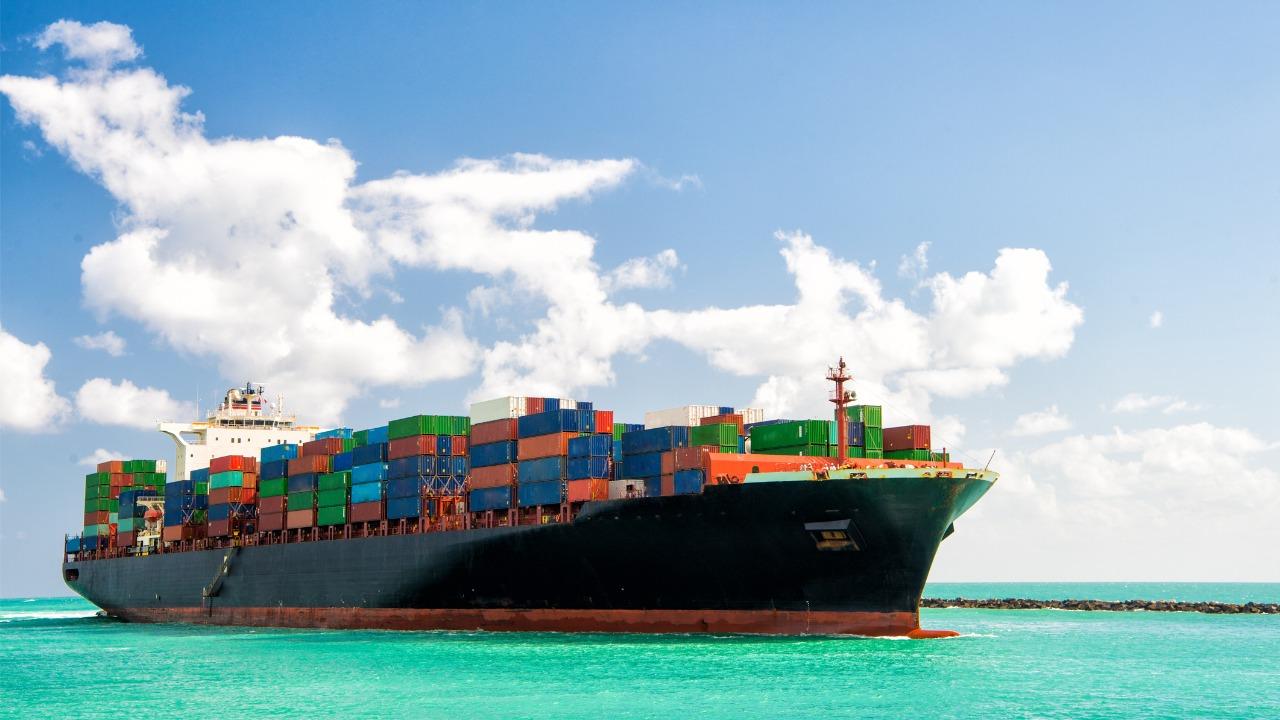
Despite the failure of a worldwide carbon pricing mechanism, shipping companies are advancing with investments in low‑carbon fuels and dual‑fuel vessels, driven by regional regulations and technological innovation, raising questions about the future of maritime decarbonisation.
Despite the collapse of a negotiated global carbon-price deal in maritime forums, many shipowners and suppliers are pressing ahead with investments in lower‑carbon fuels and dual‑fuel vessels, Reuters reported after analysing industry data and conducting interviews. Industry participants say commercial and regulatory pressures are driving a shift in fleet composition and fuel sourcing even without a worldwide levy. (Sources: Reuters analysis; decarbonisation context).
The International Maritime Organization’s Net‑Zero Framework , which had proposed a global fuel standard and a pricing mechanism , has been portrayed variously in recent accounts. According to some reports, a landmark agreement to impose a global charge on shipping emissions was adopted in April 2025, with initial fees planned from 2027 and levels broadly targeted at around $100 per tonne; proponents said the measure would raise billions to accelerate clean technologies. Other coverage and industry summaries say negotiations stalled and elements of the framework were deferred amid pushback from major oil producers and some delegations, leaving the timetable and scope uncertain. (Sources: AP; Le Monde; Net‑Zero Framework summary; decarbonisation overview).
Even without a settled global mechanism, shipping companies and service providers report concrete steps to cut emissions. Brokers, bunker suppliers and shipbuilders told Reuters that orders for vessels capable of running on both traditional fuel oil and alternatives such as LNG, methanol and ammonia are proceeding, and that firms are buying increasing volumes of low‑carbon fuels to meet customers’ demands and future rules. ‘The case for low‑carbon fuels such as ammonia and methanol is still alive if you have a trade concentrated around Europe,’ Kenneth Tveter, Global Head of Green Transition and LCO2 Shipping at ship broker Clarksons, told Reuters. (Sources: Reuters; IMO decarbonisation strategy).
Regional regulation is already nudging commercial choices. The European Union’s FuelEU Maritime initiative and other regional measures are creating compliance incentives for voyages to and from European ports, prompting operators to prepare for stricter fuel and carbon‑intensity requirements even if the international regime is delayed. Industry sources say this patchwork of rules makes investment in dual‑fuel capability and alternative bunkers commercially prudent for trades serving regulated markets. (Sources: Reuters; Le Monde).
Technological and operational advances are reinforcing the industry’s momentum. Demonstrations of zero‑carbon propulsion using green ammonia are under way , notably a tugboat powered by ammonia‑to‑hydrogen fuel cells that the developer says produces almost no emissions , while established operators report measurable reductions in fleet carbon intensity after upgrades and new‑build programmes. Shipping firms such as Odfjell have pointed to significant improvements in efficiency ratios and reductions in carbon intensity as evidence that investment can deliver tangible gains. (Sources: AP; Amogy demonstration; Odfjell reporting).
Nonetheless, political disagreement and questions over the scale and timing of costs remain. Environmental groups and some small island states have criticised proposed price levels as insufficient to drive the rapid decarbonisation scientists say is needed, while other governments and industry actors argue that predictable, phased incentives and regional rules will allow the sector to transition without disruptive shocks. Funding projections cited in coverage suggested a global levy could yield roughly $11–13 billion a year for technology funding and support to developing countries if implemented as proposed,but critics say higher prices will be required to shift fuel supply chains at scale. (Sources: AP; Le Monde; decarbonisation overview).
Source Reference Map
Inspired by headline at: [1]
Sources by paragraph:
– Paragraph 1: [6], [1]
– Paragraph 2: [2], [4], [5], [6]
– Paragraph 3: [1], [6]
– Paragraph 4: [1], [4]
– Paragraph 5: [3], [7], [6]
– Paragraph 6: [2], [4], [6]
Source: Noah Wire Services
Verification / Sources
- https://oilprice.com/Latest-Energy-News/World-News/Shipping-Giants-Forge-Ahead-with-Green-Investments-Despite-Carbon-Price-Collapse.html – Please view link – unable to able to access data
- https://apnews.com/article/98ff23ca4739d8b4fc5a8f941a7ca0c4 – In April 2025, major shipping nations agreed to impose the world’s first global fee on greenhouse gas emissions from ships, starting in 2027. Ships exceeding emissions thresholds will be charged a minimum of $100 per ton of greenhouse gases. The International Maritime Organization (IMO) expects this fee to generate $11–13 billion annually, funding clean shipping technologies and supporting developing countries. However, environmental groups argue the price is too low to effectively curb emissions, and some nations abstained, claiming the deal is inadequate given their climate vulnerability.
- https://apnews.com/article/60beccfb8894c79ddc624026fbf0a8e5 – In Kingston, New York, the 67-year-old tugboat NH3 Kraken became the first to sail powered solely by green ammonia—a carbon-free fuel. Developed by the startup Amogy, the tugboat uses ammonia cracked into hydrogen to power a fuel cell, generating electricity with minimal emissions. This innovation marks a significant step in reducing emissions in the maritime industry, which accounts for about 3% of global carbon emissions. Amogy aims to scale its solution to larger vessels and other sectors, with support from investors like Amazon and collaborations with leading shipbuilders.
- https://www.lemonde.fr/planete/article/2025/04/11/climat-un-accord-inedit-mais-insuffisant-pour-decarboner-le-transport-maritime_6594348_3244.html – In April 2025, the International Maritime Organization (IMO) approved a historic agreement establishing a global carbon pricing system for maritime transport to reduce greenhouse gas emissions, responsible for about 3% of global emissions. Starting in 2028, large ships must use cleaner fuels or face penalties ranging from $100 to $380 per ton of CO₂, depending on their carbon trajectory. Despite this progress, NGOs and several Pacific island states consider the agreement insufficient and delayed to limit global warming to 1.5°C. The U.S. attempted to block the deal, deeming it unfair.
- https://en.wikipedia.org/wiki/IMO_Net-Zero_Framework – The IMO Net-Zero Framework is a proposed United Nations system to price maritime shipping emissions, set to apply from 2028 to shipping in IMO member countries, applying a carbon price of $100 per tonne of CO₂ equivalent. If implemented, it would impose a fee on vessels that pollute above a certain threshold, incentivizing the shipping industry to reduce pollution. Prior to the agreement being scuttled by the U.S. administration, it was supported by leading shipping industry lobbies and most states, including the European Union, Japan, China, Britain, and the United States.
- https://en.wikipedia.org/wiki/Decarbonization_of_shipping – The decarbonization of shipping is an ongoing goal to reduce greenhouse gas emissions from shipping to net-zero by or around 2050, championed by the International Maritime Organization (IMO). As of 2025, maritime transport emits 3% of global greenhouse gas (GHG) emissions, but that could rise to 10% by 2050. The IMO has an initial strategy that includes reducing or limiting the combustion of fossil fuels for power and propulsion to limit emission of carbon dioxide (CO₂), development of alternative fuels such as green ammonia, hydrogen, and biofuels to reduce reliance on fossil fuels, and adopting digital technologies to increase vessel efficiency; and reducing emissions by 40% by 2030. However, in 2025, proposed IMO regulations aiming to reduce the GHG intensity of ship fuel, and the world’s first global mandatory charge on GHG emissions, were blocked by the United States and Saudi Arabia.
- https://en.wikipedia.org/wiki/Odfjell – In 2023, Odfjell reported a 50% reduction in the carbon intensity of its fleet compared to the IMO’s 2008 baseline. Later in the year, the company rerouted ships due to Houthi attacks in the Red Sea to ensure crew and vessel safety. In 2024, Odfjell celebrated its 110th anniversary with a record-breaking financial year and key milestones. The company continued to modernize its chemical tanker fleet, adding four newbuild vessels on long-term charter and acquiring one supersegregator previously under operational lease. By the end of the year, Odfjell had 18 chemical tankers on order—approximately 16% of the global orderbook in its segment—of which two will be owned by Odfjell and the remainder secured via long-term time charters. Four vessels were scheduled for delivery in 2025. Odfjell reported a 52.7% improvement in its average Annual Efficiency Ratio (AER) compared to the 2008 baseline, reflecting investments in vessel maintenance, upgrades, and technology aimed at reducing carbon intensity. In response to global risks—including cybersecurity threats, hybrid warfare, the rise of a shadow fleet, and climate change—the company reaffirmed its focus on safety, operational excellence, and energy efficiency.