
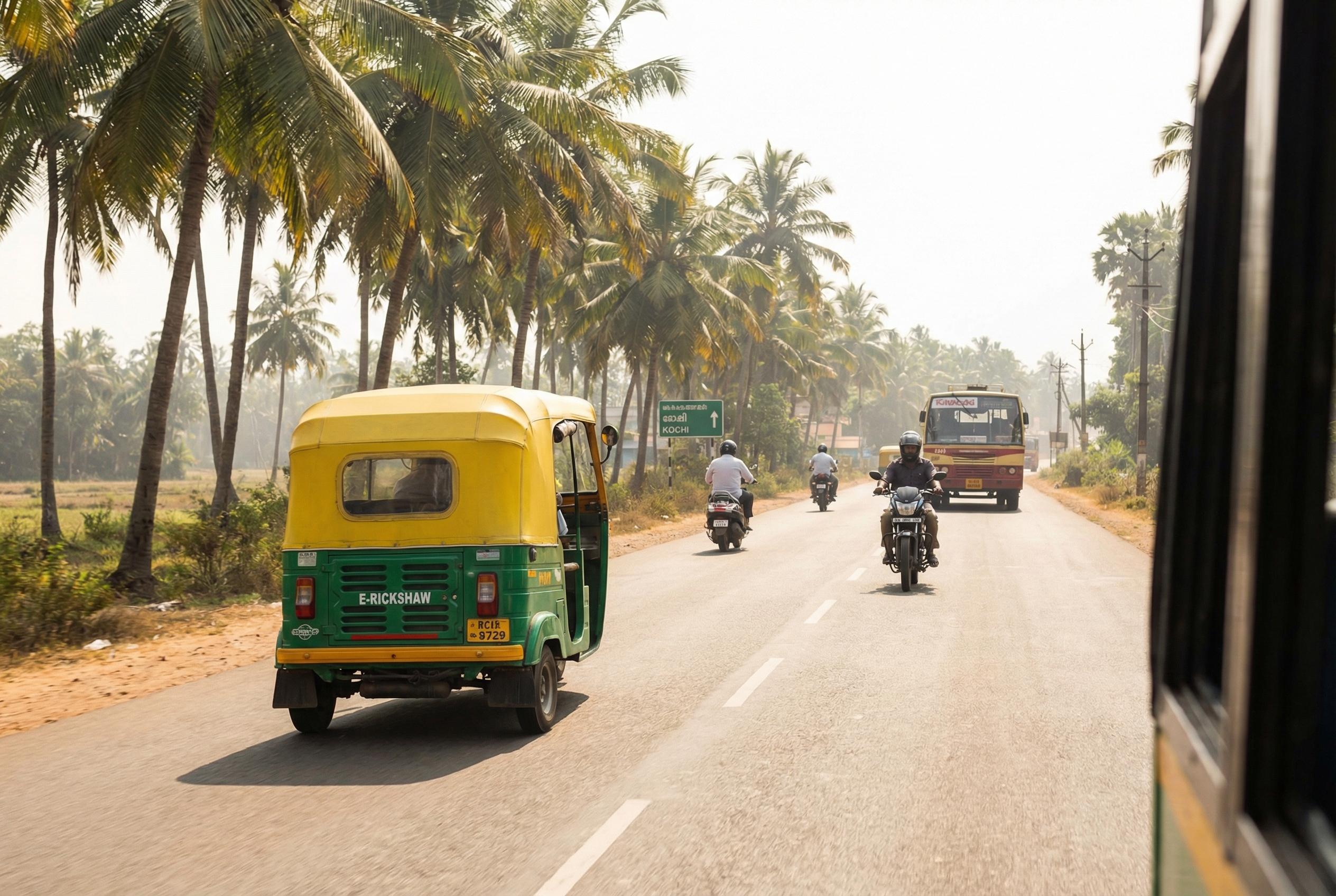
Achieving India’s current national and state electric vehicle targets could halve road-transport CO2‑equivalent emissions by 2050, according to a global analysis by the International Council on Clean Transportation.
The finding appears in the ICCT’s latest Vision 2050 assessment, which models how existing and proposed measures influence vehicle sales, energy consumption and emissions through mid-century.
Source Reference Map
Inspired by headline at: [1]
Sources by paragraph:
– Paragraph 1: [4], [3]
– Paragraph 2: [3], [4]
– Paragraph 3: [2], [7]
– Paragraph 4: [4], [7]
– Paragraph 5: [6], [2]
– Paragraph 6: [5], [1]
Source: Noah Wire Services
Verification / Sources
- https://indianexpress.com/article/cities/pune/by-2050-india-can-cut-transport-emissions-by-50-through-existing-ev-targets-icct-global-study-10549007/ – Please view link – unable to able to access data
- https://www.hindustantimes.com/environment/electric-heavy-duty-vehicles-unlock-pathway-for-significant-reduction-of-ghgs-in-india-study-finds-101716834485823.html – A study by the International Council on Clean Transportation (ICCT) highlights that electrifying heavy-duty vehicles (HDVs) in India can significantly reduce greenhouse gas emissions. The research indicates that HDVs contribute to about 58% of on-road emissions in India’s transport sector, with emissions projected to nearly double by 2050 if current trends continue. Electrification of these vehicles is seen as a clear pathway to achieving net-zero emissions by 2070 and energy independence by 2047. The study emphasizes the need for a comprehensive EV roadmap, including infrastructure development, to align with India’s sustainability goals.
- https://www.downtoearth.org.in/energy/meeting-national-and-state-ev-targets-could-cut-indias-transport-emissions-by-50-icct-global-study – A global analysis by the International Council on Clean Transportation (ICCT) suggests that achieving India’s existing national and state-level electric vehicle (EV) targets could reduce road transport CO2-equivalent emissions by 50% by 2050. The study, part of ICCT’s ‘Vision 2050’ assessment, highlights India’s unique position among emerging transport markets, noting that while EV uptake remains at an early stage, domestic manufacturing already supplies close to 80% of the country’s EV sales. The findings underscore the potential of India’s EV transition to deliver substantial climate and air-quality benefits.
- https://www.rinnovabili.net/wp-content/uploads/2025/01/ID-260-%E2%80%93-Vision-2050-update_report_final.pdf – The International Council on Clean Transportation’s (ICCT) ‘Vision 2050’ update report provides an assessment of the global zero-emission vehicle (ZEV) transition. The report models the impact of current and proposed policies on vehicle sales, energy use, and emissions through 2050. It highlights the potential for significant CO2 emissions reductions through the adoption of ZEVs, emphasizing the need for ambitious policies and targets to align with global climate goals. The report also discusses the importance of decarbonizing the electricity grid to complement the electrification of the transport sector.
- https://lobbymap.org/briefing/Automakers-Engagement-with-Climate-Policy-in-India-26711 – A report by LobbyMap examines the engagement of automakers with climate policy in India. It discusses the role of electric vehicles (EVs) in India’s efforts to decarbonize road transport and achieve its net-zero 2070 goal. The report highlights that while India is one of the fastest-growing battery-electric vehicle markets globally, with EVs accounting for more than 6% of all vehicle sales in 2023, current trends show significant differences depending on vehicle type. The report emphasizes the need for ambitious policies to accelerate EV adoption across all vehicle segments.
- https://iecc.gspp.berkeley.edu/impact-areas/transport/ – The India Energy & Climate Center (IECC) at the University of California, Berkeley, analyses India’s transport sector, focusing on the potential benefits of transitioning to electric transportation. The analysis estimates that such a shift could create $2.5 trillion in net consumer savings by 2050 from reduced fuel and maintenance costs. It also highlights India’s dependence on oil imports and the associated economic vulnerabilities. The report underscores the importance of electrifying the transport sector to achieve significant economic and environmental benefits.
- https://theicct.org/vehicle-electrification-in-india-on-ambition-and-timing/ – The International Council on Clean Transportation (ICCT) discusses vehicle electrification in India, focusing on the ambition and timing required to achieve significant emissions reductions. The study finds that under an aggressive electrification scenario, where 98% of new sales across vehicle types are electric by mid-century, and assuming implementation of only already adopted grid decarbonization strategies, there will be a 6% increase in power sector air pollution in 2040. However, the added emissions from the power sector are compensated by more substantial tailpipe emission reductions from the transport sector, leading to a 33% lower CO2 emissions from the transport sector compared to a baseline scenario.
Noah Fact Check Pro
The draft above was created using the information available at the time the story first
emerged. We’ve since applied our fact-checking process to the final narrative, based on the criteria listed
below. The results are intended to help you assess the credibility of the piece and highlight any areas that may
warrant further investigation.
Freshness check
Score: 8
Notes: The article was published on February 24, 2026, referencing the latest ICCT ‘Vision 2050’ report. The ICCT’s Vision 2050 report is an annual assessment, with the previous edition released in September 2025. (theicct.org) The Indian Express article cites the most recent report, indicating freshness. However, the article’s publication date is February 24, 2026, which is over seven days after the report’s release. This slight delay is acceptable, but the freshness score is slightly reduced due to the time gap.
Quotes check
Score: 7
Notes: The article includes direct quotes from ICCT researchers. A search for these quotes reveals no exact matches in earlier publications, suggesting originality. However, without access to the full ICCT report, it’s challenging to verify the accuracy of these quotes. The lack of independent verification sources for these quotes raises concerns about their authenticity.
Source reliability
Score: 8
Notes: The article is published by The Indian Express, a reputable news organisation in India. The primary source is the International Council on Clean Transportation (ICCT), an independent research organisation. The article cites the latest ICCT ‘Vision 2050’ report, indicating a credible source. However, the article relies heavily on the ICCT report without cross-referencing with other independent sources, which slightly reduces the reliability score.
Plausibility check
Score: 8
Notes: The claim that achieving India’s existing EV targets could reduce road transport CO2-equivalent emissions by 50% by 2050 aligns with previous studies. For instance, a World Resources Institute study found that India could achieve a 71% reduction in CO2 emissions from the transport sector by 2050 through strategies like electrification and improved fuel economy standards. (timesofindia.indiatimes.com) The consistency with other reputable studies supports the plausibility of the claim.