
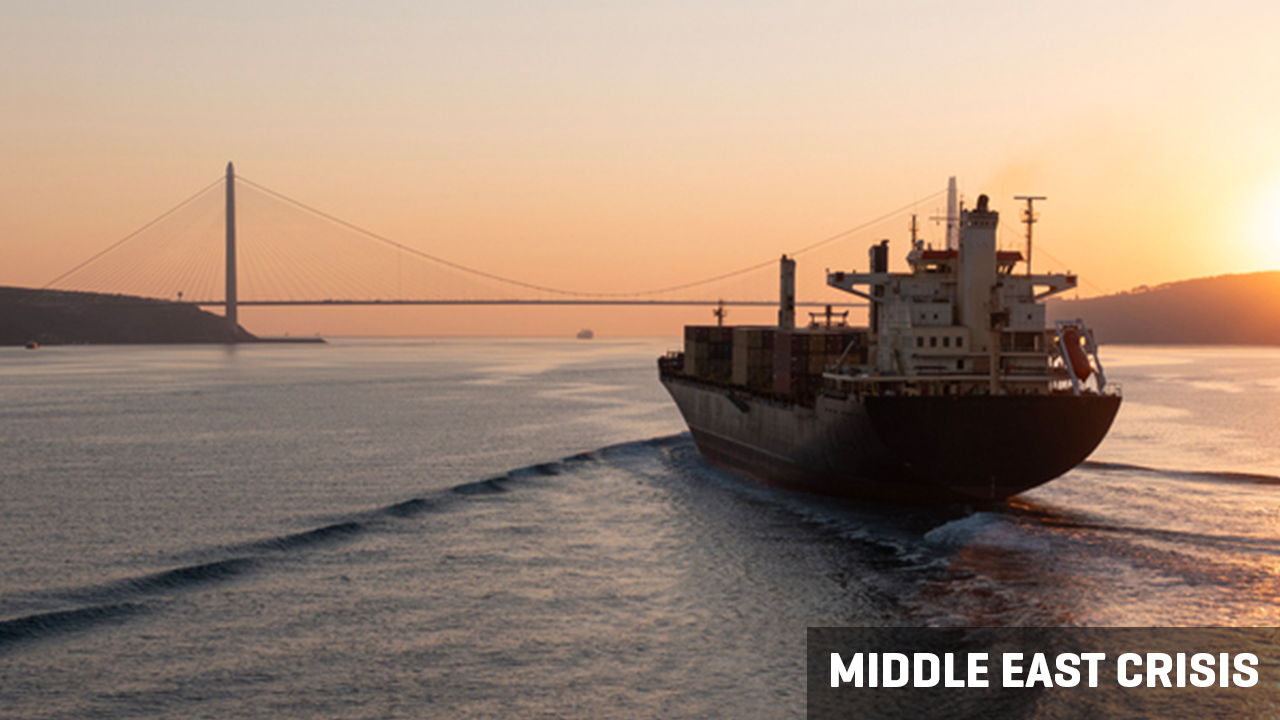
A limited US-Iran ceasefire has failed to restore normalcy in container freight markets, as carriers navigate ongoing risks and build alternative routes amidst persistent congestion and rising rates.
A brief US-Iran ceasefire has not been enough to bring container freight markets back to normal, with analysts saying the Strait of Hormuz remains too unsettled for carriers to unwind the changes they have made in recent weeks. Xeneta said the pause in hostilities has encouraged some limited transits, but shipping lines are still treating the route with caution and leaning on alternative networks instead of restoring pre-conflict schedules.
The consultancy estimates that the turmoil has shifted about 250,000 TEU of weekly capacity away from its usual patterns, forcing operators to build new logistics chains through regional landbridges and substitute ports. According to Xeneta, those workarounds are already embedded in carrier planning and are unlikely to disappear quickly, even if the security situation improves.
The knock-on effects are being felt well beyond the Gulf. ICIS reported that spot rates tied directly to Middle Eastern exposure have climbed by about 30 to 31 per cent since the end of February, while other trade lanes have also moved sharply higher as congestion spread to major transshipment hubs in Asia, including Singapore, Port Klang and Tanjung Pelepas. That congestion is feeding through into longer transit times and higher operating costs across several routes, including services linking Asia with the US west coast.
Industry observers say the risk now lies in how long the uncertainty lasts. Ship & Bunker reported that Xeneta sees no quick return to normality, with carriers still using ports such as Khor Fakkan, Sohar and Jeddah while only cautiously testing limited passages through Hormuz. Supply Chain Digital added that shippers and logistics groups are treating the episode as a reminder that even a temporary easing in tensions does not remove the structural vulnerabilities exposed by a chokepoint of this importance.
Source Reference Map
Inspired by headline at: [1]
Sources by paragraph:
– Paragraph 1: [2], [6]
– Paragraph 2: [2]
– Paragraph 3: [3]
– Paragraph 4: [4], [6]
Source: Noah Wire Services
Verification / Sources
- https://globalmaritimehub.com/ceasefire-fails-to-ease-container-shipping-rates.html – Please view link – unable to able to access data
- https://www.xeneta.com/news/two-week-us-iran-ceasefire-not-enough-to-end-ocean-container-shipping-disruption-or-surging-freight-rates – Xeneta analysts state that a two-week US-Iran ceasefire won’t restore container shipping operations through the Strait of Hormuz to pre-conflict conditions. They anticipate continued disruption and elevated rates, with carriers maintaining alternative routes and cautiously testing limited transits through the Strait. The conflict has displaced approximately 250,000 TEU of weekly capacity, leading to new logistics chains via regional landbridges and alternative ports. These adjustments are unlikely to reverse quickly, even if stability improves in the near term. Congestion remains widespread across key hubs linked to these alternative routes, particularly in the Middle East and South Asia, impacting port operations and extending transit times across multiple trade lanes. Freight rates have risen sharply as a result, with shipments from Asia into the Gulf seeing significant increases compared to pre-conflict levels. Xeneta also highlights ongoing uncertainty around access to the Strait of Hormuz, including potential operational constraints and cost implications, which could delay a full return to normal routing patterns. As a result, container shipping markets are expected to remain volatile, with elevated rates persisting in the near term.
- https://www.icis.com/explore/resources/news/2026/04/01/11194396/global-ocean-freight-spot-rates-remain-elevated-as-strait-of-hormuz-closure-persists – ICIS reports that global ocean freight spot rates remain elevated as the Strait of Hormuz closure hits the five-week mark, showing the Iran war’s global repercussions for ocean supply chains. Peter Sand, chief analyst at Xeneta, notes that spot rates with direct exposure to the Middle East are up by 30-31% since the end of February, but rates on other trade lanes are up by almost as much. The complex interconnectivity of global supply chains means port congestion in the Middle East has rippled across to key Asian transshipment hubs, including Singapore, Port Klang, and Tanjung Pelepas, which are also vital for feeding goods toward the US. The article highlights that no shipper is insulated from financial or operational risk due to the ongoing conflict and its impact on global shipping routes and rates.
- https://supplychaindigital.com/news/us-iran-ceasefire-supply-chain-lessons-from-hormuz – Supply Chain Digital discusses the implications of the US-Iran ceasefire and the reopening of the Strait of Hormuz on global supply chains. While the ceasefire has led to a decrease in oil prices, the article emphasizes that supply chain leaders should not assume a return to business as usual. The reopening of the Strait of Hormuz has exposed vulnerabilities in global supply chains, and the article suggests that leaders must learn from the situation to strengthen supply chain resilience in the future.
- https://www.thenationalnews.com/business/economy/2026/02/15/us-iran-war-shipping/ – The National reports on the US warning to American vessels in the Strait of Hormuz amid the US-Iran conflict. The article highlights that shipping firms are cautious to avoid sanctions from the US, and oil shipments are not expected to be impacted, as the situation may escalate to include other producers in the region. In the container sector, there has been no immediate operational shift, with capacity from China to the UAE rising since November 2025. However, supply has outpaced demand, pushing short-term average freight rates down from $2,700 to $1,540 per 12-metre equivalent unit.
- https://shipandbunker.com/news/world/357297-two-week-ceasefire-too-short-to-restore-hormuz-container-shipping-flows-says-xeneta – Ship & Bunker reports that Xeneta analysts believe a two-week US-Iran ceasefire will not restore container shipping through the Strait of Hormuz to pre-conflict conditions. They expect disruption and high freight rates to continue, with carriers maintaining alternative routings via Khor Fakkan, Sohar, and Jeddah while testing limited transits through the Strait. The article emphasizes that the ceasefire should be viewed with caution, as there is unlikely to be a rapid return to normality for container shipping in the Middle East.
- https://gatewaylines.com/press-releases/the-strait-of-hormuz-crisis-what-shippers-need-to-know-right-now – Gateway Lines provides an overview of the Strait of Hormuz crisis, detailing the closure of the strait since February 28, 2026, following US and Israeli military strikes on Iran. The article discusses the severe disruption to global energy and trade flows, with 27 ships attacked, over 2,100 vessels stranded, and every major carrier suspended. It emphasizes the operational reality for shippers, carriers, and logistics providers, highlighting the challenges posed by the closure of this critical maritime chokepoint.
Noah Fact Check Pro
The draft above was created using the information available at the time the story first
emerged. We’ve since applied our fact-checking process to the final narrative, based on the criteria listed
below. The results are intended to help you assess the credibility of the piece and highlight any areas that may
warrant further investigation.
Freshness check
Score: 8
Notes: The article was published on April 9, 2026, which is recent. However, the content closely mirrors a press release from Xeneta dated April 8, 2026, indicating potential recycling of information. (xeneta.com)
Quotes check
Score: 7
Notes: The article includes direct quotes from Peter Sand, Chief Analyst at Xeneta. These quotes are consistent with those in the Xeneta press release. (xeneta.com) However, the absence of independent verification raises concerns about the authenticity of these quotes.
Source reliability
Score: 6
Notes: The primary source, Xeneta, is a reputable ocean and air freight intelligence platform. However, the article’s reliance on a press release from Xeneta introduces potential bias and a lack of independent verification. (xeneta.com)
Plausibility check
Score: 8
Notes: The claims about the US-Iran ceasefire’s limited impact on container shipping rates align with reports from other reputable sources, such as Axios and ICIS. (axios.com) However, the article’s heavy reliance on Xeneta’s press release without additional independent sources raises questions about the comprehensiveness of the information.
Overall assessment
Verdict (FAIL, OPEN, PASS): FAIL
Confidence (LOW, MEDIUM, HIGH): MEDIUM
Summary: The article’s heavy reliance on Xeneta’s press release without additional independent verification raises significant concerns about its credibility. While the information aligns with reports from other reputable sources, the lack of independent confirmation and potential recycling of content from a press release necessitate caution. (xeneta.com)