
Ankara is pressing for more appointments, faster decisions and broader use of multiple-entry visas, while Schengen missions in Türkiye prepare a separate group to review visa practices.
Türkiye is maintaining its long-term push for visa-free travel to the Schengen area while pressing for changes to make applications easier in the meantime. At a Local Schengen Cooperation meeting in Ankara on 18 November 2026, Turkish officials discussed visa procedures and application data with representatives of Schengen countries, the EU Delegation and the European Commission. The European External Action Service describes the network as a forum for sharing information and supporting a more consistent approach to visa decisions. [2][4][5]
According to reports by Ekonomim and Sondakika, Turkish officials asked for better access to appointments, faster decisions and fewer supporting documents. They also called for simpler procedures for people who have previously held Schengen visas, arguing that the difficulties warrant attention given Türkiye’s close links with the EU. [2][3]
The meeting also addressed the Cascade system, which can help eligible applicants obtain multiple-entry visas and, over time, visas with longer validity. Türkiye called for the arrangement to be used more widely. The Turkish Foreign Ministry’s 2025 activity report says the European Commission approved improvements to Schengen visa practice for Turkish citizens on 15 July that year. [3][7]
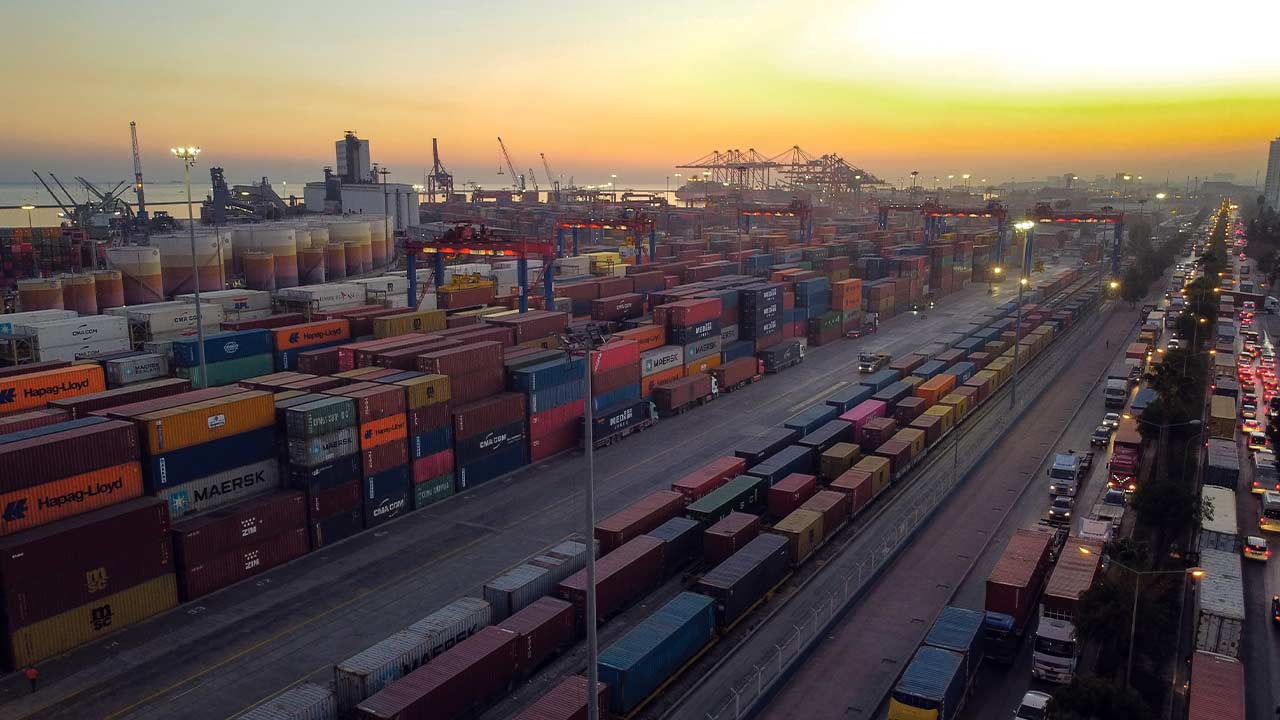
Officials raised the position of Turkish lorry drivers, seeking reliable access to the Schengen area and a response to restrictions on the length of stays. Ekonomim reported that the issue was linked to the continuity of trade with the EU. [3][4]
The Foreign Ministry also warned that appointment difficulties had created opportunities for unlicensed visa consultants. Reports say Turkish authorities have pursued operations and legal cases against such networks in co-operation with the Justice, Trade and Interior ministries. EU guidance advises applicants to use embassies, consulates or authorised service providers, and warns that unauthorised intermediaries do not improve the likelihood of approval. [2][4][6]
Problems affecting Turkish students admitted to EU universities have reportedly fallen substantially compared with the previous two years, with only a limited number of cases reaching the Foreign Ministry in 2026. The meeting’s participants also agreed to establish a separate group among Schengen missions in Türkiye to review visa practices. [2][3][4]
Visa-free travel remains Türkiye’s stated priority. The EU launched its Visa Liberalisation Dialogue with Türkiye in December 2013, while Turkish citizens remain subject to the Schengen visa requirement. Short-stay visas generally allow visits of up to 90 days in any 180-day period; the new working group is intended to examine current practices as the broader dialogue continues. [2][5][6]
Source Reference Map
Inspired by headline at: [1]
Sources by paragraph:
– Paragraph 1: [2], [4], [5]
– Paragraph 2: [2], [3]
– Paragraph 3: [3], [7]
– Paragraph 4: [3], [4]
– Paragraph 5: [2], [4], [6]
– Paragraph 6: [2], [3], [4]
– Paragraph 7: [2], [5], [6]
Source: Noah Wire Services
Verification / Sources
- https://www.sondakika.com/guncel/haber-turkiye-ile-schengen-ulkeleri-arasinda-vize-20443453/ – Please view link – unable to able to access data
- https://www.sondakika.com/guncel/haber-turkiye-ile-schengen-ulkeleri-arasinda-vize-20443453/ – The article reports that Türkiye is continuing to pursue visa-free travel to the Schengen area through its Visa Liberalisation Dialogue with the European Union, while also seeking practical improvements to visa applications in the meantime. It describes a Local Schengen Cooperation meeting held in Ankara, bringing together Turkish Foreign Ministry officials, representatives of Schengen countries, the EU Delegation and European Commission officials. The discussion covered visa procedures and application data, and the article notes that ministry and Commission representatives took part for the first time. Türkiye renewed its requests for easier appointment access, quicker decisions, fewer supporting documents and simpler procedures for people who have previously held visas. It also called for wider use of the Cascade system, which can facilitate longer-validity and multiple-entry visas, and raised the difficulties faced by Turkish lorry drivers seeking reliable access to the Schengen area. The report says that illegal visa consultancy businesses have emerged amid appointment problems, and that operations and legal proceedings have been pursued with several Turkish ministries. It adds that problems affecting Turkish students admitted to EU universities have substantially decreased compared with the previous two years. Finally, it reports the creation of a separate working group among Schengen missions in Türkiye to review visa practices. The article presents visa liberalisation as Türkiye’s principal long-term objective.
- https://www.ekonomim.com/ekonomi/turkiye-ile-schengen-ulkeleri-arasinda-vize-calisma-grubu-kuruldu-haberi-932266 – This report describes a Local Schengen Cooperation meeting in Ankara and the Turkish requests raised there concerning Schengen visa applications. According to information attributed to Foreign Ministry sources, Turkish officials met representatives of Schengen countries in Türkiye, the EU Delegation and European Commission officials. The meeting reviewed visa procedures and related data; the report highlights that Foreign Ministry and Commission representatives participated together for the first time. Türkiye argued that its close integration with the EU makes the difficulties facing applicants important to resolve. Its requests included improving access to appointments, shortening the time required to decide applications, reducing the number of documents requested and making the process easier for people who have held visas previously. The article also says Türkiye sought broader use of the Cascade system, intended to enable longer-term and multiple-entry visas. It raised the need for uninterrupted Schengen access for Turkish lorry drivers, linking the matter to the continuity of trade, and asked for a solution to existing limits on stays. The report mentions concerns about unlicensed consultancy businesses taking advantage of appointment difficulties and says authorities were informed about legal proceedings. It adds that student visa difficulties have declined compared with the preceding two years. A separate working group among Schengen missions in Türkiye was established to review visa practices.
- https://borahaber.com/en/news/turkiye-asks-eu-to-review-its-schengen-visa-processes – This English-language report summarises Türkiye’s requests at a Local Schengen Cooperation meeting in Ankara on 18 November 2026. It says Foreign Ministry officials met representatives of Schengen countries in Türkiye, the EU Delegation and European Commission officials, with ministry and Commission officials participating together for the first time. The meeting concerned Schengen visa procedures and application data. Türkiye called for easier appointment access, faster processing, fewer required documents and more straightforward treatment for applicants who had previously held Schengen visas. It also asked for wider application of the Cascade system, which can allow multiple-entry visas with longer validity. Another issue was the need for Turkish lorry drivers to maintain access to the Schengen area, so that trade with the EU is not interrupted, alongside a request to address current restrictions on duration of stay. The report says the Foreign Ministry warned that disruptions in the process have helped create illegal consultancy businesses that make it harder for people to secure appointments. It describes operations and legal cases involving such networks, conducted in cooperation with the Turkish Justice, Trade and Interior ministries. The article further reports fewer visa difficulties for Turkish students accepted by EU universities than in the previous two years, with only a limited number of cases reaching the ministry in 2026. It confirms that a working group was formed to review visa practices.
- https://www.eeas.europa.eu/delegations/t%C3%BCrkiye/visa-policy-and-local-schengen-cooperation-network-t%C3%BCrkiye-0_en?s=230 – The European External Action Service page explains the role of the Local Schengen Cooperation network in Türkiye and provides background on the Schengen visa system. It says EU Member State embassies and consulates in Türkiye implement the common Visa Code, which sets out procedures and conditions for short-stay and airport-transit visas. The page lists the Schengen countries represented in Türkiye and identifies the cities where consular offices issue visas. It explains that Local Schengen Cooperation is a forum for exchanging information and experience, with the aim of supporting a harmonised approach to visa issuance. Public outreach meetings also explain the visa system, particularly to business associations and local chambers of commerce. The page notes the connection between local cooperation, the EU Visa Code and the continuing visa-liberalisation dialogue with Türkiye. It states that Turkish citizens are subject to a visa requirement for travel to the Schengen area, and that the EU launched its Visa Liberalisation Dialogue with Türkiye in December 2013. The page also provides historical application statistics for 2011–2015, including application volumes, visas issued and refusal rates. It explains that a short-stay Schengen visa generally permits travel within the Schengen area for up to 90 days in any 180-day period, while longer stays are governed by national procedures. This source supports the article’s description of the LSC platform and the broader context of visa policy.
- https://www.eeas.europa.eu/delegations/t%C3%BCrkiye/visa_en – This European Union Delegation page gives practical guidance for people applying for Schengen visas in Türkiye. It says applicants are responsible for their own applications and should apply to the country that is their main destination or where they intend to spend the most time. Only Schengen embassies and consulates process visa applications; the EU Delegation itself does not. The page lists authorised external service providers in Türkiye and the countries they serve, including providers for Germany, Italy, Spain, Greece and several other Schengen states. It specifically warns applicants that travel agencies and unauthorised intermediaries are unnecessary and do not improve the chances of receiving a visa. The guidance cautions that fraudulent or abusive conduct can lead to cancelled appointment slots, refusal, visa cancellation or an entry ban. Applicants are advised to submit accurate, complete documentation, demonstrate genuine travel arrangements and adequate financial means, check passport validity and apply in good time. The page also outlines current visa fees and warns that intermediaries may charge extra fees without providing privileged access to consulates. It explains the 90-days-in-180-days limit that applies to short-stay visits, including holders of long-validity multiple-entry visas. This official information is relevant to the article’s claims about the application process, authorised providers and risks associated with misleading consultancy services.
- https://www.mfa.gov.tr/data/BAKANLIK/disisleri-bakanligi-2025-yili-idare-faaliyet-raporu.pdf – The Turkish Foreign Ministry’s 2025 activity report is an official document describing the ministry’s work, including visa policy and relations with the European Union. Its discussion of the Schengen Cascade arrangement states that the European Commission approved a decision on 15 July 2025 providing improvements to Schengen visa practice for Turkish citizens. The report says the arrangement is intended to help eligible applicants obtain multiple-entry visas more quickly and easily, with later applications potentially leading to visas valid for longer periods. This background is pertinent to the article’s request that the Cascade system be implemented more widely. The document also records the ministry’s continuing coordination with relevant Turkish institutions on international issues and describes a working group established to align visa policy with national interests and foreign-policy objectives. It notes that a second meeting of this domestic Visa Policies Working Group took place on 4 December 2025. The report is not a record of the Ankara meeting described in the news article, nor does it independently verify each claim about appointments, student cases, lorry drivers or enforcement operations. Its value is to substantiate the prior official policy context: Türkiye had been working on improvements to Schengen visa procedures, and the Cascade decision was formally approved in 2025. It therefore provides an official source for the phased visa-facilitation measure mentioned in the report.
Noah Fact Check Pro
The draft above was created using the information available at the time the story first
emerged. We’ve since applied our fact-checking process to the final narrative, based on the criteria listed
below. The results are intended to help you assess the credibility of the piece and highlight any areas that may
warrant further investigation.
Freshness check
Score: 7
Notes: 🕰️ The meeting is reported as taking place in Ankara on 18 November 2026, and the supplied Sondakika article was published on 19 November 2026. Search results show substantially similar coverage on 19 November, including an earlier item attributed to Yeni Şafak at 15:17, before Ekonomim’s 15:57 publication and Sondakika’s 16:22 publication. This is therefore current-day reporting, but the supplied article is not demonstrably the first publication. Multiple same-day versions appear to repeat a common account rather than independently establish every detail. No substantially similar report dated more than seven days earlier was found in the searches conducted. (sondakika.com)
Quotes check
Score: 6
Notes: ✅ The supplied article contains no attributed direct quotations to verify; its claims are paraphrased. This avoids an identifiable reused-quote issue, but means there are no quoted statements independently attributable to named speakers. The central account is attributed in Ekonomim to Foreign Ministry sources, without naming those sources or providing a transcript or public meeting record. Treat the reported requests and meeting outcomes as source-based claims, not independently confirmed quotations. (ekonomim.com)
Source reliability
Score: 6
Notes: ⚠️ The linked lead is Sondakika, a Turkish news site, and the closest detailed same-day source located is Ekonomim, which attributes its report to Foreign Ministry sources. The article supplied here is credited to Noah Wire Services and synthesises those reports with official EU background material; it is not primary reporting from the meeting. The EEAS pages support general context about the Local Schengen Cooperation network, visa requirements and the 90-days-in-180 rule, but one cited network page dates from 5 August 2022 and does not verify the November 2026 meeting. The 2025 Turkish Foreign Ministry report supports the Cascade decision date but is a government source and not independent confirmation of the 2026 claims. No evidence found that the named institutions are fabricated. (sondakika.com)
Plausibility check
Score: 6
Notes: ⚠️ The central event is plausible and has same-day coverage in several Turkish outlets, while the EEAS supports the general description of local Schengen cooperation and visa rules. However, much of the apparent corroboration repeats the same account and does not establish independent confirmation. Specific claims about the meeting, the working group, enforcement operations against illegal consultants and the small number of student cases reaching the Foreign Ministry are not accompanied by a meeting statement, named officials, case figures or independently accessible records in the material reviewed. The article should not imply that visa rules have already changed: it describes requests and a review group, not an implemented reform. The claimed 15 July 2025 Cascade approval is supported by the Turkish Foreign Ministry’s own report, but remains government-sourced. (ekonomim.com)