
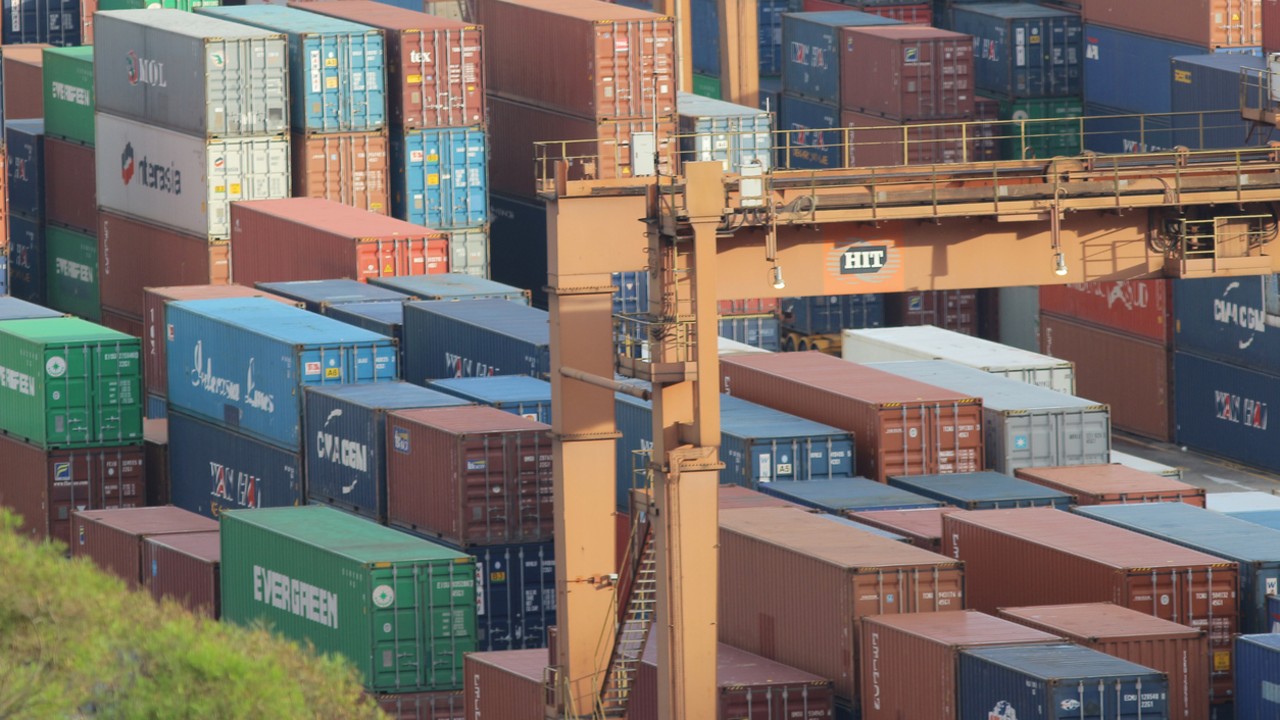
Xeneta forecasts spot rates will drop by about 30 per cent in 2027 as fleet capacity outpaces demand, with ships returning to the Red Sea adding to the surplus. The outlook depends on security conditions and whether routes through Suez remain viable.
Xeneta expects global container spot rates to fall by about 30 per cent in 2027, with long-term contract rates declining by a more modest 5 per cent. The projections, set against the third quarter of 2026, were presented by chief analyst Peter Sand at the company’s Munich summit on 5 November. They point to a difficult year for carriers, but depend heavily on how shipping routes and security conditions develop. ([2], [4], [7])
The central pressure is an anticipated gap between demand and available capacity. Xeneta forecasts that container volumes will expand by 2.5 to 4 per cent next year, while the global fleet grows by 6.8 per cent. Around 2.9 million TEU of new ships are expected to enter service, against approximately 500,000 TEU due to be scrapped. Demand growth in the first eight months of 2026 was 4.7 per cent, but some of that strength reflected shippers bringing orders forward and building inventories amid disruption concerns. ([3], [4], [5])
The return of services to the Red Sea and Suez Canal could add further capacity to the market. Longer diversions around the Cape of Good Hope have tied up ships on extended voyages; shorter routes through Suez can allow carriers to maintain service frequency with fewer vessels. Xeneta estimates that the shift back towards the canal has already freed about 599,000 TEU for use elsewhere. Weekly capacity assigned to Red Sea routes reached 467,297 TEU in October, roughly twice the level at the end of August but still around half the pre-crisis figure. ([2], [4], [5])
For carriers, the combination of new deliveries and vessels released from diversions may intensify competition, particularly on major east–west trades. They could seek to manage the surplus through cancelled sailings, slower speeds or changes to service capacity. The contrast between the forecast falls in spot and contract rates also matters: spot prices can respond quickly to available space, while longer-term agreements adjust according to when they are negotiated, their duration and their renewal terms. ([2], [4], [5])
The outlook follows a turbulent year for freight markets. Xeneta’s data showed Far East–US west coast spot rates rising by 343 per cent between 28 February and 31 October 2026. At the same time, schedule performance remained weak: only 27 per cent of container ships arrived on time globally in the third quarter, while the figure on the Far East–Europe route fell to 4 per cent in September. A move back to Suez could also bring vessels onto overlapping schedules, temporarily adding pressure to European ports. ([2], [3], [4])
The forecast is not assured. Renewed insecurity in the Red Sea could force carriers to resume longer African diversions, absorbing capacity and potentially pushing rates upwards. Restrictions on Panama Canal transits if low water levels persist present another risk. Xeneta’s expectations therefore hinge not only on how many ships enter the fleet, but also on whether the shorter routes remain viable and whether cargo demand can absorb the capacity coming back into circulation. ([2], [3], [6])
Source Reference Map
Inspired by headline at: [1]
Sources by paragraph:
– Paragraph 1: [2], [4], [7]
– Paragraph 2: [3], [4], [5]
– Paragraph 3: [2], [4], [5]
– Paragraph 4: [2], [4], [5]
– Paragraph 5: [2], [3], [4]
– Paragraph 6: [2], [3], [6]
Source: Noah Wire Services
Verification / Sources
- https://www.seanews.com.tr/article/sharp-decline-in-container-freight-rates-mw8ocenf – Please view link – unable to able to access data
- https://www.seanews.com.tr/article/sharp-decline-in-container-freight-rates-mw8ocenf – SeaNews reports Xeneta’s forecast that global container spot freight rates could fall by 30% in 2027, while long-term contract rates may decline by 5%. The forecast was presented by chief analyst Peter Sand at the Xeneta Summit in Munich on 5 November 2026. Xeneta expects shipping demand to grow by 2.5% to 4%, while the container fleet expands by 6.8%. Around 2.9 million TEU of new vessels are expected to enter service, compared with about 500,000 TEU of capacity due to be scrapped. The article says that returning services to the Red Sea and Suez Canal will release capacity previously absorbed by longer Cape of Good Hope voyages. In October 2026, weekly capacity allocated to the Red Sea exceeded 467,000 TEU, and Xeneta estimates that the return to Suez has already made about 599,000 TEU reusable. It also reports a 343% increase in Far East–US west coast spot rates between 28 February and 31 October 2026, and weak schedule reliability, including a 27% global on-time arrival rate in the third quarter. The forecast is subject to geopolitical uncertainty: renewed attacks could force ships back around Africa, while Panama Canal restrictions could also disrupt shipping. The article concludes that supply growth and Red Sea security will be decisive factors.
- https://www.clecat.org/news/newsletters/xeneta-forecasts-30-drop-in-container-spot-rates-a – This CLECAT news item summarises Xeneta’s Ocean Outlook and its expectation that global container spot rates may fall by around 30% in 2027 as capacity grows faster than demand. Presented in Munich by chief analyst Peter Sand, the outlook assumes carriers can continue using the Red Sea and Suez Canal. Xeneta expects container volumes to grow by 2.5% to 4% in 2027, slower than the 4.7% recorded during the first eight months of 2026. The article explains that some recent volume growth came from shippers bringing orders forward and building inventories amid concerns about disruption in the Strait of Hormuz. Those inventories may be drawn down, while weaker consumer demand could further restrain growth. Fleet capacity is forecast to increase by 6.8%; approximately 2.9 million TEU of new ships are due for delivery, while about 500,000 TEU may be scrapped. The gradual return to Suez is expected to free additional capacity because shorter voyages allow carriers to maintain weekly services with fewer vessels. The article also notes risks to the forecast. Renewed attacks in the Red Sea could send ships back around the Cape of Good Hope, absorbing capacity and pushing freight rates upwards. Low water levels in the Panama Canal could cause transit restrictions and surcharges. It further cautions that the transition back to Suez may temporarily create congestion at European ports as vessels on different routes arrive together.
- https://www.forwardernews.com/news/2026-11-05-xeneta-sees-2027-spot-rates-down-30 – Forwarder News examines Xeneta’s forecast of a 30% fall in average ocean spot rates in 2027, compared with a smaller 5% reduction in long-term contract rates. Both projections use the third quarter of 2026 as their comparison baseline. The article attributes the expected decline chiefly to an imbalance between supply and demand: Xeneta forecasts fleet growth of 6.8%, against demand growth of 2.5% to 4%. It anticipates 2.9 million TEU of new capacity and only 500,000 TEU of scrapping. Demand growth in the first eight months of 2026 was 4.7%, partly supported by early shipments intended to protect against disruption and higher fuel costs. The report also describes the restoration of Red Sea and Suez services. Weekly capacity allocated to the Red Sea reached 467,297 TEU in October, around half the pre-crisis level and approximately twice the amount at the end of August. Xeneta estimates that 599,000 TEU has already been released from Cape diversions. The article stresses that the forecast is not certain: geopolitical shocks have repeatedly overturned expectations of lower rates, and renewed insecurity could send carriers back around the Cape. It also discusses poor schedule performance, including global on-time arrivals of 27% in the third quarter and just 4% on the Far East–Europe route in September. It outlines potential implications for shippers, forwarders, contracts and carrier capacity management.
- https://www.xindemarinenews.com/news/2119716950562373634 – Xinde Maritime News reports that Xeneta expects average global container spot rates to decline by 30% in 2027, with long-term contract rates falling by 5%. The outlook was unveiled at Xeneta’s Munich summit on 5 November 2026. Xeneta’s demand growth forecast is 2.5% to 4%, compared with a central fleet-growth estimate of 6.8%, within a projected range of 5.4% to 8.3%. The article explains that the difference between spot and contract rates reflects their differing responses to market conditions: spot prices can react quickly to available space, whereas longer-term agreements depend on signing dates, duration and renegotiation terms. It also describes the capacity consequences of ships returning to the Red Sea and Suez Canal after diversions around the Cape of Good Hope. According to Xeneta, carriers offered 467,297 TEU of weekly Red Sea capacity in October 2026, around double the amount at the end of August but about half the pre-crisis level in August 2023. The return to Suez had released an estimated 599,000 TEU previously absorbed by Cape diversions. Shorter routes reduce the number of ships needed to maintain service frequency, potentially freeing vessels for other trades. The story also notes that the market outlook depends on vessel productivity, port bottlenecks and the ability of shipping demand to absorb the additional capacity. Its discussion places the forecasts in a broader context of carrier flexibility and the timing of market adjustment.
- https://www.containersignal.com/posts/2026-11-08-cs-daily/ – ContainerSignal summarises Xeneta’s Ocean Outlook 2027, forecasting that global container spot rates will fall by 30% and long-term contract rates by 5%, using the third quarter of 2026 as the comparison period. The article links this outlook to returning Red Sea capacity and continued fleet expansion. In October 2026, carriers committed 467,297 TEU of weekly capacity to the Red Sea, approximately half the August 2023 pre-crisis level but about twice the amount offered at the end of August 2026. Xeneta estimates that the return to Suez has already released around 599,000 TEU of capacity previously tied up by diversions around the Cape of Good Hope. Fleet capacity is forecast to grow by 6.8% in 2027, following 4.9% growth in 2026, with 2.9 million TEU of new ships delivered against 500,000 TEU demolished. Demand growth is expected to be 2.5% to 4%, down from 4.7% in the first eight months of 2026. The article explains that 2026 demand was supported by early ordering and inventory-building in response to supply-chain concerns. It also emphasises uncertainty: geopolitical shocks could reverse the anticipated rate decline, particularly if renewed insecurity prompts ships to avoid the Red Sea. Other topics include the sharp rise in Far East–US west coast rates during 2026, weak schedule reliability, and the potential effects of capacity growth on shippers, carriers and freight markets.
- https://maritimegazette.co.uk/article/xeneta-report-forecasts-30-per-cent-fall-in-container-spot-rates-for-2027-presented-at-munich-summit-17880120 – The Maritime Gazette reports Xeneta’s prediction that global ocean container spot rates could fall by 30% in 2027. The forecast was presented by chief analyst Peter Sand at the Xeneta Summit in Munich on 5 November 2026, before an audience of more than 800 industry representatives. The article identifies the Ocean Outlook Report as the basis for the projection and connects the expected rate decline to the return of capacity associated with Red Sea and Suez transits. As ships resume shorter routes, vessels that were previously occupied by longer voyages around the Cape of Good Hope may become available for other services. That additional capacity could place downward pressure on rates, particularly if fleet supply grows faster than cargo demand. The report’s central forecast is framed as a market outlook rather than a guaranteed outcome: shipping conditions may change if geopolitical risks disrupt routes or alter carriers’ operating plans. The article focuses chiefly on the announcement, the summit setting, the report and the headline spot-rate projection. It identifies Sand as the presenter and describes the event as a gathering of major shippers and logistics-service providers. Its account helps confirm the timing and context of Xeneta’s forecast, while highlighting the relationship between restored Red Sea capacity and the expected 2027 rate decline. The piece does not provide the same detailed figures on fleet growth, scrapping, route reliability or rate changes as some of the other reports.
Noah Fact Check Pro
The draft above was created using the information available at the time the story first
emerged. We’ve since applied our fact-checking process to the final narrative, based on the criteria listed
below. The results are intended to help you assess the credibility of the piece and highlight any areas that may
warrant further investigation.
Freshness check
Score: 8
Notes: ✅ The central forecast is genuinely recent: Xeneta’s own news page lists its announcement on 5 November 2026, and coverage appeared on 6 November. SeaNews lists this article as published on 9 November 2026, so it is not old news on the evidence found. ⚠️ The supplied article is a synthesis of an announcement already covered by Xeneta and several trade outlets, rather than a clearly original scoop. Search results confirm the main narrative was circulating by 6 November, three days before this article’s listed publication. No evidence found of substantially similar reporting more than seven days earlier. The article’s wording and figures should still be checked against Xeneta’s original report, not treated as independent confirmation.
Quotes check
Score: 5
Notes: ⚠️ The supplied text contains no direct quotations, so there are no quotes to authenticate or compare. It attributes forecasts and statistics to Xeneta, but provides no verbatim statement from Peter Sand or a link to a transcript. Xeneta’s announcement is discoverable, but the precise wording and context of any remarks cannot be independently verified from the article text. This check is therefore not evidence that the underlying claims are independently confirmed.
Source reliability
Score: 6
Notes: ✅ Xeneta is the identifiable origin of the forecast and publishes its own announcement dated 5 November 2026. This is a useful primary source for what Xeneta predicts, but Xeneta is a commercial freight-data company with an interest in its analysis attracting attention; its forecast is not independent proof of what rates will do. SeaNews identifies the source on its page as SeaNews Türkiye/denizhaber.com, and the submitted article is credited to Noah Wire Services. ⚠️ The article’s chain of authorship and reporting is not transparent: the supplied reference map cites the article itself alongside other reports, which is circular support, and the text gives no clear original reporting methodology or direct interview evidence. The forecast is attributable, but the article’s framing and supporting details need primary-source checking.
Plausibility check
Score: 6
Notes: ✅ The central claim is presented as a conditional forecast, not a certainty, and its attributed supply-and-demand rationale is coherent: expected fleet growth exceeds projected cargo-volume growth, with route normalisation potentially releasing capacity. Xeneta’s own announcement corroborates the headline forecast and its 5 November date. ⚠️ Forecasts are inherently uncertain, and the supplied article gives no underlying calculations, assumptions, or model details. The detailed figures—including 2.9 million TEU of deliveries, 500,000 TEU of scrapping, 599,000 TEU freed, 467,297 TEU of weekly Red Sea capacity, and schedule-performance figures—are largely presented as reported Xeneta data, not independently audited facts. The broader claims about 2026 conditions should be checked against original datasets and dated market reporting before publication.