
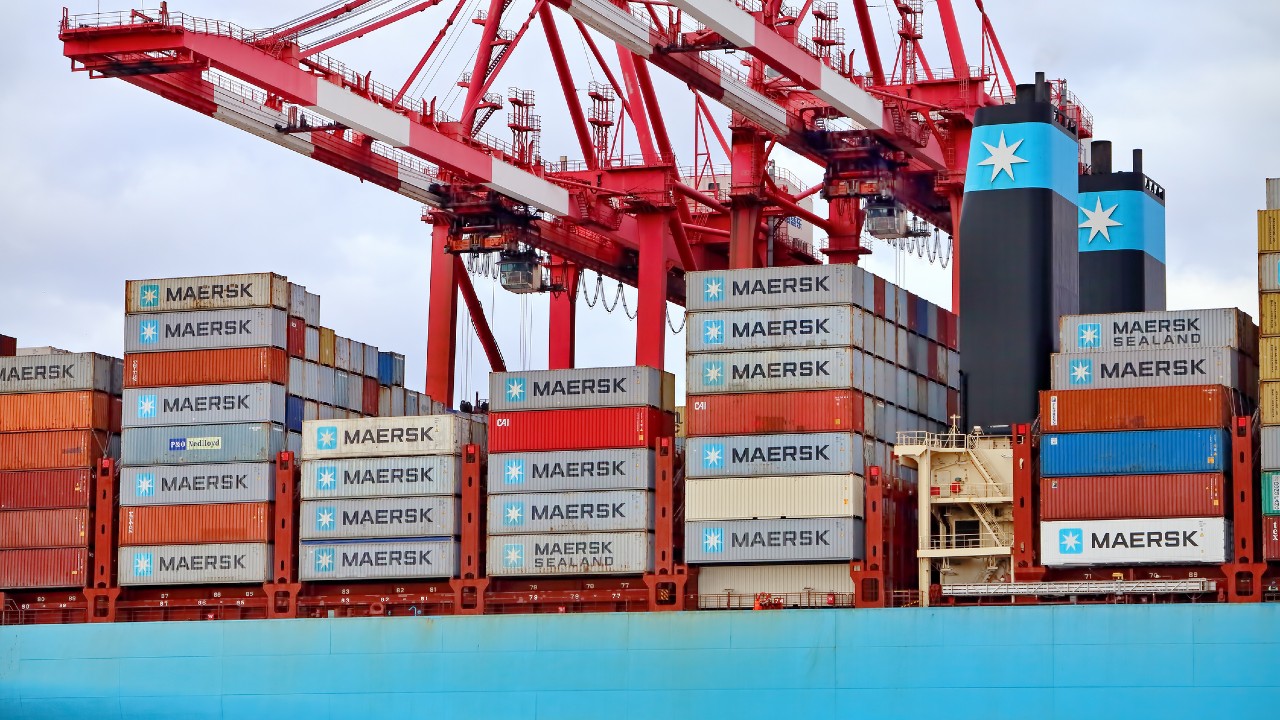
Maersk requiring all Egypt-bound export shipments to include a valid NAFEZA Unique Consignment Reference from 17 July 2026, marking a significant shift towards paperless customs processing and stricter cargo tracking.
Maersk has tightened its booking rules for sea export cargo leaving Egypt, saying all shipments must comply with the country’s updated customs process through the NAFEZA platform from 17 July 2026. The carrier said every booking must carry a valid Unique Consignment Reference, or UCR, a 19-digit number used for electronic customs processing, compliance and cargo tracking.
According to NAFEZA’s own explanation of the system, the portal is Egypt’s single digital gateway for import, export and transit formalities, and the UCR is intended to give each shipment a unique identifier from registration through to completion of the export process. Maersk said customers must secure the number through NAFEZA before booking and make sure the shipper details match the registered export data.
The company said bookings lacking a valid UCR will be turned away, and any submission containing incorrect reference information will be rejected or cancelled. It also said the number and shipper details cannot be amended once a booking has been lodged. If changes are needed, customers must cancel the original reservation and rebook, subject to space on the vessel. Maersk added that split booking requests will no longer be accepted, because it will be required to file an Empty Container List with Egyptian Customs and each container must be assigned correctly at the outset.
Maersk said the new process will be applied one day earlier than the date indicated by Egyptian Customs, meaning all bookings made from 17 July must comply. The carrier already provides Egypt-specific customs support, including export clearance, certificates of origin and other documentation services, while its local guidance for exporters also sets out rules on demurrage, detention and storage charges. Together, the changes underline how Egypt’s shift towards paperless customs processing is reshaping day-to-day shipping procedures for exporters and carriers alike.
Source Reference Map
Inspired by headline at: [1]
Sources by paragraph:
– Paragraph 1: [2], [5]
– Paragraph 2: [5], [6]
– Paragraph 3: [2], [7]
– Paragraph 4: [3], [4], [6]
Source: Noah Wire Services
Verification / Sources
- https://container-news.com/maersk-updates-egypt-export-booking-rules-under-new-nafeza-customs-requirements/ – Please view link – unable to able to access data
- https://container-news.com/maersk-updates-egypt-export-booking-rules-under-new-nafeza-customs-requirements/ – Maersk has announced new booking requirements for all sea export cargo originating from Egypt, effective 17 July 2026. All export shipments must include a valid Unique Consignment Reference (UCR), a 19-digit identification number required for electronic customs processing, compliance, and cargo tracking. Customers must obtain a UCR through the NAFEZA platform and provide it when submitting bookings. Bookings without a valid UCR will not be accepted, and shipper details must match the registered export information. Amendments to the UCR number or shipper details after booking submission are not permitted; customers must cancel the original booking and submit a new one, subject to vessel capacity. Additionally, split booking requests will no longer be accepted under the new customs framework. Customers must ensure that the correct containers are assigned to each booking, as Maersk will be required to submit an Empty Container List (ECL) to Egyptian Customs. Although Egyptian Customs indicated the requirement would apply from 18 July, Maersk will implement the new procedures one day earlier, with all bookings submitted from 17 July required to comply.
- https://www.maersk.com/local-information/europe/egypt/export – Maersk provides comprehensive information on exporting goods to and from Egypt, including details on export procedures, restrictions, and tariffs. The page outlines demurrage, detention, and storage charges effective from 1 August 2026, specifying free time periods and applicable rates for various container sizes. It also offers guidance on detention, storage, and demurrage definitions, helping customers understand the costs associated with holding containers beyond the agreed free time. Additionally, the page provides links to useful resources such as SPOT terms, the D&D Calculator, and detention and demurrage terms, assisting customers in managing their export shipments effectively.
- https://www.maersk.com/local-information/europe/egypt/local-solutions/customs-services – Maersk offers a range of customs services in Egypt to assist with the complexities of border controls and customs regulations for both import and export cargos. Their services include standard full customs declaration, complicated customs clearance, and general authority of import and export control. For export shipments, Maersk provides export customs clearance, certificates of origin, and GGOEIC certificates depending on the product. The page also details the mandatory documents required for customs clearance, such as legalized commercial invoices, packing lists, and certificates of origin. Additionally, it addresses frequently asked questions regarding pricing, customs clearance processes, and necessary documentation, providing valuable information for customers navigating Egypt’s customs procedures.
- https://www.nafeza.gov.eg/en/about-nafeza – NAFEZA is Egypt’s unified registration system designed to streamline electronic transactions for import, export, and transit of goods. It serves as the sole trade facilitation portal in Egypt, enabling stakeholders to submit all necessary documentation through a single point of entry. The platform aims to simplify procedures, reduce clearance times, and promote the use of electronic documents over paper-based ones. NAFEZA requires exporters and customs brokers to issue a Unique Consignment Reference (UCR) number, serving as a unified identifier for each shipment and enabling end-to-end tracking until the export process is completed.
- https://www.nafeza.gov.eg/en – NAFEZA is Egypt’s unified registration system designed to streamline electronic transactions for import, export, and transit of goods. It serves as the sole trade facilitation portal in Egypt, enabling stakeholders to submit all necessary documentation through a single point of entry. The platform aims to simplify procedures, reduce clearance times, and promote the use of electronic documents over paper-based ones. NAFEZA requires exporters and customs brokers to issue a Unique Consignment Reference (UCR) number, serving as a unified identifier for each shipment and enabling end-to-end tracking until the export process is completed.
- https://terms.maersk.com/booking-web – Maersk’s Web Booking Terms outline the conditions and requirements for booking shipments through their online platform. The terms specify that rate information provided is an estimate and may be subject to change due to various charges, surcharges, fees, and adjustment factors. They also detail the cargo acceptance policies, including the necessity for customers to indicate whether the cargo requires temperature control or is hazardous. The terms emphasise that bookings are subject to Maersk’s Terms for Carriage and that acceptance of booking requests is always subject to space and equipment availability at both the time of receipt of the booking request and at the time of receipt of the full container quantity to be stated in the transport document(s).
Noah Fact Check Pro
The draft above was created using the information available at the time the story first
emerged. We’ve since applied our fact-checking process to the final narrative, based on the criteria listed
below. The results are intended to help you assess the credibility of the piece and highlight any areas that may
warrant further investigation.
Freshness check
Score: 8
Notes: The article was published on 14 July 2026, reporting on Maersk’s updated booking requirements effective 17 July 2026. The earliest known publication date of similar content is 14 July 2026, indicating freshness. However, the narrative is based on a press release, which typically warrants a high freshness score. No earlier versions with different figures, dates, or quotes were found. The article includes updated data and does not recycle older material.
Quotes check
Score: 7
Notes: The article does not contain direct quotes. The information is paraphrased from Maersk’s press release and NAFEZA’s official website. No identical quotes appear in earlier material. However, the lack of direct quotes makes independent verification challenging.
Source reliability
Score: 6
Notes: The narrative originates from Container News, a niche publication. While it provides a summary of Maersk’s press release and NAFEZA’s official website, it does not offer independent verification. The lead source appears to be summarising content from Maersk’s press release and NAFEZA’s official website, which are both corporate sources. This raises concerns about the independence of the information.
Plausibility check
Score: 7
Notes: The claims about Maersk’s updated booking requirements align with industry trends towards digitalisation and compliance with customs regulations. The NAFEZA platform is Egypt’s official digital gateway for import, export, and transit formalities. However, the article lacks supporting detail from other reputable outlets, and the report lacks specific factual anchors, such as direct quotes or detailed explanations. The language and tone are consistent with corporate communications.