
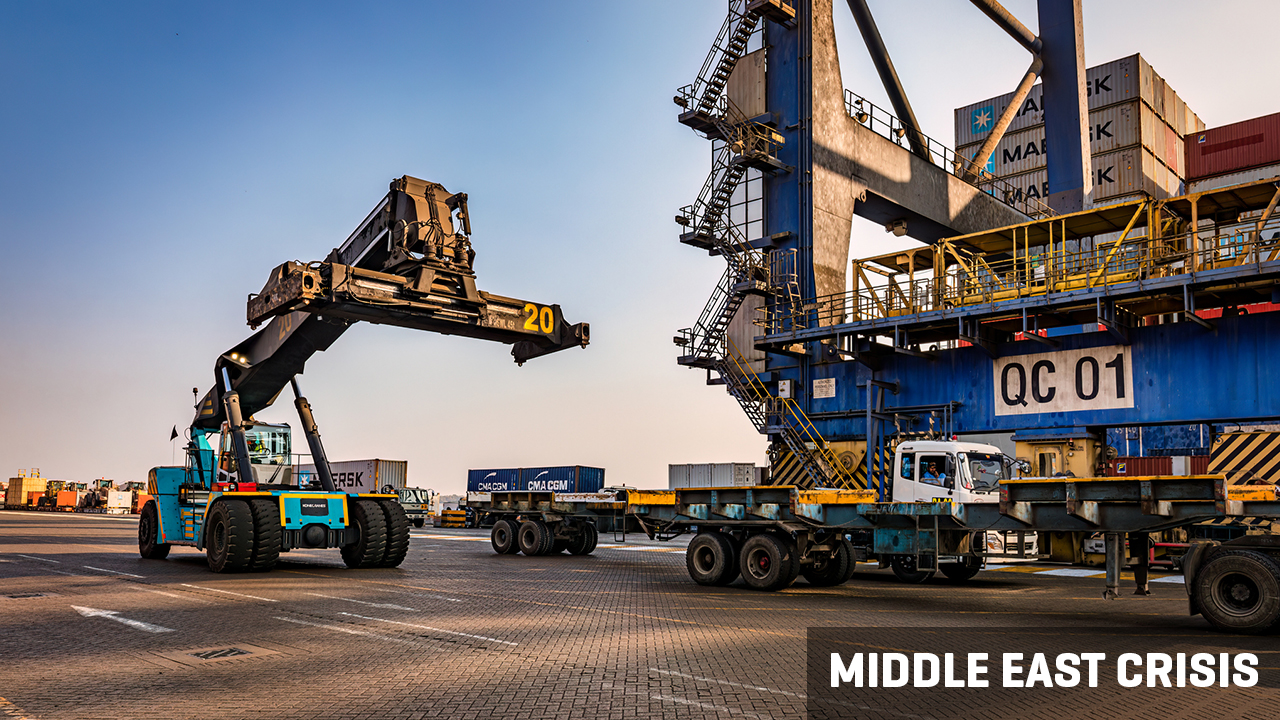
As tensions in the Gulf escalate, the shipping industry is increasingly relying on real-time data and AI to navigate the unpredictable landscape, highlighting a shift towards smarter, faster operational decision-making amid rising geopolitical risks.
Rising hostilities around Iran and renewed pressure on the Strait of Hormuz have exposed how fragile global maritime flows can be and why shipping resilience now rests on faster, data-driven decision-making. According to reporting from the Associated Press, strikes on Gulf energy nodes and Iran’s subsequent actions have intensified uncertainty over a corridor that carries a large share of the world’s oil, producing immediate disruptions for trade and energy markets. (Paragraph 1)
The strait’s strategic weight is extraordinary: a substantial portion of global oil and liquefied natural gas transits the channel, and recent attacks on energy infrastructure across the Gulf have tightened supply and pushed prices sharply upwards. Industry data and news coverage indicate that damage to facilities in Qatar, Kuwait, Saudi Arabia, the UAE and Oman has exacerbated shortages and prompted emergency measures in some importing countries. (Paragraph 2)
Operationally, the consequences are cascading. Even suggestions of escalation force carriers to reconsider routings, ports to reshuffle berth plans and logisticians to rework inland haulage and storage, often with only hours to act. Maritime analysts point out that while vessels can reroute around Africa when the Suez corridor is constrained, the Strait of Hormuz offers no practical maritime alternative for most oil and gas trade, meaning interruptions there can stanch flows rather than divert them. (Paragraph 3)
Yet the disruption picture is not uniformly binary. Maritime monitoring firms report that many tankers have continued to transit the strait in recent weeks, including a number of oil-laden movements to Asia conducted via more opaque ‘dark’ passages, complicating efforts to assess true flows and sanctions exposure. That uneven pattern of closures and selective passage has produced both acute market volatility and opaque operational risk. (Paragraph 4)
That opacity is precisely why industry executives and digital platforms are pushing for a triptych of preparedness: reliable operational data, predictive analytics and processes that translate insight into action. According to executives quoted by trade outlets, AI models that fuse vessel tracking, historical voyages, port schedules and environmental forecasts can produce earlier, more accurate arrival estimations and scenario projections. (Paragraph 5)
Crucially, AI is effective only when it ingests trustworthy, timely inputs. The maritime ecosystem remains fragmented: planned arrival times, cargo readiness and terminal sequencing are routinely held in disparate systems across carriers, terminals and forwarders. Multiple sources emphasise that without unified, verifiable operational data, predictive models cannot deliver the certainty operators need to reallocate berths, redeploy labour or revise hinterland logistics at pace. (Paragraph 6)
When data quality and analytical capability align with agile operations, the industry gains a continuous, shared view of evolving conditions. That shared picture enables ports to reprioritise berth allocations, terminals to reassign shifts and shippers to reroute cargo or secure alternative storage before delays reverberate through supply chains. Observers warn, however, that technological insight only yields value where commercial and operational decision-making is empowered to change plans rapidly. (Paragraph 7)
The larger market response is already visible. Higher fuel prices and navigation risks are prompting some operators to evaluate alternative passages, including greater use of the Panama Canal for certain east–west trades, while traders and governments scramble to replace damaged Gulf production. Economists and shipping authorities caution that lasting adjustments to global trade patterns will depend on the conflict’s duration, with prolonged instability likely to shift routing and cargo flows more permanently. (Paragraph 8)
Geopolitical shocks to maritime trade are now a recurring operational stressor rather than an exceptional event. As recent reporting shows, the most resilient organisations will not be those with the flashiest tech but those that combine dependable operational records, AI-driven foresight and streamlined processes that allow fleets, ports and logistics chains to change course fast when the unexpected arrives. (Paragraph 9)
Source Reference Map
Inspired by headline at: [1]
Sources by paragraph:
– Paragraph 1: [4], [2]
– Paragraph 2: [2], [5]
– Paragraph 3: [1], [7]
– Paragraph 4: [3], [4]
– Paragraph 5: [1], [5]
– Paragraph 6: [1], [2]
– Paragraph 7: [1], [3]
– Paragraph 8: [6], [5]
– Paragraph 9: [1], [7]
Source: Noah Wire Services
Verification / Sources
- https://cyprusshippingnews.com/2026/03/20/hormuz-tensions-highlight-a-new-reality-maritime-resilience-now-runs-on-data-and-ai/ – Please view link – unable to able to access data
- https://apnews.com/article/36037b31738bd9582f0ca617f292839d – Escalating military strikes on key oil and gas infrastructure in the Persian Gulf—sparked by an Israeli attack on Iran’s South Pars gas field and Iranian retaliation against Gulf targets—are fueling fears of long-term global energy disruptions and sustained high prices. Iran targeted critical sites in Qatar, Kuwait, Saudi Arabia, the UAE, and Oman, severely affecting the energy supply chain. The closure of the Strait of Hormuz, a major chokepoint, compounded the disruption, even as countries like Saudi Arabia and the UAE tried to reroute exports via alternative paths. The Ras Laffan LNG terminal in Qatar, responsible for 20% of global LNG, was badly damaged; facilities like Kuwait’s Mina refineries, Oman’s Salalah LPG plant, and Abu Dhabi’s Shah gas field saw extensive interruptions. Supply shortages have begun hitting Asian economies hardest, prompting government austerity measures on energy use. Additionally, disruption of raw materials such as sulfur and helium threatens the broader manufacturing and food supply chains. U.S. President Donald Trump has warned Iran against further attacks, indicating possible U.S. military responses, increasing geopolitical tensions and uncertainty in global markets.
- https://apnews.com/article/82a9acb473837f1bf7a821d0c3f95205 – Despite the ongoing war involving Iran and the effective closure of the Strait of Hormuz—a critical global oil shipping route—about 90 ships, including 16 oil tankers, have managed to cross the strait between March 1 and 15, 2026. According to maritime data sources like Lloyd’s List Intelligence and Kpler, Iran continues to export significant amounts of oil, exceeding 16 million barrels since early March, mostly to China. Many vessels have undertaken “dark” transits to bypass Western sanctions, with increasing involvement from India and Pakistan, which have engaged in diplomatic talks with Iran to ensure passage. The U.S., under President Donald Trump, has allowed some Iranian oil tanker movements in hopes of stabilizing oil prices, which have surged over 40%, breaching $100 per barrel. Iran has selectively allowed certain vessels through the strait—particularly those aligned or negotiating with it—while keeping it effectively closed to Western and allied traffic. Intelligence reports suggest diplomatic activity and Iran’s strategic control have created a temporary corridor for specific ships. The situation remains volatile, with U.S. military action targeting Iranian military assets but sparing vital oil infrastructure for now.
- https://apnews.com/article/2a8abe58648abd2d9c4785b4130bee0c – The article from the Associated Press, dated March 18, 2026, highlights the ongoing geopolitical crisis involving the U.S., Israel, and Iran, which has brought major disruptions to the Strait of Hormuz—a vital global oil trade chokepoint. Amid the conflict and the killing of Iran’s supreme leader, nearly all maritime traffic has halted in the strait, severely impacting global oil supplies and driving fuel prices higher. The Strait of Hormuz, though officially international waters, lies under significant Iranian influence due to its proximity and military control. The article contextualizes the current disruption with a history of similar incidents. These include the Iran-Iraq “Tanker War” in the 1980s, Iran’s threats during the 2011-2012 sanctions over its nuclear program, and renewed tensions after the U.S. withdrew from the nuclear agreement in 2018. From 2019 to 2025, incidents such as ship seizures and attacks further destabilized the region. Even during the brief 2025 Israel-Iran war, fears of closure caused only temporary oil price spikes. Despite repeated threats over decades, Iran has never entirely closed the strait. However, the current conflict has caused the most significant disruption yet, with energy markets reeling from the fallout.
- https://apnews.com/article/a7e51335d9ce790dbf6bc377ed2763a9 – As of March 19, 2026, tensions in the Middle East have intensified dramatically following Iran’s retaliatory strikes on Gulf energy infrastructure in response to an earlier Israeli attack on a major Iranian gas field. These developments have greatly escalated the conflict between Iran, Israel, and the U.S., causing global economic disruptions, especially in energy markets. Brent crude oil surged above $110 a barrel, with prices briefly topping $119, leading to significant volatility in global financial markets. Multiple countries, including Bahrain, Saudi Arabia, and the UAE, reported attacks or missile interceptions, while Dubai experienced explosions linked to Iranian missile strikes. The war has paralyzed traffic through the strategic Strait of Hormuz, halting oil and gas shipments and exacerbating already rising global fuel prices. The conflict has also devastated Lebanon, where over a million people have been displaced and more than 1,000 have died due to Israeli strikes linked to Hezbollah’s involvement. The U.S. and Israel remain uneasy allies in the conflict, with growing signs of strategic divergence between President Trump and Prime Minister Netanyahu. The war has sparked international diplomatic efforts, including an urgent UN Security Council meeting and calls by EU leaders for the protection of energy and water infrastructure. Meanwhile, nations like Qatar and Iran face long-term energy production challenges due to missile damage, and the risk of broader military escalation looms as discussions circulate about potential U.S. troop deployments to secure Iran’s nuclear materials.
- https://apnews.com/article/cd96f57f8aede33a274381be5525a6aa – Amid ongoing conflict in the Middle East and rising fuel costs, Panama Canal Administrator Ricaurte Vásquez stated that the interoceanic waterway might see increased traffic as global shipping routes shift. In an interview with the Associated Press, Vásquez explained that elevated fuel and navigation costs make the Panama Canal a more appealing option for commerce, especially since oil prices have surged following Iran’s closure of the Strait of Hormuz in response to U.S. and Israeli actions. This strategic strait handles around 20% of global oil shipments. The Panama Canal offers the potential to cut travel time by 3 to 15 days, depending on the route, while also reducing fuel usage. Vásquez indicated that container ships, bulk carriers, and LNG tankers are likely to be most affected by these cost changes. A disruption in Middle Eastern energy supplies could prompt a shift toward U.S. LNG exports, with some being rerouted from Europe to Asia through Panama. Gerardo Bósquez of the Panama Maritime Chamber noted that a prolonged conflict could potentially alter global trade patterns, particularly benefiting gas transport. However, Vásquez cautioned that any such changes would depend on the duration of the Gulf region’s instability.
- https://www.cnbc.com/2025/06/22/threat-to-commercial-shipping-around-arabian-peninsula-is-rising-largest-global-shipowners-organization-warns.html – The inability of oil to traverse through the Strait of Hormuz, even temporarily, can ratchet up global energy prices, raise shipping costs and create significant supply delays. In 2023, oil flows through the waterway averaged 20.9 million barrels per day, according to the U.S. Energy Information Administration, accounting for about 20% of global petroleum liquids consumption. “Given the Iranian threat to U.S. military bases in the region, availability of warships for protection of commercial shipping is probably limited, especially for commercial ships with no affiliation to the U.S. or Israel,” Larsen said. The Strait of Hormuz handles less than 4% of global container trade but the ports of Jebel Ali and Khor Fakkan are critical intermediary points for global shipping networks in the region. The majority of cargo volumes from those ports are destined for Dubai, which has become a hub for the movement of freight with feeder services in the Persian Gulf, South Asia, and East Africa.
Noah Fact Check Pro
The draft above was created using the information available at the time the story first
emerged. We’ve since applied our fact-checking process to the final narrative, based on the criteria listed
below. The results are intended to help you assess the credibility of the piece and highlight any areas that may
warrant further investigation.
Freshness check
Score: 8
Notes: The article was published on March 20, 2026, and discusses recent events, including military strikes on Gulf energy infrastructure and the impact on global oil supplies. The Associated Press has reported on similar events, such as Iran’s retaliatory strikes on Gulf energy sites and the targeting of key Gulf energy infrastructure. (apnews.com) However, the specific angle of maritime resilience through data and AI appears to be original. The article cites multiple sources, including the Associated Press and trade outlets, indicating a reliance on independent reporting.
Quotes check
Score: 7
Notes: The article includes direct quotes from industry executives and trade outlets. However, the specific sources of these quotes are not provided, making independent verification challenging. Without access to the original sources, it’s difficult to confirm the accuracy and context of these statements.
Source reliability
Score: 6
Notes: The article is published on Cyprus Shipping News, a niche publication focusing on maritime news. While it provides detailed coverage, the lack of information about the publication’s editorial standards and independence raises concerns about source reliability. The article references multiple sources, including the Associated Press and trade outlets, which are reputable. However, the absence of direct links to these sources makes it difficult to assess the accuracy and context of the information presented.
Plausibility check
Score: 8
Notes: The article discusses the impact of geopolitical tensions on the Strait of Hormuz and the importance of data and AI in maritime resilience. This aligns with recent reports on disruptions in the Strait of Hormuz and the role of technology in mitigating such disruptions. However, the specific claims about AI models analyzing vessel movements and environmental conditions are not substantiated with direct evidence or examples, making it difficult to fully assess their plausibility.