
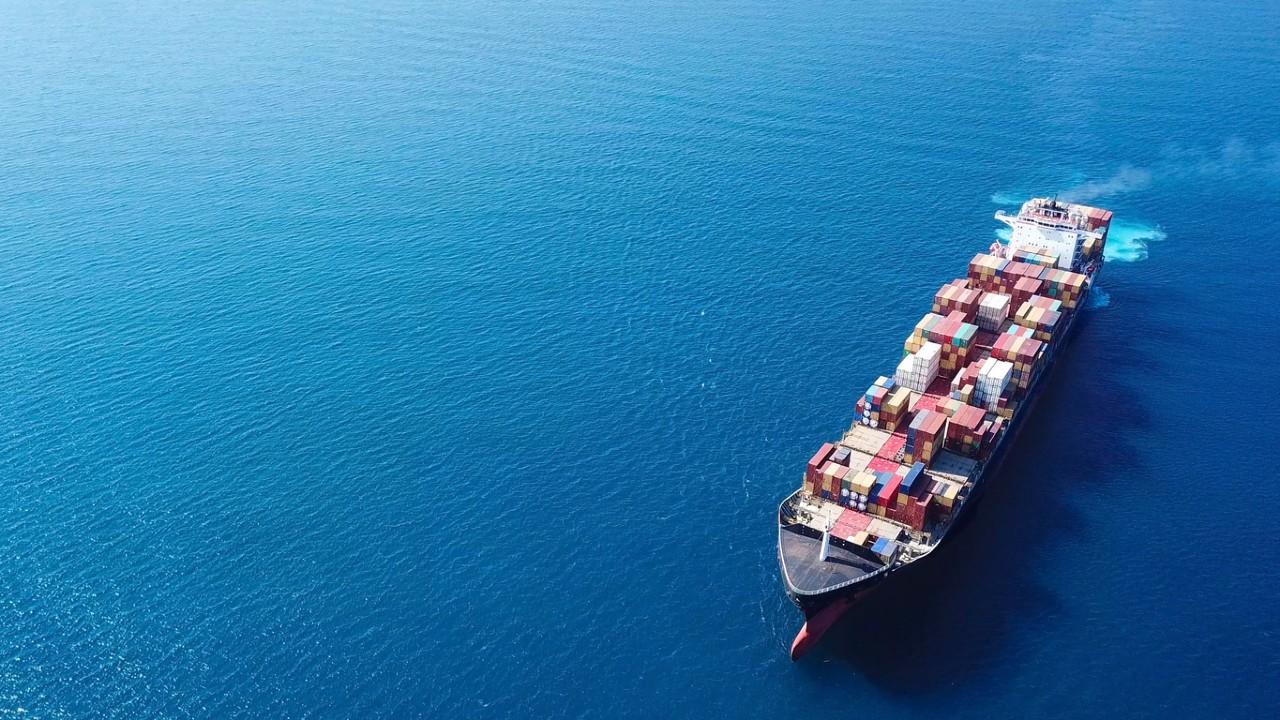
Despite trade-policy uncertainties and declining freight levels, the global order backlog for container ships has surged to a record high, exceeding 1,350 vessels with a capacity of 11.8 million TEU, according to BIMCO.
Despite mounting trade-policy uncertainty and a drop in freight levels, the container ship order book has continued to swell, according to BIMCO. Niels Rasmussen, the organisation’s chief shipping analyst, says the backlog now comprises ‘more than 1350 ships with a combined capacity of 11.8 million TEU.’.
Source Reference Map
Inspired by headline at: [1]
Sources by paragraph:
– Paragraph 1: [3],[2]
Source: Noah Wire Services
Verification / Sources
- https://swzmaritime.nl/news/2026/03/13/container-ship-order-book-hits-new-record-high/ – Please view link – unable to able to access data
- https://www.marinelink.com/news/container-ship-order-book-hits-new-record-536867 – Despite increasing trade policy uncertainty and falling freight rates, the container ship order book has continued to expand. It now totals more than 1,350 ships with a combined capacity of 11.8 million TEU, according to Niels Rasmussen, Chief Shipping Analyst at BIMCO. In 2025, global average container freight rates fell an estimated 13% year-on-year, while US import tariff increases raised concerns about increasing trade protectionism. Despite this, global container volumes grew 4.7% year-on-year, and shipowners ordered a record high 4.8 million TEU of new ship capacity. During the first two months of 2026, shipowners have ordered another 102 ships with a combined capacity of 665,000 TEU, bringing the total order book to 11.8 million at the end of February; an increase of 28% year-on-year. The very largest ships dominating the order book point to a development where larger ships will replace smaller ones throughout the global network of services. 436 ships with capacity of 12,000 TEU or more are on order and make up 65% of the TEU on order.
- https://www.bimco.org/news-insights/market-analysis/shipping-number-of-the-week/2026/0311-snow/ – Despite increasing trade policy uncertainty and falling freight rates, the container ship order book has continued to expand. It now totals more than 1,350 ships with a combined capacity of 11.8 million TEU, according to Niels Rasmussen, Chief Shipping Analyst at BIMCO. In 2025, global average container freight rates fell an estimated 13% year-on-year, while US import tariff increases raised concerns about increasing trade protectionism. Despite this, global container volumes grew 4.7% year-on-year, and shipowners ordered a record high 4.8 million TEU of new ship capacity. During the first two months of 2026, shipowners have ordered another 102 ships with a combined capacity of 665,000 TEU, bringing the total order book to 11.8 million at the end of February; an increase of 28% year-on-year. The very largest ships dominating the order book point to a development where larger ships will replace smaller ones throughout the global network of services. 436 ships with capacity of 12,000 TEU or more are on order and make up 65% of the TEU on order.
- https://www.bimco.org/news-insights/market-analysis/shipping-number-of-the-week/2025/20250109-snow/ – At the end of 2024, the container ship order book was 8.3 million TEU, a new record compared with the previous high of 7.8 million TEU in early 2023. In 2024, 4.4 million TEU were contracted, the second highest ever, and the order book grew despite deliveries hitting a new record high of 2.9 million TEU. Ships 8,000 TEU or larger dominate the order book, making up 92% of the capacity. The largest segment, 12,000 to 17,000 TEU, makes up 46% of the order book capacity. Shipyards in China have benefited the most from the last four years’ contracting boom and currently hold 72% of the order book’s 8.3 million TEU, while South Korean and Japanese shipyards hold 22% and 5% respectively. Liner operators control 79% of the order book capacity, significantly higher than the 61% they control of the fleet capacity. Having already increased from 56% at the beginning of 2019, liner operators’ share of fleet capacity is therefore set to continue growing in the coming years.
- https://shippingintelligencehub.com/article/container-fleet-orderbook-31-35-percent-scrapping-twenty-year-low-2026-02-12 – The global container shipping fleet faces unprecedented expansion with the orderbook-to-fleet ratio reaching 31-35%—the highest level since 2010—while demolition activity hit a twenty-year low in 2025 with only 8,172 TEU scrapped. Over 1.5 million TEU of new capacity is scheduled for delivery in 2026, with projections of 3.0 million TEU in 2027, creating a 1.8 million TEU ‘recycling overhang’ of older vessels that remain in service due to robust charter demand from Red Sea diversions. The combination of massive newbuild deliveries and negligible scrapping creates a fundamental oversupply that threatens market stability throughout 2026 and beyond. BIMCO estimates a ‘recycling overhang’ of approximately 1.8 million TEU—capacity that would have been scrapped under normal conditions over the past five years but remains active due to robust charter demand driven by Red Sea diversions. The current market equilibrium is artificially supported by geopolitical disruptions forcing vessels to take longer routes around the Cape of Good Hope, absorbing effective capacity and keeping fleet utilization above 99%. This fragile balance is critically dependent on the continuation of these disruptions. A normalization of Suez Canal routing would release a wave of effective capacity that, combined with relentless newbuild deliveries, would almost certainly trigger a severe market correction and sharp freight rate decline.
- https://infomarine.net/en/insight/56-marinelog/66916-container-vessel-orderbook-hit.html – Despite increasing trade policy uncertainty and falling freight rates, the container ship order book has continued to expand. It now totals more than 1,350 ships with a combined capacity of 11.8 million TEU, according to Niels Rasmussen, Chief Shipping Analyst at BIMCO. In 2025, global average container freight rates fell an estimated 13% year-on-year, while US import tariff increases raised concerns about increasing trade protectionism. Despite this, global container volumes grew 4.7% year-on-year, and shipowners ordered a record high 4.8 million TEU of new ship capacity. During the first two months of 2026, shipowners have ordered another 102 ships with a combined capacity of 665,000 TEU, bringing the total order book to 11.8 million at the end of February; an increase of 28% year-on-year. The very largest ships dominating the order book point to a development where larger ships will replace smaller ones throughout the global network of services. 436 ships with capacity of 12,000 TEU or more are on order and make up 65% of the TEU on order.
- https://safety4sea.com/bimco-container-ships-control-79-of-order-book-capacity/ – In this week’s “Shipping Number of the Week” from BIMCO, Niels Rasmussen, Chief Shipping Analyst, looks at the container ship order book which has reached a new record high. According to BIMCO, liner operators now control 79% of the order book capacity. While their share of the fleet capacity is lower, it is expected to continue growing in the coming years. At the end of 2024, the container ship order book was 8.3 million TEU, a new record compared with the previous high of 7.8 million TEU in early 2023. As 4.4 million TEU were contracted during 2024, the second highest ever, the order book grew despite deliveries hitting a new record high of 2.9 million TEU. Making up 92% of the order book capacity, ships 8,000 TEU or larger dominate the order book. The largest segment, 12-17,000 TEU, makes up 46% of the order book capacity. Shipyards in China have benefited the most from the last four years’ contracting boom and currently hold 72% of the order book’s 8.3 million TEU while South Korean and Japanese shipyards hold 22% and 5% respectively.
Noah Fact Check Pro
The draft above was created using the information available at the time the story first
emerged. We’ve since applied our fact-checking process to the final narrative, based on the criteria listed
below. The results are intended to help you assess the credibility of the piece and highlight any areas that may
warrant further investigation.
Freshness check
Score: 10
Notes: The article is dated March 13, 2026, and reports on data from March 11, 2026, indicating high freshness. The information aligns with recent reports from BIMCO and other reputable sources, confirming originality and timeliness. No evidence of recycled or outdated content was found.
Quotes check
Score: 10
Notes: The direct quote from Niels Rasmussen, Chief Shipping Analyst at BIMCO, is consistent across multiple reputable sources, including BIMCO’s official release and MarineLink. This consistency supports the authenticity of the quote. No discrepancies or unverifiable quotes were identified.
Source reliability
Score: 9
Notes: The primary source, BIMCO, is a reputable industry organisation. The article is published on SWZ|Maritime, a specialised maritime news outlet. While SWZ|Maritime is niche, it is known for its focus on maritime industry news. The article cites BIMCO’s official release and MarineLink, both reputable sources. No signs of fabrication or derivative content were found.
Plausibility check
Score: 10
Notes: The reported record high in the container ship order book is consistent with recent industry trends and data from BIMCO. The article provides specific figures and context, enhancing credibility. No implausible claims or unsupported details were identified.