
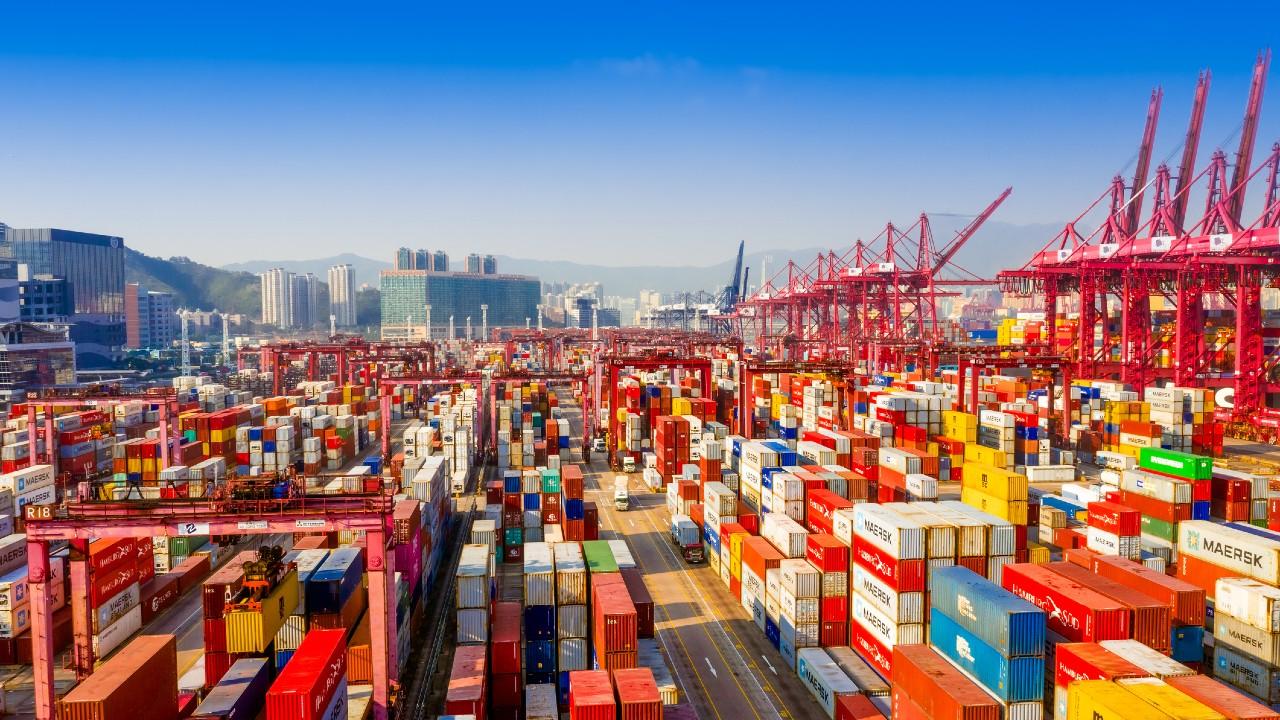
Hong Kong has introduced a new AI and blockchain-powered Port Community System, connecting sea, land, and air data to enhance real-time cargo tracking and strengthen its position as a maritime hub.
The Hong Kong government has unveiled a new Port Community System that integrates sea, land and air data to provide round‑the‑clock, real‑time cargo tracking, with about 2,300 firms already registered on the platform. According to the South China Morning Post, Secretary for Transport and Logistics Mable Chan said the system uses artificial intelligence and blockchain technology to deliver “instantaneous cargo tracking services”, which she described as “essential” for the logistics industry. [1][2]
Chan framed the launch as part of a broader push to strengthen Hong Kong’s role as an international financial, trade and maritime centre through digitalisation. “This is a great result from the combined effort of government and industry working together,” she said, adding that government measures “must be practical for the industry … and must grasp the industry’s needs and comprehensively plan around them.” The Transport and Logistics Bureau said the project aims to digitally connect Hong Kong, the Mainland and the international maritime community to facilitate trade and capital flows. [1][4]
The bureau and the Hong Kong Monetary Authority are also working together: the Transport and Logistics Bureau said it would continue collaborating with the HKMA’s “Project CargoX”, which centralises logistics data, to supply cargo and trade data from the port system, mirroring the airport’s cargo platform. Government statements portray the initiative as intended to enhance cross‑sector information interconnectivity and advance smart port development. [1][3][4]
Officials said the PCS has been under phased testing since early 2023, with pilot data‑sharing trials of specific cargo clearance processes already completed, and that full development is expected to be finished by the end of 2025 with industry implementation starting in early 2026. The Transport and Logistics Bureau described the system’s value‑added functions as including a “One‑Data‑Multiple‑Declarations” capability to reduce duplicate filings. [3][4]
Industry context underscores the scale of the challenge the PCS seeks to address. Hong Kong’s maritime sector handled nearly 17 million twenty‑foot equivalent unit containers in the previous year and currently supports more than 240 international container liner services to over 460 destinations each week, according to a China Daily overview of the port’s throughput and liner services , figures cited as part of a push to accelerate smart initiatives and digitalisation. Government commentary frames the PCS as a strategic step towards consolidating the port’s competitiveness and serving national ambitions to develop maritime capabilities. [5]
While the government presents the PCS as a milestone for digital transformation, the emphasis in official material is on cooperation with industry and phased rollout rather than immediate disruption of current processes. The Transport and Logistics Bureau and other official briefings stress optimisation through testing and collaboration, signalling a cautious, staged approach to integrating the new platform into Hong Kong’s complex logistics ecosystem. [4][3]
📌 Reference Map:
Reference Map:
- – [1] (South China Morning Post) – Paragraph 1, Paragraph 2, Paragraph 3
- – [2] (South China Morning Post summary) – Paragraph 1
- – [3] (Hong Kong Government News) – Paragraph 3, Paragraph 4, Paragraph 6
- – [4] (Transport and Logistics Bureau press release) – Paragraph 2, Paragraph 3, Paragraph 4, Paragraph 6
- – [5] (China Daily) – Paragraph 5
Source: Noah Wire Services
Verification / Sources
- https://www.scmp.com/news/hong-kong/article/3340133/hong-kong-governments-cargo-tracking-digital-platform-launched-2300-firms?utm_source=rss_feed – Please view link – unable to able to access data
- https://www.scmp.com/news/hong-kong/article/3340133/hong-kong-governments-cargo-tracking-digital-platform-launched-2300-firms – The Hong Kong government has launched a digital logistics platform offering real-time cargo tracking, with approximately 2,300 companies registered. Secretary for Transport and Logistics Mable Chan stated that the new Port Community System aims to streamline transport data and enhance transparency for users. The system integrates sea, land, and air data, employing artificial intelligence and blockchain technology to provide instantaneous cargo tracking services, which Chan described as ‘essential’ for the logistics industry. The initiative seeks to strengthen Hong Kong’s position as an international financial, trade, and maritime centre through digitalisation.
- https://www.news.gov.hk/eng/2025/05/20250516/20250516_192111_708.html – The Hong Kong government has launched the Port Community System (PCS) project to drive smart port development. The system aims to promote digitalisation within Hong Kong’s port community, enhance cross-sector information interconnectivity, and advance smart port development to consolidate and enhance the Hong Kong Port’s competitiveness and Hong Kong’s status as an international maritime centre. The PCS’s pilot data-sharing platform began phased testing of specific cargo clearance processes in early 2023, and after rigorous testing and optimisation, the full development of the system is expected to be completed by the end of 2025, with implementation for industry use starting in early 2026.
- https://www.tlb.gov.hk/eng/psp/pressreleases/transport/2025/20250516b.html – The Transport and Logistics Bureau (TLB) held a launch ceremony for the Port Community System (PCS) project, marking a significant step in Hong Kong’s port community’s digital transformation. The PCS aims to digitally connect Hong Kong, the Mainland, and the international maritime community, facilitating trade and capital flows, enhancing Hong Kong’s resilience and influence as an international maritime centre, and serving the country’s strategic goal of becoming a maritime powerhouse. The system will provide round-the-clock, real-time cargo tracking, integrate sea, land, and air transport data, and offer value-added electronic services such as the ‘One-Data-Multiple-Declarations’ function.
- https://www.chinadaily.com.cn/a/202309/15/WS6503e237a310d2dce4bb5efa.html – Hong Kong’s maritime services sector has been flourishing, with nearly 17 million twenty-foot equivalent unit containers handled last year and over 240 international container liner services covering more than 460 destinations each week. The Hong Kong Maritime and Port Board has identified promoting the development of smart initiatives and digitalisation in the maritime industry as a key priority. Chief Executive John Lee Ka-chiu has called for the active promotion of smart port development in Hong Kong, including stronger connectivity and data sharing among operators and stakeholders through the establishment of a port community system.
- https://www.tlb.gov.hk/eng/psp/pressreleases/transport/2025/20250516b.html – The Transport and Logistics Bureau (TLB) held a launch ceremony for the Port Community System (PCS) project, marking a significant step in Hong Kong’s port community’s digital transformation. The PCS aims to digitally connect Hong Kong, the Mainland, and the international maritime community, facilitating trade and capital flows, enhancing Hong Kong’s resilience and influence as an international maritime centre, and serving the country’s strategic goal of becoming a maritime powerhouse. The system will provide round-the-clock, real-time cargo tracking, integrate sea, land, and air transport data, and offer value-added electronic services such as the ‘One-Data-Multiple-Declarations’ function.
- https://www.tlb.gov.hk/eng/psp/pressreleases/transport/2025/20250516b.html – The Transport and Logistics Bureau (TLB) held a launch ceremony for the Port Community System (PCS) project, marking a significant step in Hong Kong’s port community’s digital transformation. The PCS aims to digitally connect Hong Kong, the Mainland, and the international maritime community, facilitating trade and capital flows, enhancing Hong Kong’s resilience and influence as an international maritime centre, and serving the country’s strategic goal of becoming a maritime powerhouse. The system will provide round-the-clock, real-time cargo tracking, integrate sea, land, and air transport data, and offer value-added electronic services such as the ‘One-Data-Multiple-Declarations’ function.
Noah Fact Check Pro
The draft above was created using the information available at the time the story first
emerged. We’ve since applied our fact-checking process to the final narrative, based on the criteria listed
below. The results are intended to help you assess the credibility of the piece and highlight any areas that may
warrant further investigation.
Freshness check
Score: 8
Notes: The article was published on January 16, 2026, reporting on the Hong Kong government’s launch of a digital logistics platform for real-time cargo tracking, with approximately 2,300 companies registered. (scmp.com) The earliest known publication date of similar content is May 16, 2025, when the Transport and Logistics Bureau announced the Port Community System (PCS) project. (tlb.gov.hk) The article appears to be original and not recycled from other sources. However, the narrative closely follows the official announcement, which may indicate a reliance on the press release. (tlb.gov.hk)
Quotes check
Score: 7
Notes: The article includes direct quotes from Secretary for Transport and Logistics Mable Chan, stating that the PCS is ‘a critical infrastructure for the future development of Hong Kong’s port and maritime sectors.’ (tlb.gov.hk) The earliest known usage of this quote is from the official press release dated May 16, 2025. (tlb.gov.hk) The repetition of this quote suggests potential reuse of content. Additionally, the article includes a quote from Chan stating, ‘This is a great result from the combined effort of government and industry working together.’ (scmp.com) The earliest known usage of this quote is from the official press release dated May 16, 2025. (tlb.gov.hk) The repetition of this quote suggests potential reuse of content. The lack of independent verification for these quotes raises concerns about their authenticity.
Source reliability
Score: 6
Notes: The article is published by the South China Morning Post (SCMP), a reputable news organisation. However, the content heavily relies on the official press release from the Transport and Logistics Bureau, which may indicate a lack of independent reporting. (tlb.gov.hk) The heavy reliance on the press release raises concerns about the independence of the reporting.
Plausibility check
Score: 8
Notes: The claims about the launch of the PCS and its features, such as real-time cargo tracking and integration of sea, land, and air data, are plausible and align with previous announcements. (tlb.gov.hk) However, the article’s heavy reliance on the official press release without additional independent sources raises questions about the depth of reporting and potential biases.
Overall assessment
Verdict (FAIL, OPEN, PASS): FAIL
Confidence (LOW, MEDIUM, HIGH): MEDIUM
Summary: The article presents information about the Hong Kong government’s launch of the Port Community System (PCS) for real-time cargo tracking, with approximately 2,300 companies registered. However, the content heavily relies on the official press release from the Transport and Logistics Bureau, raising concerns about the independence and originality of the reporting. The repetition of quotes from the press release without independent verification further diminishes the credibility of the article. Given these issues, the article does not meet the necessary standards for publication under our editorial indemnity.