
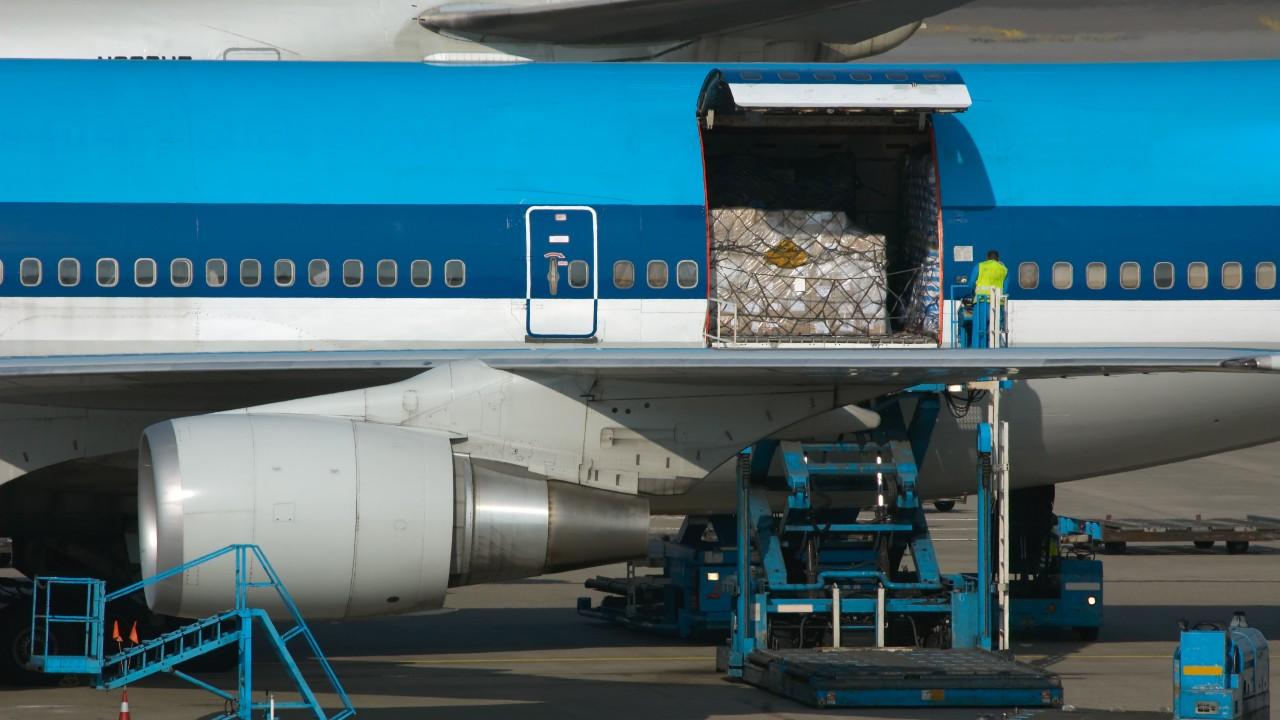
Forecasts indicate that air cargo volumes in Asia-Pacific and the Middle East will remain key contributors to global growth, supported by manufacturing, e-commerce expansion, and investments in infrastructure and technology, despite potential geopolitical and trade risks.
Air cargo volumes across the Asia‑Pacific and Middle East are forecast to remain the primary engines of global air freight growth through 2028, driven by manufacturing strength, expanding e‑commerce and sustained investment in airport capacity and technology, according to a joint forecast by Airports Council International Asia‑Pacific & Middle East (ACI APAC & MID) and OAG. ACI APAC & MID projects Asia‑Pacific cargo will grow at a 4.3% compound annual growth rate (CAGR) to 2028, with the Middle East at about 3.3% CAGR. [1][2]
The Asia‑Pacific outlook rests on several structural advantages: a large manufacturing base that concentrates high‑value shipments such as semiconductors and electronics, rapid expansion of cross‑border e‑commerce and demographic scale that supports rising consumer demand. ACI APAC & MID highlights these factors as underpinning the region’s lead in percentage growth terms. Regional sub‑forecasts point to stronger momentum in Southern Asia and Southeast Asia, with CAGRs of roughly 5.5% and 5.2% respectively, while China, Eastern Asia and Oceania show more moderate gains. [1][2]
The Middle East’s position as a global transhipment and connectivity hub is buoyed by its geography between Europe, Asia and Africa and by heavy investment in airport infrastructure, cool‑chain and automation capabilities. Industry reporting notes major projects across the Gulf, including multi‑hundred‑million dollar cargo terminal expansions and beefed‑up cold‑chain capacity at key hubs, which are intended to capture growing express and parcel flows. According to regional coverage, investments and national economic programmes are explicitly targeting a step‑change in transhipment and logistics throughput. [1][2][7]
Market research firms present a complementary, though not identical, picture of market size and pace. Business Market Insights forecasts a larger absolute market for Asia‑Pacific air cargo, projecting the sector to reach about US$59.3 billion by 2028 and citing adoption of intelligent cold‑chain solutions and airport expansion as growth drivers. For the Middle East and Africa combined, that research expects a roughly 4.2% CAGR to 2028, underscoring infrastructure and policy changes as catalysts. These market estimates differ in magnitude from the ACI regional CAGR figures but corroborate the broad trend of investment in capacity and technology. [3][4]
Global organisations offer a tempered near‑term view. The International Air Transport Association (IATA) forecasts more modest global cargo growth, around 2.6% for 2026, while acknowledging that the Middle East will see steadier near‑term expansion that aligns with the longer‑term 3.3% CAGR window to 2028. Such divergence between short‑term annual growth and multi‑year CAGR highlights how cyclical demand, inventory cycles and economic conditions can produce year‑to‑year volatility even as structural trends persist. [6]
Risks to the outlook remain material. Analysts and industry bodies flag geopolitical tensions, trade policy uncertainty, airspace restrictions and potential tariff shifts as factors that could disrupt flows and require agile rerouting, capacity adjustments and closer coordination between carriers, airports and freight forwarders. These contingencies mean that the projected trajectories are contingent on relatively stable trade environments and continued investment in technology and cold‑chain capacity. [1][2]
For logistics providers and shippers the implications are practical: rising volumes will increase demand for modernised cargo terminals, expanded warehousing and specialised services such as temperature‑controlled handling and last‑mile delivery for e‑commerce parcels. Industry commentators note the commercial opportunity for carriers and forwarders to optimise networks for express, high‑value and temperature‑sensitive goods and to deploy AI and digital booking tools to improve yield and handling efficiency. [1][7][3]
Commercial platforms that aggregate freight services position themselves as part of the response by offering transparent pricing and simplified booking for a range of cargo needs. While such services can lower transactional friction for shippers, editorial distance is warranted when considering provider claims about reliability and cost advantages; the competitive dynamics and variable service levels across corridors mean shippers should evaluate capacity, cold‑chain credentials and carrier performance before committing to large or sensitive consignments. [1]
Taken together, forecasts and market analysis point to a period of gradual, structurally supported growth for air cargo centred on Asia‑Pacific and the Middle East through 2028, even as short‑term global growth rates may fluctuate. The outcome will depend on continued infrastructure investment, wider adoption of digital and cold‑chain technologies and the ability of the sector to navigate geopolitical and trade uncertainties. [1][2][3][4][6][7]
📌 Reference Map:
Reference Map:
- – [1] (GetTransport blog) – Paragraph 1, Paragraph 2, Paragraph 3, Paragraph 6, Paragraph 7, Paragraph 8, Paragraph 9
- – [2] (ACI APAC & MID press release) – Paragraph 1, Paragraph 2, Paragraph 3, Paragraph 6, Paragraph 9
- – [3] (Business Market Insights , Asia Pacific report) – Paragraph 4, Paragraph 7, Paragraph 9
- – [4] (Business Market Insights , Middle East & Africa report) – Paragraph 4, Paragraph 9
- – [6] (IATA presentation) – Paragraph 5, Paragraph 9
- – [7] (Stat Times / regional reporting) – Paragraph 3, Paragraph 7, Paragraph 9
Source: Noah Wire Services
Verification / Sources
- https://blog.gettransport.com/news/asia-pacific-middle-east-air-cargo-growth/ – Please view link – unable to able to access data
- https://www.aci-asiapac.aero/media-centre/news/asia-pacific-and-middle-east-will-continue-to-lead-global-air-cargo-growth-through-2028 – Airports Council International Asia-Pacific & Middle East (ACI APAC & MID) forecasts that Asia-Pacific air cargo volumes will grow at a 4.3% compound annual growth rate (CAGR) through 2028, while the Middle East is expected to expand at a 3.3% CAGR. This growth is driven by factors such as a strong manufacturing base, particularly in semiconductors and electronics, expanding cross-border e-commerce, and significant demographic scale in the Asia-Pacific region. The Middle East’s strategic location and investments in airport infrastructure and technology upgrades further support its role as a major air cargo hub.
- https://www.businessmarketinsights.com/pr/asia-pacific-air-cargo-market – The Asia Pacific Air Cargo Market is projected to reach US$ 59.30 billion by 2028, growing at a CAGR of 7.5% from 2022 to 2028. This growth is attributed to expanding airport infrastructure and the adoption of intelligent cold chain solutions, which enhance the management of sensitive cargo throughout the supply chain.
- https://www.businessmarketinsights.com/pr/middle-east-and-africa-air-cargo-market – The Middle East & Africa Air Cargo Market is expected to grow at a CAGR of 4.2%, reaching US$ 22.07 billion by 2028. Key factors contributing to this growth include expanding airport infrastructure, new policies, and the implementation of intelligent cold chain solutions, which improve the management of sensitive cargo.
- https://asianaviation.com/apac-mideast-set-to-lead-growth-in-pax-cargo/ – Airports Council International Asia-Pacific & Middle East (ACI APAC & MID) projects that Asia-Pacific air cargo volumes will grow at a 4.3% CAGR through 2028, while the Middle East is expected to expand at a 3.3% CAGR. This growth is driven by factors such as a strong manufacturing base, particularly in semiconductors and electronics, expanding cross-border e-commerce, and significant demographic scale in the Asia-Pacific region. The Middle East’s strategic location and investments in airport infrastructure and technology upgrades further support its role as a major air cargo hub.
- https://www.iata.org/globalassets/iata/pressroom/gmd/gmd-2025—middle-east-presentation.pdf – The International Air Transport Association (IATA) forecasts a 2.6% global growth in air cargo for 2026. While growth is expected to remain flat in the Middle East for the same year, the region is projected to experience steady growth in the near term, with cargo volumes forecasted to grow at a 3.3% CAGR from 2025 through 2028, outpacing some other regions like Europe and the United States in terms of percentage growth.
- https://www.stattimes.com/air-cargo/the-evolving-landscape-of-air-cargo-in-the-middle-east-1352035 – The Middle East’s strategic location between Europe, Asia, and Africa has made it an attractive hub for air cargo operations. Significant investments are being made in infrastructure and technology across the region to support this growth. For example, Doha’s Hamad Airport is investing $1.2 billion in cargo terminal expansion, while Etihad Cargo has doubled its cool chain capacity at its Abu Dhabi hub to accommodate an additional 50,000 tonnes. Saudi Arabia, fueled by Vision 2030’s $100 billion investment, aims to be a major cargo player, tripling cargo volume to 4.5 million tonnes and expanding warehousing to 6 million tonnes with Riyadh and Jeddah becoming key global connecting hubs.
Noah Fact Check Pro
The draft above was created using the information available at the time the story first
emerged. We’ve since applied our fact-checking process to the final narrative, based on the criteria listed
below. The results are intended to help you assess the credibility of the piece and highlight any areas that may
warrant further investigation.
Freshness check
Score: 7
Notes: The article references forecasts from December 2025 and January 2026, indicating recent data. However, the content heavily relies on a press release from ACI APAC & MID dated 11 December 2025, which may limit originality. The earliest known publication date of similar content is 11 December 2025, suggesting the narrative is not recycled. (aci-asiapac.aero)
Quotes check
Score: 6
Notes: Direct quotes from ACI APAC & MID’s Director General Stefano Baronci are included. These quotes match the press release dated 11 December 2025. (aci-asiapac.aero) No independent verification of these quotes is available, raising concerns about their authenticity.
Source reliability
Score: 5
Notes: The primary source is a press release from ACI APAC & MID, a reputable industry body. However, reliance on a single source without independent corroboration reduces the overall reliability. The article also references a report from Business Market Insights, but the credibility of this source is uncertain due to limited information.
Plausibility check
Score: 7
Notes: The claims about projected growth rates and factors driving air cargo demand are plausible and align with industry trends. However, the lack of independent verification and reliance on a single source raises questions about the accuracy of these projections.
Overall assessment
Verdict (FAIL, OPEN, PASS): FAIL
Confidence (LOW, MEDIUM, HIGH): MEDIUM
Summary: The article heavily relies on a press release from ACI APAC & MID, with no independent verification sources provided. This lack of independent corroboration raises concerns about the accuracy and objectivity of the information presented. The inclusion of direct quotes from the press release without independent verification further diminishes the credibility of the content. (aci-asiapac.aero)