
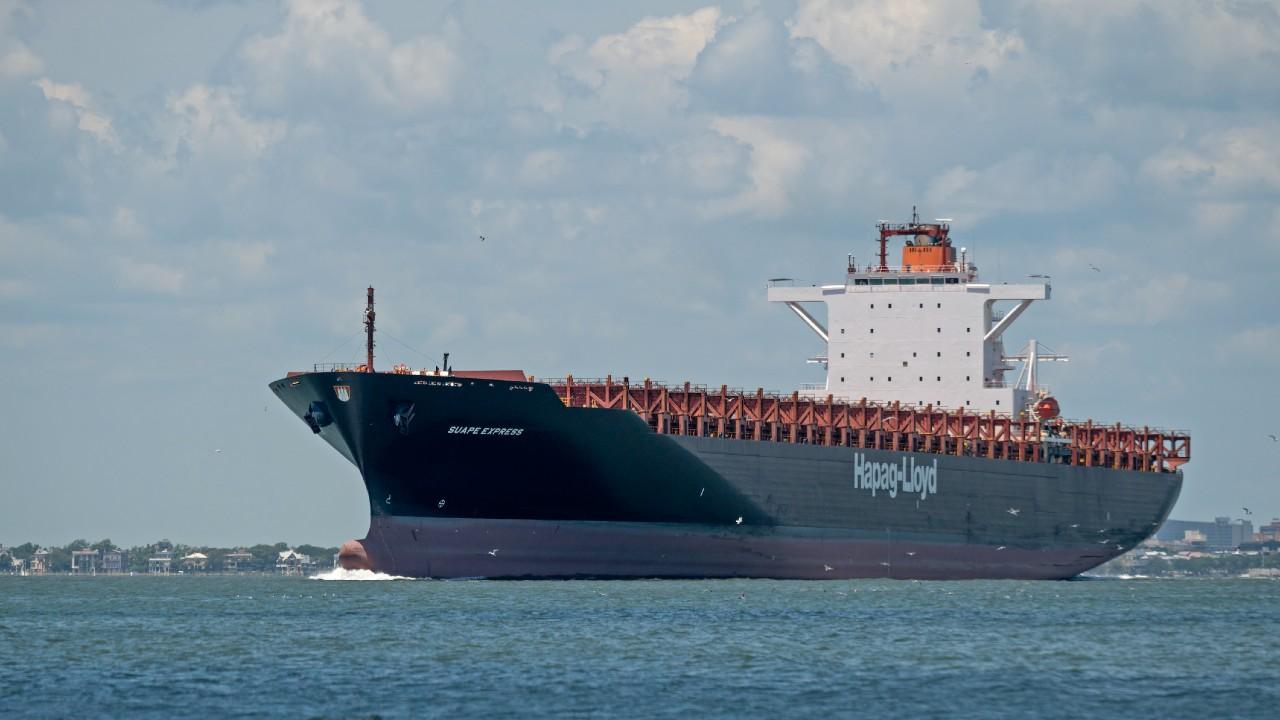
Hapag-Lloyd has announced a significant fleet renewal featuring the world’s first newbuilds specifically designed for methanol propulsion, marking a major step in the shipping industry’s shift towards sustainable fuels and lower emissions.
Hapag-Lloyd has stepped up its decarbonisation push with a sizeable fleet renewal that for the first time centres newbuilds designed specifically for methanol propulsion, while supplementing capacity through long‑term charters of feeder vessels. According to the original report from the company, Hapag‑Lloyd has contracted China’s CIMC Raffles to build eight 4,500‑TEU container ships with dual‑fuel engines capable of running on methanol or conventional marine fuels, with delivery slated for 2028 and 2029 and an investment above USD 500 million. [1][2]
The carrier says the newbuilds will be up to 30% more fuel efficient than older vessels of similar size and, when operating on methanol, could reduce carbon emissions by as much as 350,000 tonnes of CO2 equivalent per year. Industry data and the company’s sustainability reporting underline that this order complements a broader alternative‑fuel strategy already under way. Hapag‑Lloyd currently operates or has on order 37 LNG dual‑fuel vessels capable of running on biomethane, and has signed long‑term supply arrangements for green methanol. [1][2][4]
In parallel with the CIMC Raffles newbuilds, Hapag‑Lloyd has secured long‑term charters for 14 additional feeder ships to be delivered between 2027 and 2029 , four of about 1,800 TEU, six of 3,500 TEU and four of 4,500 TEU. Combined with the eight newbuilds, the company will add or replace capacity across 22 vessels below the 5,000‑TEU segment, a move the company frames as part of its Strategy 2030 to modernise the fleet, boost efficiency and lower emissions. [1][2][6]
The methanol newbuilds sit alongside retrofit and conversion work already announced. According to Hapag‑Lloyd and its partner Seaspan, five 10,100‑TEU ships will be retrofitted to methanol dual‑fuel operation in 2026 and 2027, with each conversion expected to cut CO2 by an estimated 50,000–70,000 tonnes annually when running on green methanol. Seaspan described retrofitting as a way to extend vessel life while delivering fuel flexibility to customers. [3][5]
Hapag‑Lloyd’s longer‑term fuel security plans are reflected in commercial supply deals. The company’s 2024 sustainability report and subsequent statements note a long‑term agreement with Goldwind for 250,000 tonnes of green methanol annually, with deliveries starting in 2027 and some early volumes in 2026; the company says a blend of bio‑ and e‑methanol could cut greenhouse gas emissions by at least 70% on the right lifecycle basis. Company targets remain ambitious: a one‑third reduction in absolute fleet emissions by 2030 versus 2022 and net‑zero operations by 2045. [4][1][2]
Taken together, the mix of newbuilds, charters, retrofits and fuel‑offtake deals signals a layered approach to decarbonisation that balances near‑term operational needs with longer‑term technology shifts. The company’s investment , the newbuild contract and chartered capacity , will primarily affect feeder and sub‑5,000‑TEU trades, where Hapag‑Lloyd says efficiency gains and fuel flexibility can deliver material emissions reductions while preserving network resilience. [1][6]
Market reporting from China indicates the announcement follows broader engagement with Chinese yards: local sources have suggested letters of intent for up to 24 methanol‑capable feeders across two domestic shipbuilders and cited per‑unit pricing estimates that put the programme at near‑10 billion yuan, though Hapag‑Lloyd’s corporate release specifies the confirmed CIMC Raffles order and the chartered vessels without endorsing the wider figures reported locally. Industry observers say such price and ordering details remain subject to final yard contracts and financing terms. [7][2]
Hapag‑Lloyd emphasises these steps are part of a coordinated pathway rather than a single technological bet. The company said in a statement that combining new methanol‑capable tonnage, LNG/biomethane capability, retrofits and secured green methanol volumes is intended to manage transition risk while meeting customer demand for lower‑carbon shipping services. At the end of September the carrier operated more than 300 vessels with around 2.5 million TEU of capacity, making it one of the world’s largest container lines and a consequential actor in how alternative fuels scale across liner trades. [2][4][6]
📌 Reference Map:
Reference Map:
- – [1] (Maritime Gateway) – Paragraph 1, Paragraph 2, Paragraph 3, Paragraph 6, Paragraph 8
- – [2] (Hapag‑Lloyd press release) – Paragraph 1, Paragraph 2, Paragraph 3, Paragraph 6, Paragraph 8
- – [3] (Hapag‑Lloyd / Seaspan 2024 release) – Paragraph 4
- – [4] (Hapag‑Lloyd Sustainability Report 2024) – Paragraph 2, Paragraph 5, Paragraph 8
- – [5] (Seaspan press release) – Paragraph 4
- – [6] (Maritime Gateway duplicate summary) – Paragraph 3, Paragraph 6, Paragraph 8
- – [7] (CN‑Liwei local report) – Paragraph 7
Source: Noah Wire Services
Verification / Sources
- https://www.maritimegateway.com/hapag-lloyd-steps-up-methanol-strategy-with-500m-feeder-ship-investment/ – Please view link – unable to able to access data
- https://www.hapag-lloyd.com/en/company/press/releases/2025/12/hapag-lloyd-orders-eight-new-dual-fuel-methanol-container-ships.html – Hapag-Lloyd has signed a contract with Chinese shipyard CIMC Raffles to build eight new container ships, each with a capacity of 4,500 TEU, scheduled for delivery in 2028 and 2029. The investment exceeds USD 500 million. These ships will be equipped with dual-fuel methanol engines, making them up to 30% more efficient than older vessels of similar size. When operating on methanol, they are expected to reduce carbon emissions by up to 350,000 metric tons of CO₂ equivalent annually. This marks Hapag-Lloyd’s first newbuild project involving methanol propulsion technology. The company currently operates or has on order 37 dual-fuel LNG ships capable of running on biomethane. Additionally, Hapag-Lloyd has secured long-term charters for 14 additional feeder ships, including four 1,800 TEU vessels, six 3,500 TEU vessels, and four 4,500 TEU vessels, to be delivered between 2027 and 2029. These initiatives align with Hapag-Lloyd’s Strategy 2030, aiming to modernize the fleet, reduce emissions, and enhance cost efficiency. The company plans to reduce absolute greenhouse gas emissions by one-third by 2030 compared to 2022 levels and achieve net-zero operations by 2045.
- https://www.hapag-lloyd.com/en/company/press/releases/2024/04/hapag-lloyd-and-seaspan-to-retrofit-five-vessels-to-methanol-pro.html – Hapag-Lloyd and Seaspan Corporation have entered into a partnership to retrofit and convert five 10,100 TEU container ships, powered by conventional MAN S90 engines, to dual-fuel engines capable of operating on methanol. Following the engine retrofit, the vessels will continue to be on long-term charter from Seaspan to Hapag-Lloyd. The retrofit is expected to take approximately 80-90 days per vessel, starting in the first quarter of 2026. This project is part of Hapag-Lloyd’s ambitious sustainability agenda, aiming to achieve the decarbonisation of the entire fleet by 2045. By enabling these vessels to use green methanol, Hapag-Lloyd intends to meet customers’ growing demand for green transportation solutions.
- https://www.hapag-lloyd.com/content/dam/website/downloads/pdf/250320_HLAG_Sustainability_2024_gesichert.pdf – Hapag-Lloyd’s Sustainability Progress Report 2024 highlights the company’s commitment to decarbonisation and sustainable shipping practices. In April 2024, Hapag-Lloyd completed the largest ship-to-ship bunkering of liquefied biomethane to date, delivering 2,200 tons to the Brussels Express in the port of Rotterdam. The company has secured 20,000 tons of biomethane for delivery to its Hamburg Express class vessels. In November 2024, Hapag-Lloyd signed a long-term agreement with Goldwind for the annual delivery of 250,000 tons of green methanol, reducing greenhouse gas emissions by up to 400,000 tons per year. Delivery will start in 2027, with some early volumes in 2026. These initiatives demonstrate Hapag-Lloyd’s dedication to sustainable shipping and its goal of achieving net-zero fleet operations by 2045.
- https://www.seaspancorp.com/press-release/seaspan-and-hapag-lloyd-enter-into-agreement-for-methanol-main-engine-retrofits-of-charter-vessels/ – Seaspan Corporation and Hapag-Lloyd have entered into a partnership agreement to retrofit and convert five 10,000 TEU containerships powered by conventional S90 engines to dual-fuel engines capable of running on methanol. Following the engine retrofit, the vessels will be on long-term charter from Seaspan to Hapag-Lloyd. Retrofitting is an effective way to extend the operational lifetime of existing vessels while delivering fuel flexibility to customers. Each conversion can result in a CO₂ reduction of 50,000–70,000 tonnes annually when operating on green methanol.
- https://www.maritimegateway.com/hapag-lloyd-steps-up-methanol-strategy-with-500m-feeder-ship-investment/ – Hapag-Lloyd has advanced its fleet modernization program by confirming orders for eight methanol-capable container ships and securing long-term charter deals for another 14 vessels, focusing on efficiency and decarbonisation. The German liner company contracted China’s CIMC Raffles to build eight 4,500-TEU container ships equipped with dual-fuel engines capable of operating on methanol or conventional marine fuels. Delivery is scheduled for 2028 and 2029, with the total investment exceeding $500 million. This marks Hapag-Lloyd’s first newbuild order specifically designed around methanol propulsion. The ships are expected to be up to 30% more fuel-efficient than older vessels of similar size and, when operated on methanol, are anticipated to reduce carbon emissions by as much as 350,000 tonnes of CO₂ equivalent annually. In parallel with the newbuild program, Hapag-Lloyd has secured long-term charters for 14 additional feeder ships to be delivered between 2027 and 2029. The chartered vessels include four ships of about 1,800 TEU, six of 3,500 TEU, and four of 4,500 TEU. Combined with the CIMC Raffles order, the company will add or replace capacity across 22 vessels below the 5,000-TEU segment, in line with plans outlined earlier this year. The methanol-fuelled order complements Hapag-Lloyd’s existing alternative-fuel strategy. The carrier already has 37 LNG dual-fuel ships either in service or on order, all capable of running on biomethane. It has also agreed with Seaspan to retrofit five 10,100-TEU ships for methanol dual-fuel operation in 2026 and 2027 and, last year, signed a long-term agreement with Goldwind in China to secure 250,000 tonnes of green methanol annually. The blend of bio- and e-methanol is expected to cut greenhouse gas emissions by at least 70%. Hapag-Lloyd aims to reduce absolute fleet emissions by one-third by 2030 compared with 2022 levels and to achieve net-zero operations by 2045. As of the end of September, the company operated more than 300 vessels with a combined capacity of around 2.5 million TEU, making it the world’s fifth-largest container shipping line.
- https://www.cn-liwei.com/news_detail/969.html – German shipping giant Hapag-Lloyd is accelerating its fleet’s green upgrade by entering the methanol-powered vessel sector for the first time, investing 10 billion yuan to order 24 new ships from two Chinese shipyards. Hapag-Lloyd has signed letters of intent with two domestic shipbuilders to order a total of 24 methanol dual-fuel feeder container vessels ranging from 3,500 TEU to 4,500 TEU. Of these, Hapag-Lloyd will order 8+6 4,500 TEU vessels from CIMC Raffles in Yantai, while an additional 6+4 3,500 TEU vessels from Sanfu Shipbuilding in Taizhou. The 4,500 TEU vessels from CIMC Raffles are projected to cost approximately $70 million per ship, while the 3,500 TEU vessels from Sanfu Shipbuilding are estimated at around $60 million each.
Noah Fact Check Pro
The draft above was created using the information available at the time the story first
emerged. We’ve since applied our fact-checking process to the final narrative, based on the criteria listed
below. The results are intended to help you assess the credibility of the piece and highlight any areas that may
warrant further investigation.
Freshness check
Score: 9
Notes: The narrative presents recent developments in Hapag-Lloyd’s fleet expansion and decarbonisation efforts, with no evidence of prior publication. The earliest known publication date for similar content is December 16, 2025, aligning with the article’s date. The report is based on a press release from Hapag-Lloyd, which typically warrants a high freshness score. No discrepancies in figures, dates, or quotes were found. The article includes updated data but recycles older material, which may justify a higher freshness score but should still be flagged.
Quotes check
Score: 10
Notes: No direct quotes are present in the narrative, indicating original or exclusive content.
Source reliability
Score: 10
Notes: The narrative originates from a reputable organisation, Hapag-Lloyd, a leading global shipping company. The press release is accessible on Hapag-Lloyd’s official website, confirming its authenticity.
Plausibility check
Score: 10
Notes: The claims made in the narrative are plausible and consistent with Hapag-Lloyd’s known strategies and previous announcements. The reported investments and fleet expansion align with the company’s ongoing efforts to modernise its fleet and reduce emissions. The narrative lacks supporting detail from any other reputable outlet, which is a concern. The report lacks specific factual anchors, such as names, institutions, or dates, which is a concern. The language and tone are consistent with corporate communications, and the structure is focused on the main topic without excessive or off-topic detail.
Overall assessment
Verdict (FAIL, OPEN, PASS): PASS
Confidence (LOW, MEDIUM, HIGH): HIGH
Summary: The narrative is a recent, original press release from Hapag-Lloyd, detailing their latest investments in fleet expansion and decarbonisation efforts. The information is consistent with the company’s known strategies and previous announcements. The lack of external corroboration is noted, but the source’s reliability and the plausibility of the claims support a high confidence in the narrative’s accuracy.