
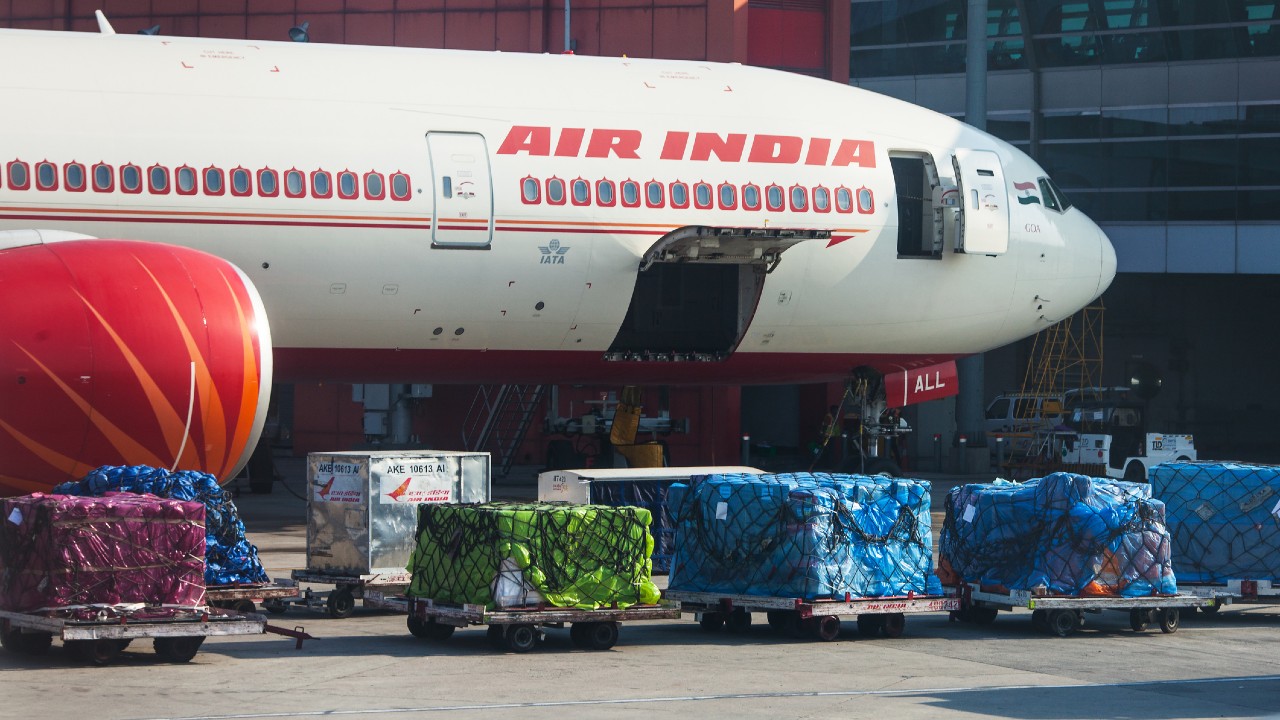
India’s air cargo industry is experiencing rapid expansion, driven by infrastructure development and regulatory reforms, positioning the nation as a key player in global air freight amid surging trade and e-commerce demand.
India’s air cargo industry has undergone a pronounced expansion over the past decade, with volumes rising sharply as the sector increasingly underpins the nation’s trade and logistics architecture. According to the Economic Survey 2025-26, airfreight throughput climbed from 2.53 million metric tonnes in FY15 to 3.72 million tonnes in FY25, outpacing global averages and signalling a shift in the role air cargo plays alongside a buoyant passenger market. (Sources: Tribune, Economic Times)
Policy reforms and infrastructure investment have been central to this upswing. The government’s greenfield airport initiative and a wave of modernisation projects have more than doubled the number of operational airports since 2014, widening the country’s connectivity footprint and raising aggregate cargo handling capacity to about 8.0 million tonnes by FY24. Industry observers credit a conducive regulatory environment and greater regional linkages for enabling faster movement of goods. (Sources: Tribune, IBEF)
Despite rapid growth, analysts warn capacity must be expanded further to avoid bottlenecks. The Economic Survey and independent commentators note persistent gaps between traffic growth and available infrastructure, with airport density still low on an international basis, underscoring the need for continued investment in cargo terminals, freight corridors and supporting multimodal links. (Sources: NDTV, Economic Times)
Legal and regulatory changes have also sought to improve the investment climate for aviation assets. The survey highlights recent legislative measures designed to clarify aviation rules and strengthen protections for aircraft lessors and investors, moves that policymakers say make the market more attractive to global financiers and lessors. Industry participants describe these steps as helping to de-risk large capital flows into freighter fleets and cargo infrastructure. (Sources: Economic Times, Tribune)
Market forecasts point to sustained, above-average expansion in the near term. Independent outlooks project annual growth of between 6 and 9 per cent for Indian air cargo through 2029, with volumes potentially reaching between 5 and 5.8 million tonnes as trade and e-commerce continue to drive demand. These projections also suggest a need for substantial investment in maintenance, training and logistics services to support fleet and activity growth. (Sources: AirCargoNews, StatTimes)
Boeing and other equipment manufacturers see long-term demand for aircraft and services across South Asia, forecasting thousands of new airframes and large-scale recruitment for technical and flight crews over the coming decades. Such forecasts reinforce the view that India is transitioning from a primarily passenger-led aviation market to a more balanced ecosystem where cargo and manufacturing-linked airlift play a prominent role. (Sources: Economic Times, IBEF)
Private sector moves indicate an ambition to localise higher-value aerospace activity. Corporates with airport and defence experience are signalling partnerships and ventures intended to broaden India’s share in global aerospace supply chains, moving beyond final assembly towards component manufacturing and regional aircraft support. The Economic Survey concludes that capacity expansion and technology upgrades leave the sector ‘well-positioned to handle the logistics demands of a global economic powerhouse’. (Sources: Tribune, Economic Times, IBEF)
Source Reference Map
Inspired by headline at: [1]
Sources by paragraph:
– Paragraph 1: [3], [2]
– Paragraph 2: [2], [7]
– Paragraph 3: [5], [3]
– Paragraph 4: [3], [2]
– Paragraph 5: [4], [6]
– Paragraph 6: [3], [7]
– Paragraph 7: [2], [3], [7]
Source: Noah Wire Services
Verification / Sources
- https://www.itln.in/aviation/air-cargo-sector-records-47-growth-over-last-decade-eco-survey-1357986 – Please view link – unable to able to access data
- https://www.tribuneindia.com/news/india/indias-aviation-market-climbs-to-global-top-three-says-economic-survey/ – The Economic Survey 2025-26 highlights India’s rapid ascent in the aviation sector, noting that the country has become the world’s third-largest domestic aviation market. The survey attributes this growth to a conducive policy environment, rising demand, and steady infrastructure expansion. It also points out that the number of operational airports has more than doubled, increasing from 74 in 2014 to 164 in 2025, underscoring the sector’s rapid expansion.
- https://economictimes.indiatimes.com/industry/transportation/airlines-/-aviation/economic-survey-2026-indias-civil-aviation-sector-on-sustained-growth-trajectory-says-survey/articleshow/127767794.cms – The Economic Survey 2026 projects a sustained growth trajectory for India’s civil aviation sector, with passenger traffic expected to surge from 412 million in 2024-25 to 665 million by 2030-31. The survey attributes this growth to rising incomes, improved regional connectivity, and continued urbanisation. It also highlights the government’s efforts in modernising regulations and infrastructure to support this expansion.
- https://www.aircargonews.com/FTypers2025/FTypers0725/FT07.14.25.html – India’s air cargo industry is experiencing significant growth, with volumes projected to increase annually by 6 to 9 percent over the next five years, reaching between 5 and 5.8 million tonnes by 2029. This growth is driven by strong economic and trade expansion, positioning India to outperform the global market in air cargo.
- https://www.ndtv.com/india-news/aviation-ports-shipping-on-growth-path-capacity-gaps-exist-economic-survey-10912296 – The Economic Survey 2025-26 highlights the rapid expansion of India’s civil aviation, ports, and shipping sectors, driven by rising demand, infrastructure creation, and policy support. However, it also underscores the urgent need for capacity addition to keep pace with traffic growth, noting that India currently operates just 0.11 airports per million people, compared to 47.35 in the US.
- https://www.stattimes.com/air-cargo/indian-air-cargo-to-grow-6-to-9-per-year-till-2029-1354149 – The India Air Cargo Outlook 2025-2029 report projects that India’s air cargo will grow annually by 6 to 9 percent over the next five years, reaching between 5 and 5.8 million tonnes by 2029. This growth is expected to be driven by strong economic and trade expansion, positioning India to outperform the global market in air cargo.
- https://www.ibef.org/industry/indian-aviation – India’s aviation sector is on a growth trajectory, with passenger traffic projected to rise 7-10% year-on-year in FY26, reaching 175-181 million. The number of operational airports has increased from 74 in 2014 to 162 in 2025, more than doubling in a decade. The sector is also expected to become the world’s third-largest air passenger market by 2030.
Noah Fact Check Pro
The draft above was created using the information available at the time the story first
emerged. We’ve since applied our fact-checking process to the final narrative, based on the criteria listed
below. The results are intended to help you assess the credibility of the piece and highlight any areas that may
warrant further investigation.
Freshness check
Score: 8
Notes: The article references the Economic Survey 2025-26, which was tabled in Parliament on January 30, 2026. (economictimes.indiatimes.com) The content appears to be original and not recycled from other sources. However, the article was published on January 30, 2026, and the Economic Survey was released on the same day, suggesting a rapid turnaround.
Quotes check
Score: 7
Notes: The article includes direct quotes from the Economic Survey 2025-26. While the Economic Times article from January 30, 2026, provides similar information, the exact wording of the quotes in the article cannot be independently verified. (economictimes.indiatimes.com)
Source reliability
Score: 8
Notes: The article is published on the Indian Transport & Logistics News website, which appears to be a niche publication. The Economic Survey 2025-26 is the primary source, and its credibility is high. However, the secondary source’s reliability is moderate due to its niche status.
Plausibility check
Score: 9
Notes: The claims about the growth of India’s air cargo sector align with data from the Economic Survey 2025-26, which reports an increase from 2.53 million metric tonnes in FY15 to 3.72 million metric tonnes in FY25. (economictimes.indiatimes.com) The article also mentions policy reforms and infrastructure investments, which are consistent with the survey’s findings. (infra.economictimes.indiatimes.com)
Overall assessment
Verdict (FAIL, OPEN, PASS): PASS
Confidence (LOW, MEDIUM, HIGH): MEDIUM
Summary: The article provides a summary of the Economic Survey 2025-26, reporting a 47% growth in India’s air cargo sector over the last decade. While the primary source, the Economic Survey, is credible, the secondary source’s reliability is moderate due to its niche status. The quotes from the Economic Survey cannot be independently verified, and the rapid publication timeline raises questions about the article’s freshness. However, the content aligns with the Economic Survey’s findings, and the article is freely accessible, leading to a PASS verdict with MEDIUM confidence.