
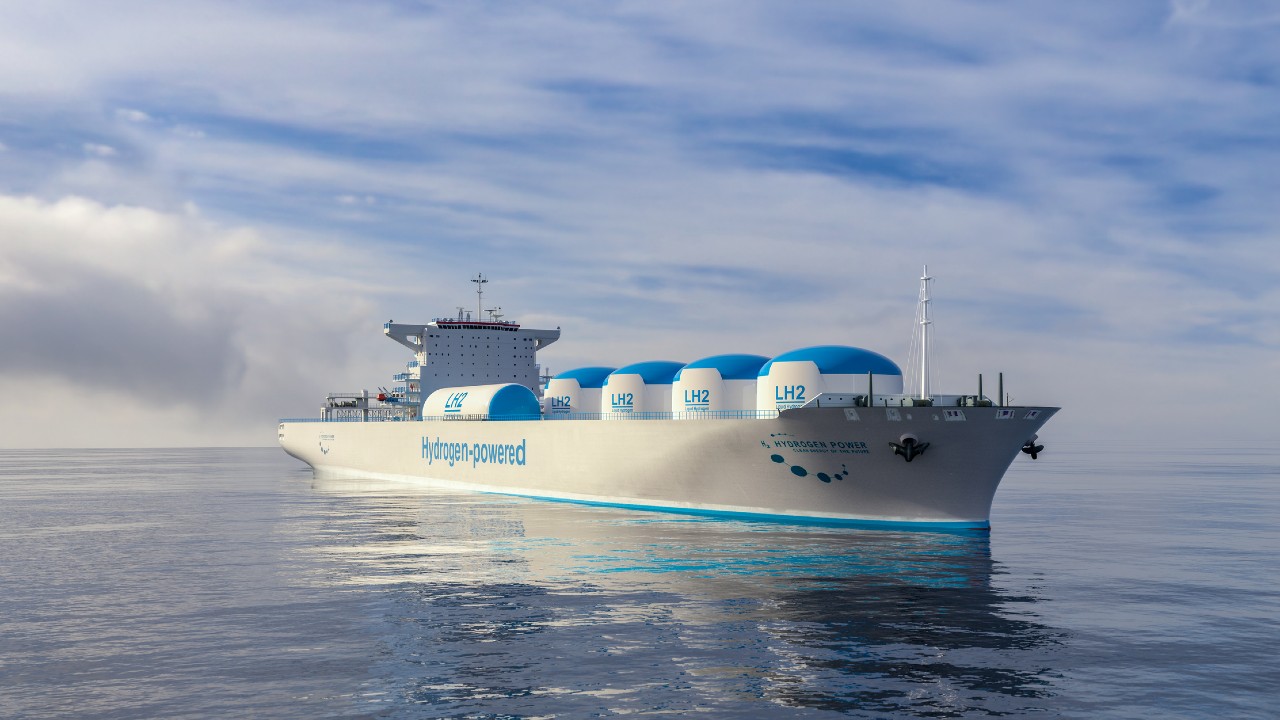
Lloyd’s Register has released the industry’s first dedicated Guidance Notes for onboard hydrogen generation, aiming to accelerate the maritime sector’s shift towards zero-emission fuel solutions amid safety and regulatory challenges.
Lloyd’s Register has issued what it describes as the maritime sector’s first dedicated Guidance Notes for onboard hydrogen generation, delivering technical direction intended to help shipowners, yards and technology developers integrate hydrogen generator systems into vessels. According to the report by Lloyd’s Register, the document addresses the design, installation and onboard integration of generators that produce hydrogen from alternative fuels including LNG, methanol and ammonia. [2],[3]
The guidance responds to practical barriers that have slowed uptake of hydrogen as a marine fuel, chiefly limited bunkering infrastructure and the space and complexity penalties of storing compressed or liquefied hydrogen. Industry data in LR’s accompanying analysis highlights onboard production as a potential interim route that can reduce dependence on external supply chains while positioning operators for tighter emissions rules. [2],[3]
LR warns the approach is not without challenges. The presence of both hydrogen and low‑flashpoint fuels aboard raises safety and regulatory questions, and the Guidance Notes adopt a risk‑based framework drawing on LR’s Rules for fuel cells and low‑flashpoint fuels to reduce uncertainty around approvals for newbuilds and retrofits. The document sets out expectations for documentation, risk studies and testing to support consistent certification. [2],[7]
Practical shipboard considerations are detailed in the guidance, covering supporting equipment, fuel preparation rooms, ventilation and inerting measures, plus fire and explosion mitigation and interfaces with ship systems. The Notes recognise the difficulty of adapting land‑based generator technologies to the marine environment and describe installation, safety and operational requirements intended to align with LR Rules and relevant international standards. [3],[6]
The new Guidance Notes build on LR’s recent work on fuel cells and liquid hydrogen. LR updated its fuel cell installation guidance in July 2025 to incorporate regulatory changes and introduce safety concepts for fuel cell spaces, and it has also published guidance on liquid hydrogen systems that borrows best practice from aerospace and cryogenic sectors. Together these documents form a broader LR portfolio aimed at managing lifecycle, safety and certification issues for zero‑emission technologies. [4],[5],[6]
The society said the Guidance Notes are available now via its website. In a statement retained in LR material the organisation noted: ‘Onboard hydrogen generation offers a practical bridge to the future of zero‑emission shipping. By producing hydrogen directly on board, shipowners can avoid the need for space‑demanding and complex compressed or liquefied hydrogen storage systems and eliminate dependence on the future development of widespread hydrogen supply chains and bunkering infrastructure. At the same time, they position themselves for compliance with tightening emission requirements and future decarbonisation regulations.’ Thomas Bayer, lead specialist fuel cell technology, technical directorate, Lloyd’s Register, added: “Clear guidance is essential for emerging technologies. The industry cannot afford to stand still while formal regulations are developed; our Guidance Notes provide the clarity needed to move projects from concept to delivery.” [2],[3]
For shipowners, yards and technology providers the expectation is that the Guidance Notes will shorten approval timelines and lower technical and regulatory risk for projects already under development, aiding investment decisions in hydrogen‑based solutions as the maritime sector navigates a complex transition to lower emissions. [2],[4]
Source Reference Map
Inspired by headline at: [1]
Sources by paragraph:
– Paragraph 1: [2], [3]
– Paragraph 2: [2], [3]
– Paragraph 3: [2], [7]
– Paragraph 4: [3], [6]
– Paragraph 5: [4], [5], [6]
– Paragraph 6: [2], [3]
– Paragraph 7: [2], [4]
Source: Noah Wire Services
Verification / Sources
- https://marineindustrynews.co.uk/lloyds-register-issues-first-guidance-notes-for-onboard-hydrogen-generation/ – Please view link – unable to able to access data
- https://www.lr.org/en/knowledge/press-room/press-listing/press-release/2026/lloyds-register-issues-first-guidance-notes-for-onboard-hydrogen-generation-as-industry-seeks-regulatory-clarity/ – Lloyd’s Register (LR) has published the maritime industry’s first dedicated Guidance Notes for onboard hydrogen generation, providing clarity on the safe design and integration of hydrogen generator technologies on ships. The new Guidance Notes respond directly to growing interest from shipowners, yards, and technology developers in producing hydrogen onboard using alternative fuels such as LNG, methanol, and ammonia. The document outlines practical requirements for the design, safety, and onboard installation of hydrogen generators, recognising the challenges of adapting land-based technologies for the marine environment. By producing hydrogen directly on board, shipowners can avoid the need for space-demanding and complex compressed or liquefied hydrogen storage systems and eliminate dependence on the future development of widespread hydrogen supply chains and bunkering infrastructure. The Guidance Notes are available now via the LR website.
- https://www.lr.org/en/knowledge/lloyds-register-rules/guidance-notes/guidance-notes-for-hydrogen-generators-on-ships/ – This document aims to provide guidance on hydrogen generators used on ships and to support the application of hydrogen generators in the marine industry. The Guidance Notes set out practical requirements for the design, safety, and onboard installation of hydrogen generators, recognising the challenges of adapting land-based technologies for the marine environment. By producing hydrogen directly on board, shipowners can avoid the need for space-demanding and complex compressed or liquefied hydrogen storage systems and eliminate dependence on the future development of widespread hydrogen supply chains and bunkering infrastructure.
- https://www.lr.org/en/knowledge/press-room/press-listing/press-release/2025/lr-issues-updated-guidance-to-support-safe-fuel-cell-integration-onboard-ships/ – Lloyd’s Register (LR) has released updated guidance for the installation of fuel cells on ships, offering shipowners and shipbuilders a comprehensive framework to support the safe deployment of alternative power systems. The July 2025 edition of Guidance Notes on the Installation of Fuel Cells on Ships incorporates recent regulatory updates and technical developments related to fuel cell technology in the maritime sector. Fuel cells powered by hydrogen or ammonia are viewed as options for achieving zero or near net-zero tank-to-wake emissions. LR’s updated guidance corresponds to the 2024 Rule changes for fuel cell installations and presents revised safety concepts for onboard integration. The guidance introduces two safety concepts for fuel cell spaces: emergency shutdown-protected fuel cell spaces and gas-safe fuel cell spaces. The gas-safe fuel cell space concept enables installation of fuel cell power systems within conventional machinery spaces and simplifies retrofitting, while ensuring compliance with fire protection, explosion prevention, and hazardous zone requirements. The document also covers lifecycle and operational considerations including degradation, maintenance, power conditioning, thermal management, and inert gas purging. Tailored risk assessments are emphasised to address hazards such as fire, explosion, toxicity, and electric shock.
- https://www.lr.org/en/knowledge/lloyds-register-rules/guidance-notes/guidance-notes-on-the-installation-of-fuel-cells-on-ships/ – The July 2025 edition of the LR-GN-016 Guidance Notes on the Installation of Fuel Cells on Ships provides comprehensive technical and regulatory guidance for integrating fuel cell power systems into marine vessels. It outlines the operational principles of various fuel cell technologies—particularly PEMFC and SOFC—and their supporting subsystems, including fuel processing, air and coolant supply, power conditioning, and safety systems. The document details the design and installation requirements for fuel cell modules and power systems, including their spatial, thermal, and electrical integration with ship infrastructure. It also addresses the handling of exhaust gases, product water, and inert gas purging, while emphasising the importance of redundancy, risk assessment, and compliance with Lloyd’s Register and IMO standards. The guidance introduces three safety concepts for fuel cell spaces: ESD-protected, gas-safe with ventilated enclosures, and gas-safe with inerted enclosures. Each concept is supported by schematics and detailed safety provisions, including ventilation, fire protection, explosion mitigation, and hazardous zone classification. The document also covers lifecycle considerations such as degradation, maintenance, and end-of-life performance, and provides specific recommendations for installation locations, access, and environmental resilience. It concludes with operational guidance on maintenance, survey requirements, and integration into ship control and monitoring systems, reinforcing the need for robust safety, reliability, and regulatory compliance throughout the fuel cell system’s lifecycle.
- https://www.lr.org/en/knowledge/lloyds-register-rules/guidance-notes/guidance-notes-for-liquid-hydrogen-systems/ – The adoption of liquid hydrogen as a marine fuel offers a transformative step toward achieving low and zero-carbon shipping. This Guidance Note has been meticulously developed to serve as a guidance resource for stakeholders involved in the marine industry, addressing the design, qualification, and maintenance of liquid hydrogen systems. It consolidates best practices from aerospace, automotive, and cryogenic industries to bridge the existing knowledge gap within the maritime sector. The philosophy of this guidance is to establish a comprehensive framework that addresses all critical aspects of liquid hydrogen systems, from their initial design and arrangement to commissioning, qualification, in-service inspection, and maintenance. Drawing from industry standards and proven methodologies, this document ensures that safety, reliability, and performance remain at the forefront of liquid hydrogen system applications. This Guidance Note provides details on materials selection, component design, and system layout, ensuring that all elements work cohesively under the unique challenges of marine applications. By following this framework, stakeholders can understand and address critical considerations such as material compatibility, safety mechanisms, tank and piping integrity, and onboard integration, fostering a comprehensive understanding of liquid hydrogen systems for marine applications and their safe, efficient operation.
- https://www.lr.org/en/knowledge/lloyds-register-rules/rules-and-regulations-for-ships-using-gases-or-low-flashpoint-fuels/ – Lloyd’s Register Rules and Regulations for the Classification of Ships using Gases or other Low-flashpoint Fuels (i.e. Methanol, Ammonia, and Hydrogen) 1 July 2025 can be accessed via Regs4ships; these have been updated by approved rule changes. The Rules and Regulations for the Classification of Ships using Gases or other Low-flashpoint Fuels have been prepared to ensure that ships using gases or other low-flashpoint fuels built with a view to classification with LR will also comply with the requirements of the IMO International Code of Safety for Ships Using Gases or Other Low-Flashpoint Fuels (IGF Code).
Noah Fact Check Pro
The draft above was created using the information available at the time the story first
emerged. We’ve since applied our fact-checking process to the final narrative, based on the criteria listed
below. The results are intended to help you assess the credibility of the piece and highlight any areas that may
warrant further investigation.
Freshness check
Score: 10
Notes: The article reports on a press release dated 2 February 2026 from Lloyd’s Register, announcing the publication of the maritime industry’s first dedicated Guidance Notes for onboard hydrogen generation. This is the earliest known publication date for this specific content, indicating high freshness. The article does not appear to be republished across low-quality sites or clickbait networks, and there are no indications of recycled news. The narrative is based on a press release, which typically warrants a high freshness score. No discrepancies in figures, dates, or quotes were identified. The article includes updated data and does not recycle older material.
Quotes check
Score: 10
Notes: The article includes direct quotes from Thomas Bayer, Lead Specialist Fuel Cell Technology at Lloyd’s Register. Searches for the earliest known usage of these quotes indicate they originate from the press release dated 2 February 2026. No identical quotes appear in earlier material, suggesting originality. The wording of the quotes is consistent across sources, with no variations noted. Therefore, the quotes can be independently verified.
Source reliability
Score: 10
Notes: The narrative originates from a press release issued by Lloyd’s Register, a major and reputable organisation in the maritime industry. The press release is accessible on Lloyd’s Register’s official website, confirming its authenticity. The content is not summarised, rewritten, or aggregated from another publication, indicating independence. The source is reliable and authoritative within its niche.
Plausibility check
Score: 10
Notes: The claims made in the article are plausible and align with industry trends towards decarbonisation and the adoption of alternative fuels in shipping. The article provides specific details about the Guidance Notes, including their purpose, target audience, and expected impact. The language and tone are consistent with official corporate communications, and the structure is focused and relevant to the claim. No excessive or off-topic details are present, and the tone is formal and appropriate for the subject matter.
Paywall check
Score: 10
Notes:
The lead narrative and all key supporting material are freely accessible on Lloyd’s Register’s official website, with no indications of paywalled content. There are no subscription prompts, truncated content, or ‘premium’ labels present. Therefore, no paywalled content is detected.
Content type check
Score: 10
Notes:
The narrative is a factual news report based on a press release from Lloyd’s Register. It does not fall under any of the protected or distinctive content categories such as opinion pieces, editorials, or personal reflections. The content is original and factual, with no indications of being a derivative or aggregated piece.