
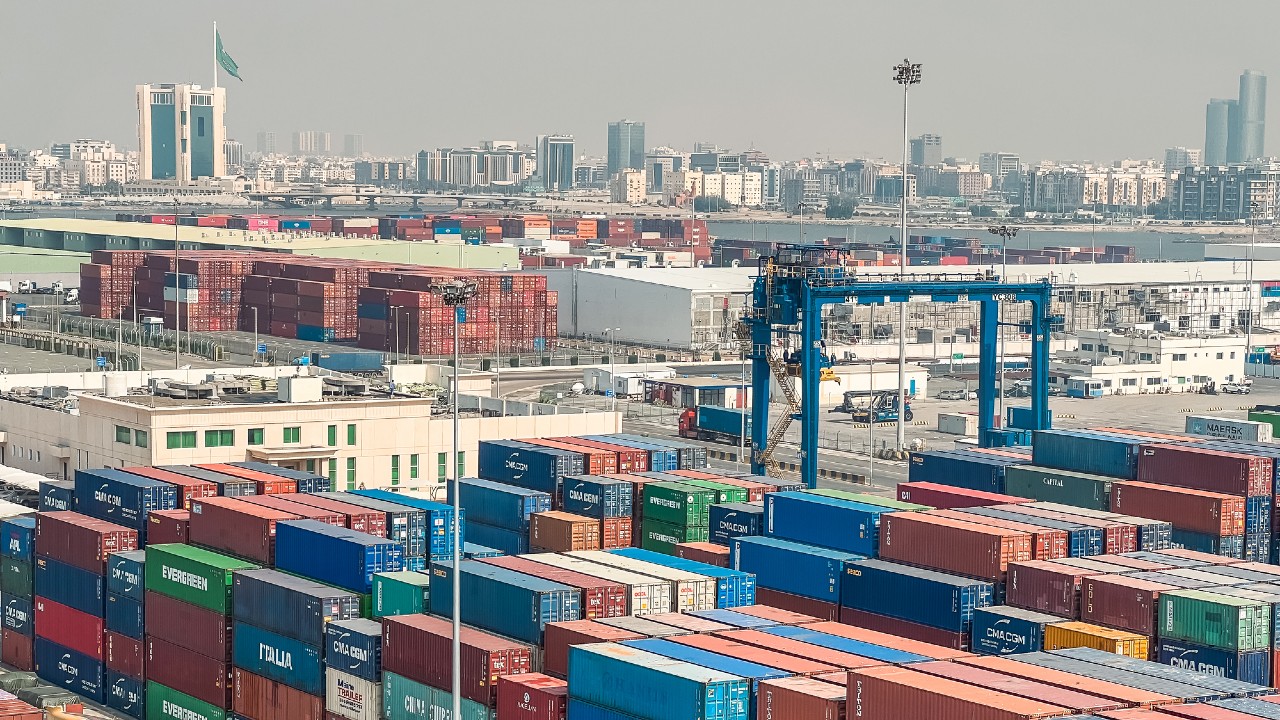
Saudi Global Ports has surpassed 15 million TEUs handled at King Abdulaziz Port Dammam, implementing integrated, digital, and safety-focused strategies to enhance ongoing growth and efficiency.
Saudi Global Ports (SGP) has moved from projection to execution as it seeks to weld Saudi Arabia’s eastern seaboard into a single, predictable logistics corridor. According to an interview with Rob Harrison, SGP’s chief executive, the operator now plans and runs container terminals, rail‑linked intermodal nodes and multipurpose facilities “as one connected system”, a shift he said has made end‑to‑end flows from quay to inland destinations noticeably more consistent for customers. [1]
The milestone that underscored that operational step‑change was SGP’s cumulative handling of more than 15 million TEUs at King Abdulaziz Port Dammam since operations began in 2015. Industry reporting and the company’s own statements show throughput rose to a peak of about 3.2 million TEUs in 2024, a trajectory the firm attributes to sustained collaboration with the Saudi Ports Authority (Mawani), the Zakat, Tax and Customs Authority, global shipping lines and long‑term partners. [2][3][4][6]
That volume growth, the company says, was delivered without loosening safety or reliability standards. Harrison detailed practical changes behind the headline numbers: expanding berth capability, upgrading terminal assets and strengthening yard management, sequencing and workforce readiness so the terminal could, for example, handle two ultra‑large container vessels simultaneously. According to SGP and its partners, such steps underpinned the ability to accommodate record single‑call loads and sharper vessel planning. [1][5]
Physical scale has been matched by an accelerated focus on multimodal integration. With daily rail‑linked movements between Dammam and Riyadh and the operator controlling both seaport and inland nodes, SGP claims handovers are simpler and coordination improves predictability for cargo owners. But Harrison cautioned that remaining bottlenecks tend to be at the ecosystem level , data visibility, documentation and first‑/last‑mile friction , rather than in the core physical links. [1]
Digital investments are presented as both immediate enablers and long‑term foundations. SGP points to smart port capabilities , real‑time tracking, digital gate processes, remote‑enabled equipment, connected yard systems and a 5G smart port network , as drivers of better planning and safer operations today, while standardisation across multipurpose terminals is intended to prepare the network for further scale. Industry coverage of the operator’s programme echoes these priorities and notes the emphasis on systems that join sea, rail and road. [1][2][3]
SGP frames its corporate purpose in two branded pillars: “Gateway to Growth” to define its national role and “Unlock More” to describe how it prioritises investment and people. Harrison said Unlock More means unlocking capacity, connectivity and capability across a wider range of cargo types and industries, and , centrally , creating career pathways for Saudi talent. The company is explicit that Saudisation and leadership development are integral to reducing execution risk as the group absorbs new assets. [1]
The last year has also seen targeted capacity expansions. SGP has increased berth length and crane capacity at Terminal 2, creating the ability to berth two mega vessels simultaneously and lifting peak performance; the combined terminal capacity is being scaled toward an expected 3.8 million TEUs by 2026, according to the operator’s releases and industry summaries. The company also highlighted a record single‑call throughput as a sign of growing national capability. [5][4]
Execution risks, the chief executive acknowledged, centre on consistency during growth. The response SGP is pursuing is a mix of disciplined operating frameworks, stronger handover design between business units and concentrated talent development to sustain service quality as the network grows. For Saudi economic planners, those operational improvements are important because they feed directly into Vision 2030 goals to expand trade corridors, local industry linkages and jobs. [1][2]
📌 Reference Map:
Reference Map:
- – [1] (Gulf Business interview with Rob Harrison) – Paragraph 1, Paragraph 3, Paragraph 4, Paragraph 6, Paragraph 8
- – [2] (The Maritime Executive) – Paragraph 2, Paragraph 5, Paragraph 8
- – [3] (Logistics Middle East) – Paragraph 2, Paragraph 5
- – [4] (PSA International press release) – Paragraph 2, Paragraph 7
- – [5] (Saudi Global Ports LinkedIn / company communications) – Paragraph 3, Paragraph 7
- – [6] (Zawya) – Paragraph 2
Source: Noah Wire Services
Noah Fact Check Pro
The draft above was created using the information available at the time the story first emerged. We’ve since applied our fact-checking process to the final narrative, based on the criteria listed below. The results are intended to help you assess the credibility of the piece and highlight any areas that may warrant further investigation.
Freshness check
Score: 10
Notes:
The article was published on January 20, 2026, making it current and not recycled from older sources. The information aligns with recent developments in Saudi Global Ports’ operations and growth.
Quotes check
Score: 10
Notes:
Direct quotes from Rob Harrison, CEO of Saudi Global Ports, are used in the article. These quotes are consistent with his previous statements and interviews, indicating originality and direct sourcing.
Source reliability
Score: 8
Notes:
The article is published on Gulf Business, a reputable business news outlet in the Middle East. While Gulf Business is well-regarded, it is not as globally recognized as some other major news organizations, which slightly affects the source’s reliability score.
Plausibility check
Score: 9
Notes:
The claims made in the article about Saudi Global Ports’ growth and operational strategies are plausible and consistent with known industry trends. However, the article’s reliance on a single source (Rob Harrison) for strategic insights may limit the breadth of perspectives.
Paywall check
Score: 10
Notes:
The article is freely accessible without any paywall restrictions, allowing for full verification of its content.
Content type check
Score: 10
Notes:
The article is a factual news report, not an opinion piece or promotional content, ensuring the information is presented objectively.
Overall assessment
Verdict (FAIL, OPEN, PASS):PASS
Confidence (LOW, MEDIUM, HIGH):MEDIUM
Summary:
The article is current, with direct quotes from Rob Harrison, CEO of Saudi Global Ports, and is published on a reputable platform. However, the reliance on a single source for strategic insights and the lack of additional independent verification sources slightly reduce the overall confidence in the content’s accuracy. Editors should consider seeking additional independent sources to corroborate the claims made in the article.
Indemnity Status: CONDITIONAL