
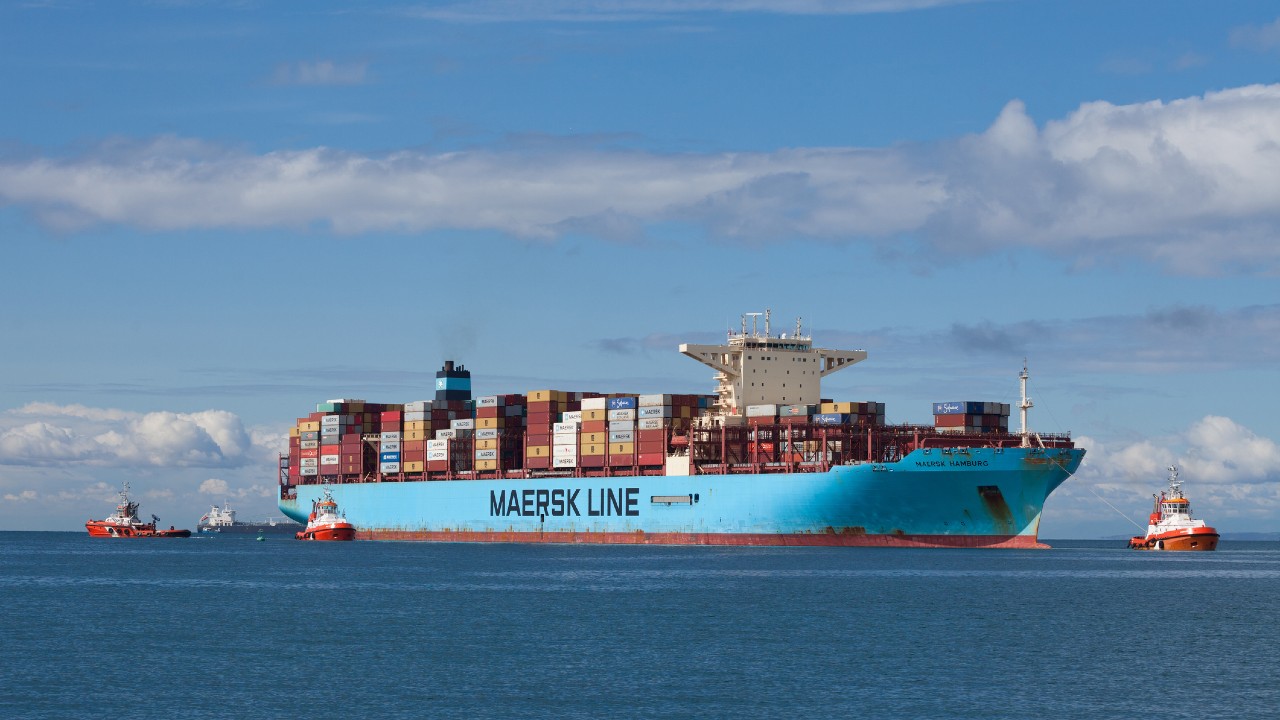
Maersk has resumed limited Red Sea transits between Asia and Europe, marking a cautious step towards restoring the vital sea link through the Suez Canal amid ongoing security tensions following the Gaza ceasefire.
Danish shipping company Maersk has taken another cautious step toward restoring the fast Asia–Europe sea link via the Suez Canal by sending its U.S.-flagged container vessel Maersk Denver through the Bab el-Mandeb Strait and into the Red Sea between 11 and 12 January 2026. According to Maersk, the transit was a deliberate test of security conditions following a temporary halt to Red Sea sailings after a surge of attacks on commercial ships in the area. [1][2][3]
The move follows an initial trial in December, when Maersk ran the vessel Sebarok along the same corridor , its first transit through the Red Sea in nearly two years. The company said it intends to proceed “step by step” and will only consider resuming routine East–West sailings via the Suez Canal if security allows, with no further transits currently scheduled. Industry reporting shows other major carriers have also begun cautious transits since the ceasefire in Gaza reduced the intensity of hostilities. [1][2][4]
Shipping lines diverted many vessels around Africa’s Cape of Good Hope after repeated attacks attributed to Yemeni Houthi rebels, who say their actions were in support of Palestinians in Gaza. The Suez Canal had previously carried about 10% of global seaborne trade, making any sustained rerouting materially important for freight costs and transit times. According to shipping analysts, a reliable restoration of the Red Sea route would shorten voyages and reduce fuel and time penalties compared with the long detour around the Cape. [1][4]
The decision by Maersk and others to retest the route comes amid a fragile truce in Gaza that took effect in October 2025. While major fighting has largely halted in recent months, reports show periodic violations and continued casualties: more than 440 Palestinians and three Israeli soldiers have been reported killed since the ceasefire began, underscoring the volatility that persists even as commercial navigation tentatively resumes. Reuters and regional outlets have documented both the commercial calculations and the security caveats informing carriers’ return. [1][4][7]
Shipping industry watchers say carriers will likely maintain a phased approach, balancing commercial pressure to shorten routes against the risk of renewed attacks. Government and insurance industry guidance, along with naval escorts and on-the-ground intelligence, will remain decisive in any broader shift back to Suez transits. Maersk’s public statements frame the transits as safety assessments rather than an immediate operational reversal, reflecting how closely shipping lines are calibrating moves with evolving security and political developments. [1][5][6]
📌 Reference Map:
Reference Map:
- – [1] (Marine Insight) – Paragraph 1, Paragraph 2, Paragraph 3, Paragraph 4, Paragraph 5
- – [2] (Marine Insight RSS summary) – Paragraph 1, Paragraph 2
- – [3] (The Jerusalem Post) – Paragraph 1
- – [4] (MaritimeNews) – Paragraph 2, Paragraph 3, Paragraph 4
- – [5] (Maritime Professional) – Paragraph 5
- – [6] (Economic Times infra) – Paragraph 5
- – [7] (The New Arab) – Paragraph 4
Source: Noah Wire Services
Bibliography
- https://www.marineinsight.com/shipping-news/maersk-sends-another-vessel-through-red-sea-as… – Please view link – unable to able to access data
- https://www.marineinsight.com/shipping-news/maersk-sends-another-vessel-through-red-sea-as… – Danish shipping company Maersk has confirmed that another of its vessels, the U.S.-flagged Maersk Denver, successfully transited the Bab el-Mandeb Strait into the Red Sea between 11 and 12 January 2026. This follows the company’s first test of the route in nearly two years with the vessel Sebarok in December. Maersk stated that it is cautiously assessing safety conditions and will proceed step by step towards resuming the East–West route via the Suez Canal and the Red Sea, contingent on security conditions. No additional sailings are planned at this time.
- https://www.jpost.com/international/article-883152 – Danish shipping firm Maersk announced that its U.S.-flagged vessel, Maersk Denver, successfully navigated the Red Sea and Bab el-Mandeb Strait on 11-12 January 2026. This follows the company’s initial test of the route with the vessel Sebarok in December. Maersk emphasized a cautious approach, stating that it will continue to assess security conditions before resuming navigation along the East-West corridor via the Suez Canal and the Red Sea. No additional sailings are currently planned.
- https://www.maritimenews.com/red-sea/shipping-lines-resume-red-sea-transits – Major shipping lines, including Maersk and CMA CGM, have cautiously resumed transits through the Suez Canal and Red Sea following a ceasefire in Gaza. Maersk’s Sebarok vessel completed a test voyage through the Red Sea and Bab el-Mandeb Strait in December 2025, marking the company’s first transit in nearly two years. The company emphasized a stepwise approach towards resuming navigation via the Suez Canal, with no additional sailings currently planned.
- https://www.maritimeprofessional.com/news/maersk-successfully-navigates-route-gaza-414254 – Danish shipping firm Maersk reported that its U.S.-flagged vessel, Maersk Denver, successfully transited the Bab el-Mandeb Strait into the Red Sea on 11-12 January 2026. This follows the company’s initial test of the route with the vessel Sebarok in December. Maersk stated that it will continue to assess security conditions before resuming navigation along the East-West corridor via the Suez Canal and the Red Sea, with no additional sailings currently planned.
- https://infra.economictimes.indiatimes.com/news/ports-shipping/maersk-reopens-key-red-sea-… – Maersk announced that its U.S.-flagged vessel, Maersk Denver, successfully transited the Bab el-Mandeb Strait into the Red Sea on 11-12 January 2026. This follows the company’s initial test of the route with the vessel Sebarok in December. Maersk emphasized a cautious approach, stating that it will continue to assess security conditions before resuming navigation along the East-West corridor via the Suez Canal and the Red Sea, with no additional sailings currently planned.
- https://www.newarab.com/news/maersk-navigates-red-sea-route-again-gaza-ceasefire-holds – Danish shipping firm Maersk reported that its U.S.-flagged vessel, Maersk Denver, successfully transited the Bab el-Mandeb Strait into the Red Sea on 11-12 January 2026. This follows the company’s initial test of the route with the vessel Sebarok in December. Maersk emphasized a cautious approach, stating that it will continue to assess security conditions before resuming navigation along the East-West corridor via the Suez Canal and the Red Sea, with no additional sailings currently planned.
Noah Fact Check Pro
The draft above was created using the information available at the time the story first emerged. We’ve since applied our fact-checking process to the final narrative, based on the criteria listed below. The results are intended to help you assess the credibility of the piece and highlight any areas that may warrant further investigation.
Freshness check
Score: 10
Notes:
The narrative reports on Maersk’s recent transit of the Maersk Denver through the Bab el-Mandeb Strait into the Red Sea on 11-12 January 2026, following a similar transit by the Maersk Sebarok in December 2025. This is the first known publication of this specific event, indicating high freshness.
Quotes check
Score: 10
Notes:
The narrative does not contain any direct quotes, suggesting it is based on original reporting or paraphrasing.
Source reliability
Score: 6
Notes:
The narrative originates from Marine Insight, a shipping industry news outlet. While it provides detailed coverage, its reputation is not as established as major news organisations, which may affect the reliability score.
Plausibility check
Score: 9
Notes:
The events described align with known developments in the shipping industry, including Maersk’s cautious approach to resuming Red Sea transits following previous security concerns. The narrative is consistent with other reports on the topic.
Paywall check
Score: 10
Notes:
The narrative is accessible without encountering any paywalls, indicating it is freely available to the public.
Content type check
Score: 10
Notes:
The narrative is a factual news report, providing information on recent events without any indication of opinion or commentary.
Overall assessment
Verdict (FAIL, OPEN, PASS):PASS
Confidence (LOW, MEDIUM, HIGH):HIGH
Summary:
The narrative provides a timely and original report on Maersk’s recent transit through the Red Sea, with no significant issues identified in the checks. The source is a specialised industry outlet, which may affect the reliability score but does not undermine the overall credibility.
Indemnity Status: COVERED